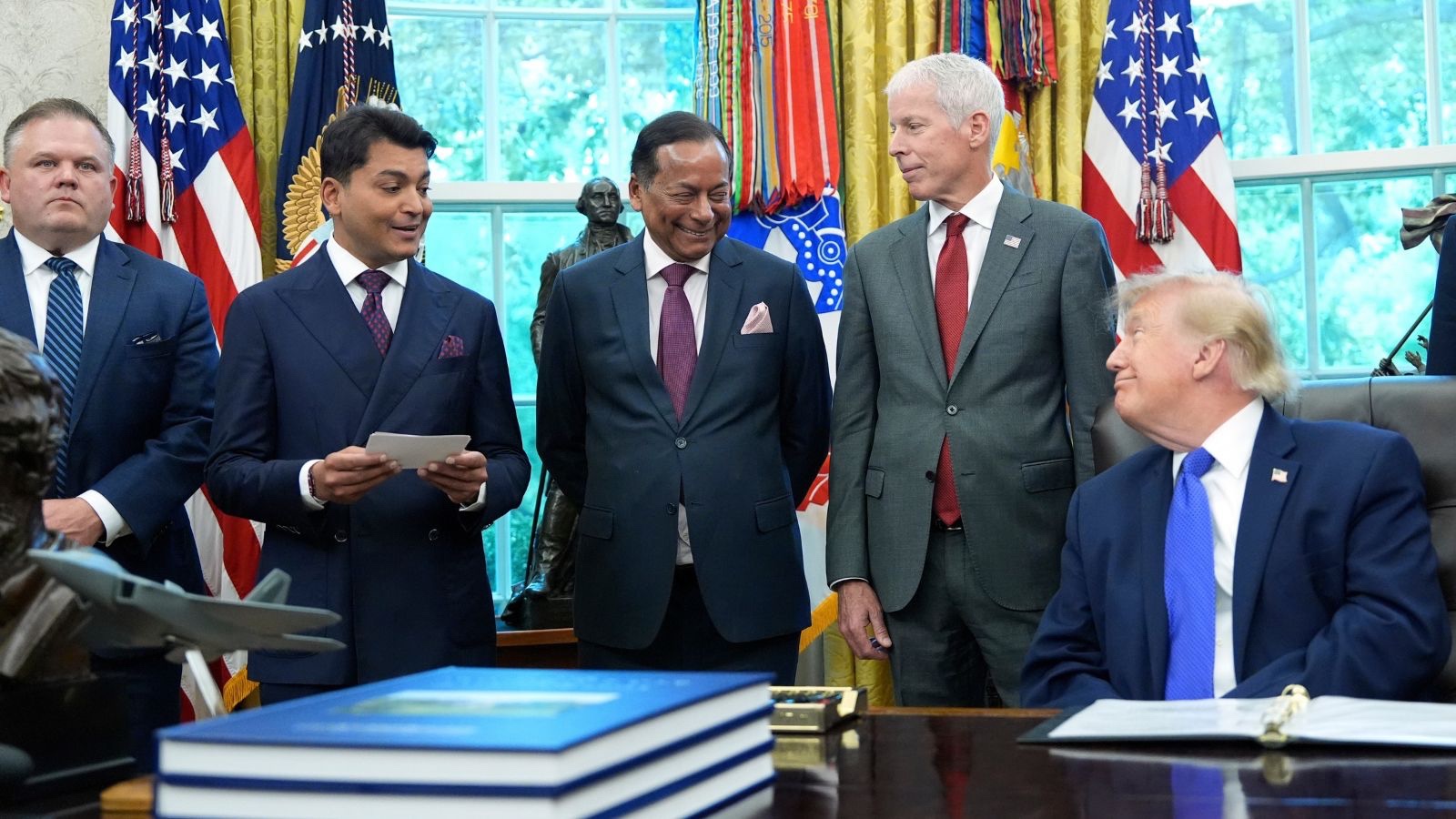
Capital expenditure of eighteen billion dollars dedicated to a single industrial asset represents a structural anomaly in contemporary corporate finance. When the Essar Group, operating through its United States subsidiary Mesabi Metallics, committed to constructing an integrated steel manufacturing complex in Iowa tied to an iron ore mining operation in Minnesota, the decision signaled a fundamental recalibration of global heavy manufacturing economics. This investment is not an isolated corporate maneuver. It serves as a masterclass in how tariff architecture, resource sovereignty, and capital structuring intersect to force physical industrial relocation.
The Structural Mechanics of Vertical Integration
Traditional blast furnace steelmaking relies on a fragmented supply chain where raw material extraction, reduction, and final casting occur across disparate geographic and corporate jurisdictions. The Iowa-Minnesota project bypasses this operational friction by engineering a closed-loop, vertically integrated supply chain from the outset.
At the northern node of this architecture lies the iron ore deposit in Minnesota. Securing domestic raw material feedstock is the primary variable that dictates long-term margin stability for any primary steel producer. By controlling the extraction phase, the operating entity neutralizes exposure to international commodity price volatility and shipping rate shocks.
The southern node in Iowa converts this extracted ore into finished steel through a dedicated logistical corridor. Moving millions of tonnes of raw material over hundreds of miles requires dedicated freight partnerships and regional infrastructure capacity that few industrial projects ever successfully coordinate. The economic logic rests on raw material self-sufficiency. When input costs for iron ore are locked in at extraction expense rather than open-market spot rates, the structural cost floor of the finished product drops significantly below that of competitors dependent on imported raw materials. Furthermore, eliminating intermediate transaction margins between the minehead and the rolling mill preserves capital efficiency across multi-decade operational cycles.
Technology Transition Economics in Electric Arc Manufacturing
The technological core of the Iowa facility departs entirely from legacy carbon-intensive blast furnaces. Modern heavy manufacturing cannot absorb the capital expenditure of mid-century blast furnace infrastructure under tightening environmental regulations and carbon-pricing regimes. Instead, the project relies on direct reduced iron, commonly known as sponge iron, paired with electric arc furnaces.
Direct reduced iron utilizes natural gas or hydrogen to strip oxygen from iron ore without melting it. This intermediate product feeds directly into electric arc furnaces, which melt scrap steel alongside hot sponge iron. The thermodynamic efficiency of this process changes the financial profile of the plant. Energy consumption drops per ton of liquid steel produced compared to traditional integrated mills.
Furthermore, electric arc furnaces offer operational flexibility that blast furnaces lack. A blast furnace operates on a continuous, multi-year burn cycle; shutting it down or ramping it down incurs prohibitive financial penalties. Electric arc furnaces can modulate production output based on real-time regional electricity pricing and market demand fluctuations. This operational elasticity acts as a financial buffer against cyclical downturns in industrial demand, allowing the enterprise to match output precisely to order book velocity rather than continuous fixed-volume constraints.
Capital Structure and Risk Mitigation Frameworks
Deploying eighteen billion dollars over a ten-year horizon requires a multi-layered financial architecture that blends private equity, debt instruments, and public export credit backing. Financing of this magnitude cannot rely solely on commercial bank lending syndicates, given the multi-year construction lag before revenue generation begins.
The capital stack for the Mesabi-Iowa venture involves private equity commitment from the promoter group alongside strategic institutional backing, complemented by financing support from institutions like the Export-Import Bank of the United States for the mining infrastructure. This blend of public export finance and private capital reduces the cost of capital during the high-risk construction phase.
Risk mitigation in megaprojects of this scale hinges on structural guarantees and long-term off-take certainty. When corporate leadership negotiates capital placement under executive-branch backing, the primary objective is regulatory durability. Changes in political administrations frequently strand capital-intensive infrastructure projects through shifting environmental mandates or tax credit reversals. Securing long-term stability agreements ensures that the baseline financial models remain viable across multiple political cycles, insulating the project from sudden policy reversals that could otherwise jeopardize long-term debt service coverage ratios.
Macroeconomic Pressures and Tariff-Induced Reshoring
The primary catalyst accelerating this capital deployment is the aggressive shift in trade policy, specifically the implementation of high tariff barriers on foreign-sourced steel imports. Protectionist tariff structures alter the standard net-present-value calculation for international conglomerates.
When import duties on foreign steel reach fifty percent, the economic arbitrage of producing goods offshore and shipping them into the domestic consumer market evaporates. Import tariffs create a localized pricing umbrella that artificially inflates domestic steel prices above global market clearing rates. For a foreign producer, absorbing the tariff penalty on ten million tonnes of annual capacity is financially untenable.
Instead, capital migrates inside the trade barrier. Building manufacturing capacity within the protected jurisdiction transforms a recurring tariff expense into domestic capital formation. The eighteen billion dollar price tag is effectively an insurance premium paid by the investor to secure permanent, tariff-free access to the world's most lucrative industrial consumer market. This dynamic illustrates a broader economic truth: protectionist walls do not merely restrict trade; they actively reconfigure global capital allocation vectors by forcing multinational enterprises to internalize production within the targeted jurisdiction.
Execution Bottlenecks and Structural Latency to 2030
Announcing a megaproject of this scale and achieving commercial production are distinct operational realities separated by severe execution hazards. The timeline pointing toward initial production around 2030 exposes the enterprise to multiple structural vulnerabilities.
First, skilled labor availability for specialized heavy industrial construction remains severely constrained across North America. Building both a massive iron ore mining complex in Minnesota and a primary steel mill in Iowa simultaneously requires thousands of welders, heavy equipment operators, and metallurgical engineers. Labor shortages drive wage inflation, extending project timelines and inflating initial capital outlays beyond original engineering estimates.
Second, environmental permitting and legal challenges represent a persistent source of project latency. Water usage rights, tailing management for iron ore processing, and air quality permits for the Iowa reduction facility invite intense scrutiny from regulatory bodies and environmental advocacy groups. Delays in obtaining or defending permits compound carrying costs during the capital-expenditure-heavy construction phase.
Third, energy infrastructure adequacy poses a hidden operational constraint. Electric arc furnaces demand immense, uninterrupted blocks of electrical power. Guaranteeing regional grid capacity to support a ten-million-tonne annual production facility requires close coordination with regional transmission organizations and regional utility providers. If local grid upgrades lag behind plant completion dates, the facility faces stranded operational capacity upon construction completion. Managing these interdependent critical paths requires rigorous project management controls that account for regulatory and supply chain friction at every phase of execution.
The Strategic Outlook for North American Heavy Manufacturing
The establishment of this integrated supply chain redefines the competitive baseline for North American industrial inputs. Domestic legacy producers now face a modernized competitor designed from the ground up for energy efficiency and supply chain autonomy.
The success or failure of this deployment will serve as the empirical test for modern industrial policy. If the asset achieves nameplate capacity on schedule and within projected capital bounds, it establishes a repeatable blueprint for international capital deployment under high-tariff regimes. If execution failures plague the timeline, it underscores the limits of using trade policy to force heavy industrial manufacturing back into developed markets characterized by high labor and regulatory overhead.
Industrial planners must evaluate capital allocation not through the narrow lens of operating margins, but through the broader framework of geopolitical risk mitigation. The era of optimizing supply chains purely for lowest-cost geographic arbitrage has ended. Resiliency, regulatory insulation, and asset localization now dictate the long-term viability of foundational material producers. Allocate capital toward secure domestic extraction corridors and modular electric-arc processing units while maintaining short-term inventory buffers to hedge against the multi-year construction lag of megaprojects.