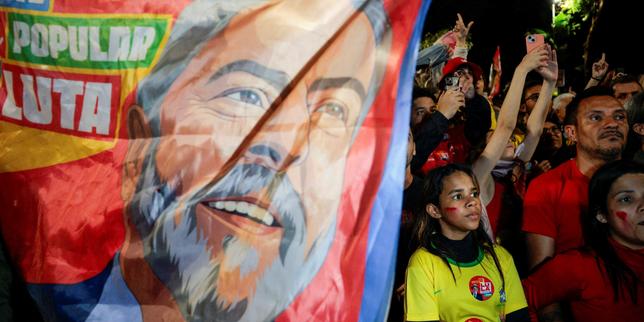
The surprise registered by senior cadres of Brazil’s Workers' Party (Partido dos Trabalhadores, or PT) regarding the spontaneous mobilization of Generation Z is not an anomaly of political communication; it is the predictable failure of a legacy hierarchical organization attempting to read a networked, non-institutional political environment. Legacy political parties operate on linear command-and-control distribution models built around union networks, physical neighborhood committees, and centralized messaging. When political action emerges through decentralized digital nodes without formal leadership, institutional parties lack the telemetry required to detect the buildup until street-level mobilization has already occurred.
To understand why the PT leadership was caught off guard by youth-led mobilization in Brazil, one must strip away journalistic abstractions about "youth energy" and examine the structural mechanics of collective action, algorithmic amplification, and the generational divergence in political socialization.
The Structural Mismatch Between Institutional Parties and Networked Movements
The core friction between the PT and Brazilian Generation Z stems from incompatible organizational architectures. Founded in 1980 out of the ABC Paulista industrial strikes, the PT mastered the logistics of physical mass mobilization. Its operational DNA relies on intermediary institutions: labor unions (such as the CUT), student unions (such as the UNE), religious base communities, and social movements (such as the MST). Within this architecture, political grievances are aggregated slowly, filtered through internal party factions (tendências), and converted into sanctioned platforms before being deployed to the public.
Networked youth mobilization bypasses every layer of this mediation. The cost of organizing has collapsed to near zero, removing the historical necessity for formal party infrastructure to coordinate logistics, print materials, or secure permits.
The Three Pillars of Decentralized Youth Mobilization
Algorithmic Aggregation Over Ideological Alignment
Traditional party recruitment requires ideological onboarding—convincing an individual to adopt a coherent worldview before taking action. Networked mobilization operates in reverse. Short-form video platforms and encrypted messaging groups aggregate individuals around hyper-specific, visceral grievances (such as public transit fares, labor precarity, environmental degradation, or legislative overreach) without requiring prior allegiance to a political doctrine. Action precedes ideology.Leaderless Node Topology
In a centralized party, neutralizing or co-opting the leadership halts the movement. In decentralized Gen Z networks, influence is distributed across thousands of micro-creators, meme pages, and local group chats. Because there is no central committee to negotiate with, party cadres cannot use traditional political levers—such as offering committee seats, state funding, or coalition compromises—to absorb or pacify the movement.Asymmetric Information Velocity
Party bureaucracies operate on weekly or monthly strategic cycles. Digital youth networks operate on sub-hour feedback loops. A legislative vote, a police intervention, or a tone-deaf statement by an official is clipped, remixed, and distributed across millions of feeds before a party's communications secretariat can convene an emergency meeting to draft a press release.
Why Legacy Telemetry Failed the PT Cadres
Political parties rely on specific sensors to gauge public sentiment: internal polling, union attendance, municipal directorate reports, and mainstream media coverage. Each of these sensors has a built-in lag and a demographic blind spot when applied to Brazilians born between 1997 and 2012.
First, standard polling methodologies frequently under-sample or misclassify non-affiliated youth whose political engagement is episodic rather than continuous. A young worker in São Paulo or Recife may express total disinterest in formal party politics in a survey on Tuesday, yet join a street protest on Friday because a specific issue breached their immediate economic or social threshold.
Second, the PT’s historical student wing apparatus—dominated by established groups like the União Nacional dos Estudantes (UNE)—no longer holds a monopoly on youth representation. While UNE remains an effective training ground for future party bureaucrats, its reach among working-class Gen Z youth navigating the gig economy is limited. When PT cadres look to their affiliated student organizations for a pulse on the youth demographic, they receive an echo of their own institutional culture rather than an accurate reading of the broader cohort.
Third, the nature of political discourse among Brazilian youth has shifted away from the Left-Right binary that defined the post-redemocratization era and the Lulismo versus Bolsonarismo polarization. While Generation Z largely rejects reactionary social policies, their relationship with the institutional Left is transactional rather than sentimental. They did not experience the historic labor victories of the 1980s or the initial poverty-reduction programs of the early 2000s as lived political milestones. To this cohort, the PT is not an insurgent force of democratization; it is the incumbent establishment.
The Economic and Material Drivers Underpinning the Mobilization
Spontaneous mobilization is never purely digital; algorithms merely accelerate pre-existing material pressures. To analyze the mechanics of this unrest accurately, it is necessary to separate known socioeconomic realities from hypotheses regarding long-term political realignment.
Known Structural Realities:
- Labor Precarity and Informality: A substantial portion of Brazilian youth enters the labor market through informal channels, app-based gig work, or low-wage service contracts with minimal upward mobility. Traditional union structures designed for formal factory or public-sector workers offer little protection or relevance to a delivery rider or freelance digital worker.
- Urban Infrastructure Deficits: Daily friction in major Brazilian metropolitan areas—long commute times, high public transit costs relative to the minimum wage, and unequal access to public security—creates a chronic baseline of frustration that requires minimal provocation to ignite.
- The Fiscal Squeeze: Constraints on public spending limit the state's ability to deploy the large-scale universal expansion programs that cemented PT loyalty among previous generations.
Educated Hypotheses on Political Behavior:
- Rejection of Co-optation: Because Gen Z views traditional political parties as self-serving cartels, visible attempts by PT cadres to endorse or claim ownership of spontaneous protests often trigger immediate backlash, accelerating the movement's anti-establishment rhetoric.
- Tactical Fluidity: Unlike ideological militants who commit to long-term party building, networked protesters treat mobilization as a tactical burst. They assemble rapidly to block a specific policy or express collective outrage, then disperse just as quickly, leaving traditional organizers with no permanent structure to capture.
The Cost Function of Institutional Misreading
When an incumbent party misinterprets decentralized mobilization, it faces a steep operational cost function. Attempting to apply 20th-century political management techniques to 21st-century networked movements produces three distinct failure modes.
1. The Co-optation Trap
If party cadres arrive at a spontaneous demonstration waving party flags and attempting to take the microphone, they violate the implicit rule of the network: authenticity through autonomy. In recent Brazilian protest cycles, the presence of institutional party branding at grassroots demonstrations has frequently provoked hostility from participants, fracturing the protest and handing opposition media an easy narrative of partisan manipulation.
2. The Compression of Policy Response Windows
Because the party fails to detect the grievance during its incubation phase in closed digital spaces, it is forced into reactive crisis management. Policy concessions made under the pressure of sudden street protests appear weak and opportunistic rather than visionary. The government absorbs the political cost of retreating without securing the political credit for listening.
3. Algorithmic Disadvantage in Narrative Framing
Institutional communications teams produce polished, high-production-value content designed for broadcast television or formal social media feeds. On platforms governed by engagement-based recommendation engines, polished institutional messaging is systematically suppressed in favor of raw, emotionally resonant, user-generated content. The party spends significant capital producing assets that fail to penetrate the target demographic's information ecosystem.
Limitations of Decentralized Movements
While spontaneous Gen Z mobilizations possess superior speed and agility compared to legacy parties, they suffer from severe structural vulnerabilities that prevent them from translating street pressure into durable legislative power.
The absence of formal leadership creates an accountability vacuum. Without designated representatives, a movement cannot negotiate binding agreements with the executive branch or legislative committees. Demands remain diffuse, maximalist, and difficult to translate into statutory text.
Furthermore, leaderless networks are highly susceptible to ideological hijacking. Because there is no gatekeeping mechanism, bad-faith actors, extremist fringes, or rival political operatives can inject divisive narratives into the digital bloodstream of the movement, rapidly eroding public sympathy and fragmenting the coalition from within.
Finally, algorithmic momentum is inherently ephemeral. The same recommendation engines that amplify a protest call to millions of screens will pivot to an unrelated entertainment trend within days. Without institutional memory, legal defense funds, and permanent organizing committees, spontaneous movements struggle to sustain pressure across the multi-year timelines required to pass and implement complex public policy.
Strategic Realignment for Legacy Political Organizations
For the Workers' Party—or any institutional political organization confronting autonomous youth mobilization—the objective cannot be to control or absorb these networks. Attempting to impose hierarchical discipline on a decentralized system destroys the very energy that makes the system potent. Instead, legacy organizations must overhaul their operational interface with non-institutional actors.
1. Deploy Decentralized Listening Telemetry
Replace reliance on traditional student union intermediaries with continuous, granular analysis of hyper-local digital spaces, regional meme ecosystems, and niche creator networks. Party strategists must track emerging material grievances—such as localized transit hikes, algorithmic wage cuts in gig sectors, or municipal service failures—at the point of origin, months before they reach critical mass.
2. Shift from Co-optation to Infrastructure Provision
When spontaneous youth mobilizations align with broader progressive goals, party cadres must keep their branding off the streets. Rather than seeking visibility at the front of the march, the institutional party should operate strictly in the background, providing silent logistical support: legal defense networks for detained protesters, parliamentary oversight to curb police abuses, and legislative drafting capacity to convert raw street demands into viable bills.
3. Decentralize Internal Party Messaging
Dismantle the centralized communications bottleneck. Instead of forcing all party messaging through a single approved narrative, equip hundreds of young, credible communicators within the party's periphery with raw data, legislative facts, and full creative autonomy to engage in native digital formats without bureaucratic pre-approval.
4. Establish Direct, Non-Mediated Policy Feedback Loops
Create institutional mechanisms that allow non-affiliated youth to influence municipal and federal budget allocations directly without joining a party or attending formal committee meetings. Digital participatory budgeting and issue-specific citizen assemblies must offer tangible, rapid material outcomes to prove that institutional engagement yields measurable results faster than street disruption alone.
The surprise experienced by PT cadres is an early warning indicator of a permanent structural shift in Brazilian politics. Political power is no longer solely the domain of organizations that can command disciplined masses; it increasingly belongs to entities capable of interfacing with fluid, leaderless networks without attempting to own them.


