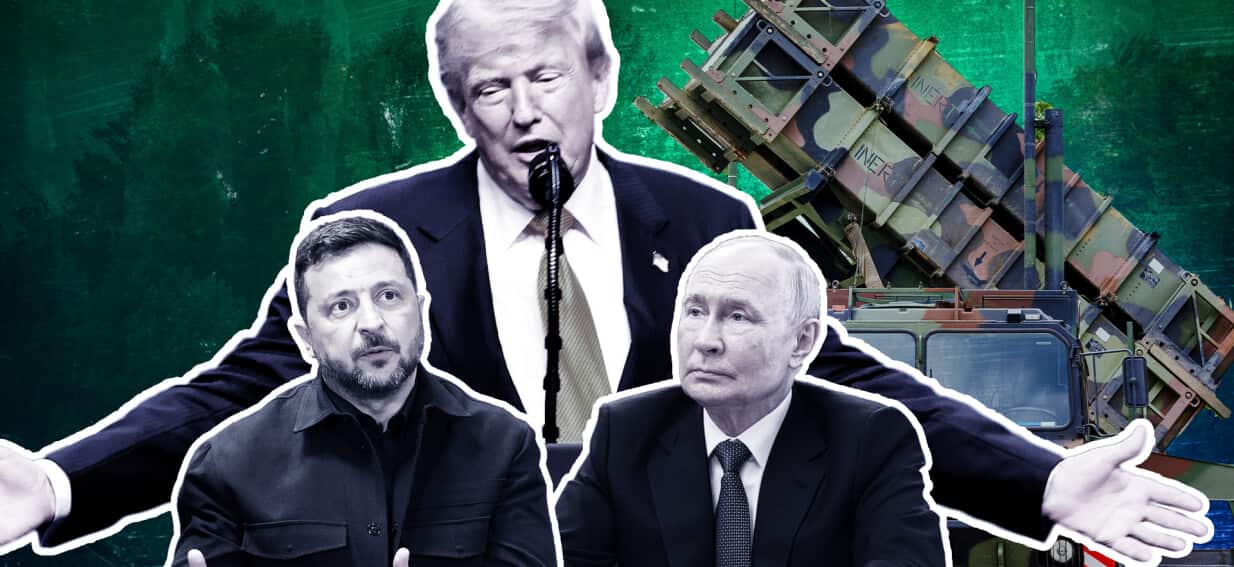
The United States has formally initiated the process to remove Syria from the State Department’s State Sponsors of Terrorism (SST) list, ending a 47-year designation enacted in 1979. This decision, announced by President Donald Trump at the NATO Summit in Ankara alongside Syrian interim President Ahmed al-Sharaa, represents the final legal and administrative hurdle in the systematic dismantling of the U.S. sanctions regime against Damascus.
While public rhetoric emphasizes political normalization and the personal rapport between leadership, the mechanism driving this policy shift is fundamentally economic and geostrategic. To evaluate the structural transformation of Syria’s position in the global economy, one must dissect the operational mechanics of the SST list, the capital flows it restricted, and the specific bottlenecks that remain for foreign direct investment. Also making waves lately: Why the Indian Diaspora is Rewriting Australia Geopolitics.
The Triad of Economic Isolation: Mechanics of the SST Designation
The SST designation functions as a foundational legal anchor that triggers a cascade of automated prohibitions across federal statutes. It does not operate as a single, static ban; rather, it enforces three distinct friction points that systematically disconnect a targeted nation from international capital markets.
- The Foreign Assistance Blockade: Under Section 620A of the Foreign Assistance Act, the U.S. government is prohibited from providing any bilateral aid, financing, or agricultural assistance. This restriction forces reliance on fragmented non-governmental organizations rather than institutional state-to-state reconstruction programs.
- Dual-Use Export Controls: Under Section 1754(c) of the Export Control Reform Act, the Department of Commerce imposes strict licensing requirements on any commodity, software, or technology that contains even minimal U.S.-origin content and possesses potential dual civil-military applications. This serves as a comprehensive technological embargo, preventing the modernization of heavy infrastructure, electrical grids, and telecommunications networks.
- Financial Transaction Bans and Institutional Vetoes: By law, the U.S. must oppose and vote against any loan, credit extension, or financial allocation from International Financial Institutions (IFIs) such as the World Bank and the International Monetary Fund (IMF) to an SST-listed country.
The primary operational consequence of these restrictions is not merely the absence of direct U.S. capital, but the institutionalized fear of secondary exposure. For international commercial banking institutions, any transaction intersecting with an SST-designated country introduces catastrophic compliance risks. The cost of auditing, tracking, and validating transactions against potential Office of Foreign Assets Control (OFAC) violations exceeds the marginal return on processing those funds. Additional details regarding the matter are explored by Associated Press.
The executive order signed previously to ease the broader U.S. sanctions program and the subsequent repeal of the Caesar Syria Civilian Protection Act targeted specific sector-level blockades. However, the foundational SST classification remained an absolute legal barrier. International commercial banks refused to clear dollar-denominated assets or re-establish correspondent banking relationships with the Central Bank of Syria because the SST status meant the jurisdictional risk was fundamentally unmanageable.
The 45-Day Congressional Review Buffer
The formal announcement initiates a statutory 45-day pre-notification period during which Congress can review the administration's intent. Under federal law, the president can rescind an SST designation via two statutory paths. The administration has utilized the mechanism requiring certification that:
- There has been a fundamental change in the leadership and policies of the government of the country concerned.
- The government is not supporting acts of international terrorism.
- The government has provided assurances that it will not support acts of international terrorism in the future.
The 45-day window establishes a legislative cooling period. For Congress to block this rescission, both chambers would need to pass a joint resolution of disapproval by a supermajority capable of overriding an inevitable presidential veto. Given the shifting political alignment in Washington—underscored by a bipartisan cohort of lawmakers who recently petitioned for Syria’s removal to facilitate regional stabilization—legislative blockage is highly improbable.
The Geostrategic Capital Function: Displacing Regional Competitors
The rescission of the SST designation is a calculated instrument of economic statecraft aimed at altering the balance of influence in the Levant. The conflict in Syria left a massive capital vacuum, estimated in the hundreds of billions of dollars required for baseline infrastructural reconstruction.
The U.S. strategy leverages a basic market principle: capital will flow to the path of least resistance if the risk-adjusted return is favorable. By removing the legal risks associated with Syrian exposure, Washington is deliberately lowering the barrier to entry for regional partners, specifically Gulf Cooperation Council (GCC) sovereign wealth funds and private enterprises. Saudi Arabian conglomerates have already positioned multi-billion-dollar investment packages pending the removal of the designation.
This influx of private and regional public capital is designed to achieve a specific geopolitical outcome: the systemic displacement of Iranian and Russian economic leverage. During the civil war, Tehran and Moscow secured long-term concessions in Syrian phosphate mining, port infrastructure, and oil exploration as collateral for military assistance. However, neither state possesses the liquidity or the macroeconomic stability required to fund systemic national reconstruction. By enabling Gulf capital to flow freely into Syrian real estate, energy, banking, and technology sectors, the U.S. creates a market-driven substitution effect, reducing Damascus's financial dependence on its wartime security patrons.
Structural Bottlenecks and Investment Realities
The removal of the SST designation provides the legal clearance for investment, but it does not automatically generate a stable macroeconomic environment. Sovereign and private investors looking at the Syrian domestic market face severe structural frictions.
- Asymmetric Infrastructure Destruction: The decapitalization of Syria's industrial base, particularly its energy generation and logistics networks, means initial investments must absorb high capital expenditure overheads just to achieve basic operational functionality.
- Regulatory Inconsistency and Legal Vacuum: Transitioning from an economy dominated by wartime allocation systems to a conventional commercial framework introduces massive institutional friction. The legal architecture protecting foreign direct investment, intellectual property, and contract enforcement remains unproven under the interim administration.
- Residual Sanctions and Compliance Inertia: While the SST list and the Caesar Act have been dismantled, specific individuals and entities linked to the previous regime or illicit networks remain under targeted sanctions. Global compliance departments will require prolonged due diligence cycles to ensure supply chains do not inadvertently interact with blocked persons.
Furthermore, regional security dynamics introduce persistent political risk premiums. While President Trump has publicly framed the new Syrian government under Ahmed al-Sharaa as a potential stabilizing force capable of managing regional threats—including containing remnants of the Islamic State and balancing cross-border friction with Israel—the internal security apparatus is still consolidating. Recent security incidents in Damascus emphasize that the transition from a fragmented landscape of armed factions to a centralized state security monopoly is non-linear and vulnerable to disruption.
The strategic imperative for international enterprises is clear: the legal path to market entry is open, but project financing must be structured to insulate against institutional volatility. Capital allocation will likely prioritize short-cycle, high-yield infrastructure and consumer sectors before expanding into long-horizon industrial commitments. The legal barrier has fallen; the operational stress test now begins.