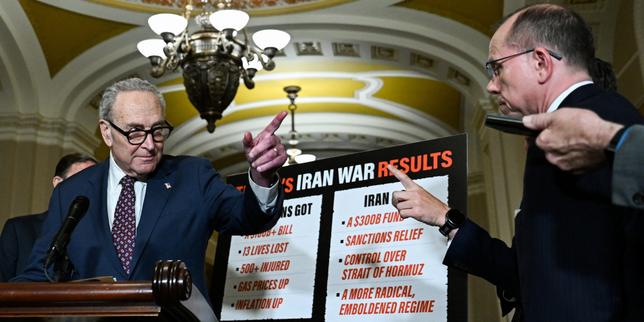
The legislative branch of the United States government cannot force an immediate cessation of the conflict with Iran, despite the passing of a concurrent War Powers Resolution. While media narratives frame the recent legislative votes as an absolute directive ordering Donald Trump to withdraw American forces, the institutional architecture of U.S. foreign policy tells a completely different story.
To evaluate the actual strategic trajectory of this conflict, analysts must look past political theater and map the friction between executive military authority and legislative budgetary constraints. The true bottleneck for administrative war-making lies not in non-binding resolutions, but in the structural feedback loops of international trade, legal ambiguities, and long-term defense appropriations. Also making headlines in related news: The Brutal Truth About the Record Breaking Impact in the Outback.
The Tripartite Legal Framework of Presidential Hostilities
The executive branch and Congress operate under a structural tension defined by three competing legal pillars. Understanding why the legislative push remains primarily an expression of political friction rather than a hard operational stop requires examining these mechanics directly.
- The Article II Commander-in-Chief Clause: The Executive branch interprets its constitutional authority as an open-ended mandate to conduct defensive military actions to protect national security interests without prior legislative consent.
- The 1973 War Powers Resolution: This statute requires the president to terminate the use of armed forces within 60 days—with an additional 30-day window for safe extraction—unless Congress explicitly declares war or issues a specific statutory authorization.
- The Concurrent Resolution Mechanism: Because concurrent resolutions do not go to the president's desk for a signature or a veto, they lack the force of law under current supreme constitutional jurisprudence. They function as formal declarations of institutional opposition rather than operational mandates.
The conflict, initiated via Operation Epic Fury on February 28, triggered the 60-day statutory clock of the War Powers Resolution. The administration side-stepped this boundary by asserting that the April ceasefire effectively concluded active hostilities, classifying subsequent military actions—such as the response to Iranian ballistic missile strikes on bases in Kuwait and Bahrain—as distinct, isolated defensive maneuvers. This legal maneuvering insulates the executive branch from direct statutory compliance, leaving the legislative branch with limited short-term recourse. Further insights regarding the matter are covered by Associated Press.
The Cost Function of Asymmetric Naval Warfare
The ongoing military friction in the Middle East has created an economic friction point centered on maritime chokepoints, specifically the Strait of Hormuz. The administration’s strategic objective to maintain an unrestricted flow of commerce faces an escalatory cost spiral from asymmetric regional tactics.
The core vulnerability is the extraction of economic rents. Proposing transit tolls or fees on international waterways represents an economic strategy to offset the structural costs of naval blockades. When a superpower deploys multi-billion dollar carrier strike groups to counter low-cost drone swarms and anti-ship ballistic missiles, the cost-exchange ratio shifts dramatically against the intervening power.
The primary economic consequence is not the direct cost of military munitions, but the secondary impacts on maritime insurance premiums and global energy supply lines. As long as the physical safety of commercial shipping remains unguaranteed, global trade routes experience permanent friction, increasing container freight rates and introducing volatility into global energy markets.
Legislative Leverage and Diplomatic Distortions
Congress possesses ultimate authority over the federal budget, which serves as its most potent lever for altering military strategy. The introduction of repetitive war powers challenges creates a distinct signaling dynamic that alters the behavior of both domestic and foreign actors.
On the domestic front, lawmakers face shifting political alignments ahead of mid-term elections. Prolonged military engagements with poorly defined termination criteria create electoral liabilities. The breakdown of the vote—where four structural defectors from the president's party joined the opposition—indicates that domestic political survival can outweigh party alignment when military costs begin impacting local economies.
On the diplomatic stage, this institutional friction creates an unintended bargaining distortion. When the executive branch enters negotiations with Tehran regarding nuclear access and international maritime verification regimes, a fractured domestic government degrades its bargaining position. The Iranian diplomatic apparatus views public legislative resistance as a sign of finite American endurance, creating a clear incentive to prolong negotiations. Delaying talks exploits the domestic political calendar, applying pressure on the executive to make concessions to resolve the conflict before electoral deadlines arrive.
The Strategic Path Forward
The conflict has reached an equilibrium where standard military strikes yield diminishing returns. Continued enforcement of a naval blockade without explicit statutory authorization will only deepen institutional friction inside Washington and accelerate the strain on global maritime commerce.
The administration must pivot away from open-ended defensive interventions. The optimal strategic move is to codify a narrowly tailored, conditional authorization for the use of military force that links naval operations directly to verifiable maritime security benchmarks in international waters. This approach achieves two critical outcomes: it neutralizes the domestic legal challenge by securing necessary legislative backing, and it establishes a predictable, rules-based threshold that forces regional actors to weigh the exact costs of further escalation.
To gain a deeper perspective on how this legislative friction impacts regional alliances and military readiness on the ground, analyzing expert commentary can clarify the immediate geopolitical stakes. The breakdown in US Congress Votes to Halt Iran War provides structural reporting on how this domestic political battle directly influences the ongoing ceasefire negotiations.