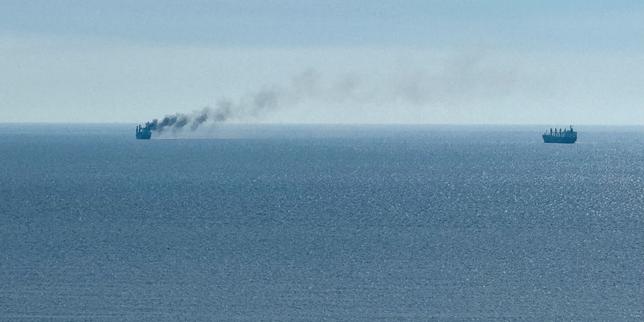
Global agricultural markets operate on delicate supply chain tolerances where physical maritime access dictates price stability. When geopolitical friction disrupts transit hubs, the failure propagates rapidly through international trade vectors. The systematic targeting of Black Sea maritime terminals creates a cascading economic shock that extends far beyond regional borders, directly altering grain delivery schedules, marine insurance pricing, and global food security indices. To understand this disruption, one must examine the mechanics of maritime freight choke points, the operational friction imposed on port logistics, and the resulting structural adaptations required by international grain traders.
The Three Pillars of Maritime Export Vulnerability
Physical export capacity relies on the continuous synchronization of three discrete infrastructure layers: terminal storage, loading velocity, and open-water transit corridors. When any single pillar experiences structural failure, the entire system absorbs the penalty through capacity degradation. In related developments, we also covered: Inside the Massive Price Tag of PM Modi Overseas Trips.
- Silo and Storage Capacity: Inland agricultural production must clear regional storage hubs to prevent post-harvest spoilage. Russian strikes targeting terminal silos reduce the local holding buffer, forcing grain to remain up-country where storage is finite and logistically expensive to maintain.
- Berthing and Loading Velocity: High-capacity gantry cranes and deep-water berths dictate how fast dry bulk carriers can take on cargo. Structural damage to these mechanical assets drops throughput metrics from thousands of tons per hour to zero, creating physical queues of stranded vessels in adjacent anchorages.
- Navigational Corridor Security: Safe passage relies on predictable insurance rates and minimal military interference. Mine hazards, active targeting, and naval blockades elevate the risk profile, forcing underwriters to price maritime transit at prohibitive premiums.
The convergence of these vulnerabilities transforms a localized military campaign into an international logistics crisis. Without functional deep-water ports, the cost function of moving grain shifts dramatically from maritime transport economics to more expensive overland logistics alternatives.
The Cost Function of Route Diversification
When primary maritime channels face systemic obstruction, logistics operators turn to alternative corridors. Each substitution introduces a steep economic penalty, altering the landed price of agricultural commodities. USA Today has also covered this fascinating topic in extensive detail.
[Primary Maritime Route: Direct Black Sea Access]
   │
   ├─► High Throughput / Low Cost per Ton
   │
   ▼
[Disruption Event: Terminal Targeting & Blockade]
   │
   ├─► Forces Modal Shift to Overland / River Corridors
   │
   ▼
[Alternative Corridors: Rail, Road, Danube Barges]
   │
   └─► Lower Volume / Higher Handling Costs / Border Bottlenecks
Moving bulk commodities by rail or road instead of Panamax and Handysize bulk carriers introduces severe economic friction. Rail gauges differ across borders, requiring transshipment delays at terminals. Road transport suffers from high fuel consumption, driver shortages, and strict weight limitations per truck. River barges navigating the Danube offer a partial relief valve, but shallow drafts and lock capacities limit total volume compared to open-sea shipping lanes.
The economic consequence is clear. The landed cost of wheat and corn rises, squeezing farm-gate margins in exporting nations while driving up import bills for consumer nations in North Africa, the Middle East, and parts of Asia. Market participants absorb these losses through hedging strategies, but structural price inflation remains persistent as long as Black Sea infrastructure remains contested.
Risk Transmission and Insurance Mechanics
Maritime commerce cannot function without predictable underwriting. Underwriters calculate risk based on historical loss data and immediate environmental threats. Active targeting of port facilities introduces tail-risk variables that standard actuarial models struggle to price accurately.
When missile strikes hit port grain terminals, marine war risk insurance premiums spike instantly. Shipowners demand higher charter rates to compensate crews for operating in high-threat zones. If the perceived risk exceeds the economic upside of a voyage, commercial operators simply refuse to position vessels in the region, regardless of market demand for the underlying commodity.
This behavior creates an artificial scarcity effect. Grain exists in local silos, and global buyers require supply, but the matching engine of international trade stalls because the physical transport mechanism becomes financially unviable.
Strategic Adaptation and System Resilience
Supply chains eventually adapt to chronic friction, though the transition period is painful. Traders diversify origin portfolios, shifting procurement toward alternative exporting regions such as South America or North America when Black Sea volumes become unreliable. Concurrently, regional operators develop decentralized logistics networks, utilizing smaller river ports and shallow-draft vessels that present harder targets and lower individual loss exposure.
The long-term outlook for Black Sea agricultural exports depends entirely on the durability of alternative corridors and the security guarantees attached to shipping lanes. Systemic risk will persist as long as infrastructure remains vulnerable to kinetic disruption. Stakeholders must price these geopolitical variables directly into forward contracts, treating infrastructure volatility not as a temporary anomaly, but as a permanent variable in modern agricultural trade modeling.