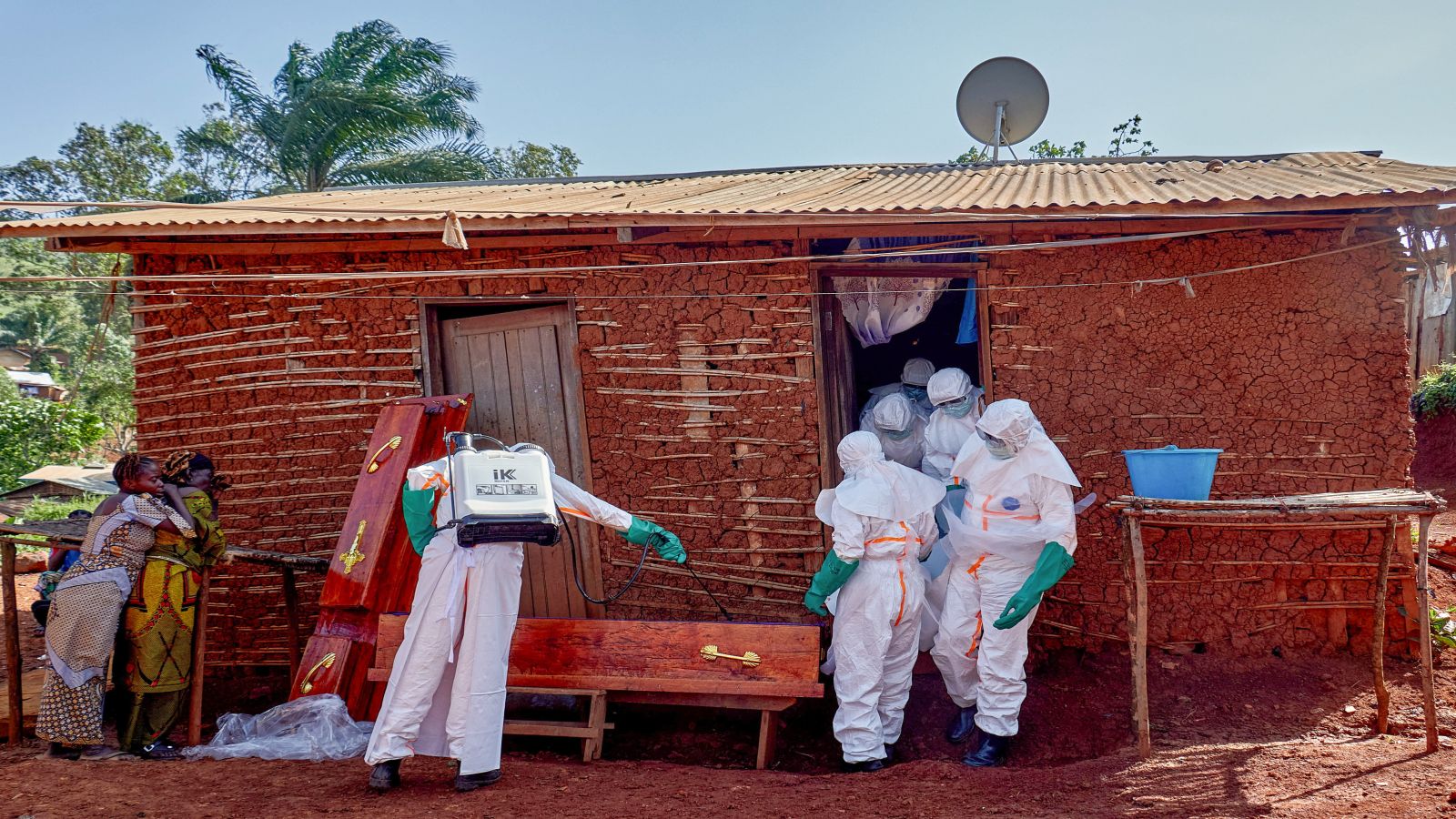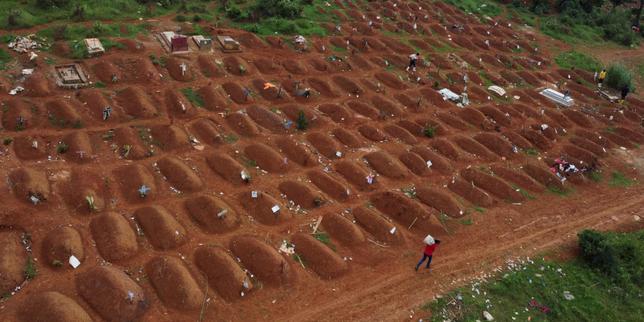
The containment of highly infectious filoviruses like Ebola depends on a binary outcome: either a border interception system stops a pathogen at a point of entry, or it does not. Media narratives framing public health threats around generalized panic often ignore the cold mechanics of transmission dynamics and border infrastructure. For the Asia-Pacific region, a geography defined by high-density urban hubs and interconnected trade corridors, the risk of an Ebola outbreak is not an abstract probability. It is a quantifiable function of passenger volume, incubation windows, and localized clinical diagnostic latency.
To evaluate whether a virus can penetrate regional defenses, we must deconstruct biosecurity into an operational pipeline. When a pathogen breaches a border, it is rarely due to a single catastrophic failure. Instead, it is the result of a series of misaligned operational gaps across three specific pillars: border intercept physics, clinical surveillance latency, and supply-chain readiness. Meanwhile, you can read related stories here: The Dental Desert Crisis and How One Engineer Is Rewriting the Rules of Survival.
The Mathematics of the Incubation Gap
The core vulnerability in any border defense framework is the temporal mismatch between the incubation period of Ebola virus disease (EVD) and the duration of international transit. The incubation period for EVD ranges from 2 to 21 days, with a mean distribution of 8 to 10 days. In contrast, a commercial flight from an endemic region in Sub-Saharan Africa to a major Asian transit hub like Singapore, Tokyo, or Bangkok takes less than 24 hours.
This reality invalidates thermal imaging and visual screening at points of entry. Automated thermography only identifies symptomatic individuals—those presenting with a fever exceeding 38°C (100.4°F). Because an individual infected with EVD is non-infectious and asymptomatic during the incubation phase, an asymptomatic carrier can pass through a thermal scanner with a zero-variant reading. To understand the full picture, we recommend the detailed article by World Health Organization.
The probability ($P$) of an infected individual entering a country without detection can be modeled as a function of the proportion of the incubation period spent traveling:
$$P_{\text{undetected}} = \frac{T_{\text{incubation}} - T_{\text{travel}}}{T_{\text{incubation}}}$$
Where $T_{\text{incubation}}$ represents the total incubation time and $T_{\text{travel}}$ is the time elapsed since exposure. If an individual boards a flight two days after exposure, they possess an expected 6 to 19 days of asymptomatic travel and entry runway. Consequently, border screening does not act as a filter; it merely acts as a net that catches only the most advanced, symptomatic cases.
The Three Pillars of Regional Vulnerability
Evaluating the threat profile across Asia requires moving past a monolithic view of the continent. The risk is distributed unevenly across three operational pillars.
1. The Border Intercept Pipeline
The first pillar relies on the tracking of passenger manifests and health declaration data. The primary point of failure here is data fragmentation. While advanced economies utilize integrated Passenger Name Record (PNR) systems linked to real-time immigration databases, many developing transit hubs rely on self-reported physical health cards or siloed digital applications that do not sync across borders.
A traveler departing an EVD-affected zone may route their journey through multiple secondary hubs (e.g., Middle Eastern or European transit points), effectively obfuscating their origin point on a standard passport check. Without mandatory, algorithmically verified travel-history reconstruction at immigration desks, the intercept pipeline breaks down.
2. Clinical Surveillance Latency
Once an asymptomatic carrier passes the border, the countdown to a localized outbreak shifts to the clinical sector. Latency is measured as the time elapsed between the onset of the first symptom and the strict isolation of the patient.
[Symptom Onset] ---> [First Healthcare Contact] ---> [Differential Misdiagnosis] ---> [Isolate & Test]
       |__________________________________________________________________________________|
                                   Clinical Latency Window
In many Asian nations, the primary care level is unequipped for rapid differential diagnosis. Initial symptoms of EVD—fever, myalgia, headache, and pharyngitis—are identical to prevalent regional endemic diseases such as dengue fever, malaria, typhoid, and seasonal influenza.
The typical clinical pathway in a high-density urban environment involves multiple points of contact before correct identification:
- The patient visits a local, low-tier clinic or pharmacy, presenting non-specific symptoms.
- The clinician prescribes standard antipyretics or antibiotics, sending the patient back into a high-density community or multi-generational household.
- The patient returns 3 to 5 days later with advanced symptoms (vomiting, diarrhea, or hemorrhagic manifestations), having already exposed family members and healthcare workers.
This diagnostic delay creates a high-velocity transmission window. Because Ebola is transmitted through direct contact with bodily fluids, a single misdiagnosed patient in a standard, unshielded emergency room can rapidly amplify the effective reproduction number ($R_0$) within a hospital setting.
3. Institutional Supply-Chain Readiness
The final pillar is the material capacity to manage an asset-heavy medical response. A standard isolation protocol for a single EVD patient requires an immense volume of personal protective equipment (PPE), specialized waste disposal systems, and biocontainment transport infrastructure.
A critical bottleneck is the scarcity of Biosafety Level 4 (BSL-4) laboratories capable of handling high-consequence viral pathogens. While nations like Japan, South Korea, and Singapore maintain operational BSL-4 facilities with established sample-transport protocols, vast areas of Southeast and South Asia lack immediate access to these facilities. Shipping a suspected sample across international borders introduces severe regulatory, bureaucratic, and logistical delays, extending the clinical latency window by days.
Economic and Behavioral Friction Points
The structural weaknesses discussed above are worsened by predictable human and economic behaviors. Biosecurity protocols often fail because they assume perfect compliance from both travelers and local institutions.
The Cost Function of Disclosure
Travelers face significant economic disincentives regarding honest disclosure. If a passenger admits to visiting an affected region or experiencing mild symptoms on a health declaration form, they face immediate quarantine, lost wages, missed business opportunities, and potential deportation or isolation costs. When the cost of compliance outweighs the perceived individual risk of being infected, travelers deliberately conceal their travel history or mask symptoms using antipyretics like paracetamol before passing border checks.
Institutional Risk Suppression
A parallel friction point occurs at the institutional level. Local governments and municipal health authorities are often reluctant to trigger an early EVD alert due to the immediate economic fallout. A confirmed Ebola case within a global financial hub like Hong Kong or Singapore would trigger instant travel restrictions, plummeting tourism revenues, supply-chain diversions, and market volatility. This creates an environment where early, ambiguous cases may be downplayed or categorized as atypical hemorrhagic dengue until the outbreak reaches a scale that can no longer be hidden.
Quantification of Transit Vulnerabilities
To understand where the system is most likely to break, look at the distribution of flight paths connecting endemic zones to Asian networks. The vulnerability of a city is a factor of its direct flight connections, its population density, and its health expenditure per capita.
- Tier 1 Risk Hubs (High Connection / High Density / High Prep): Cities like Singapore and Tokyo possess direct or one-stop connections to globally connected African transit hubs (e.g., Addis Ababa, Doha, Dubai). While their internal clinical readiness is exceptional, their high volume of transit passengers makes them statistical targets for importing an asymptomatic case.
- Tier 2 Risk Hubs (High Connection / High Density / Low Prep): Megacities across parts of South and Southeast Asia face a more dangerous equation. They receive high volumes of labor migration and trade-related travel, yet their public healthcare systems operate at near-maximum capacity daily, leaving zero elasticity for sudden isolation or contact-tracing surges.
The structural failure point here is the reliance on contact tracing in mega-cities. In an urban center with a population density exceeding 10,000 people per square kilometer, tracing every individual who shared a subway car or a public space with an early-stage, symptomatic EVD patient is operationally impossible. The contact-tracing mechanism, which succeeded in localized rural African outbreaks, fails when applied to mass transit systems.
Operational Remediation and Hardening
Relying on luck or broad travel bans is not a viable strategy for long-term biosecurity. To build a resilient defense against filovirus infiltration, regional frameworks must transition from passive border screening to an active, decentralized diagnostic model.
Decentralized Molecular Surveillance
The reliance on centralized BSL-4 testing must be minimized. Public health networks should deploy closed, fully automated point-of-care PCR diagnostic platforms at major regional referral hospitals and international entry gates. These systems can process blood or saliva samples within hours using self-contained cartridges, eliminating the need to transport live viruses across long distances for initial verification.
Algorithmic Syndromic Surveillance
Instead of relying on self-reported health forms, immigration infrastructure must ingest real-time PNR data to flag high-risk travel patterns automatically. If a passenger’s journey originated in an active transmission zone within the past 21 days—regardless of how many connecting flights or separate tickets were used to mask the route—the system must trigger a mandatory, secondary clinical assessment at the border.
Hardening the Primary Care Network
The most effective defense against an outbreak is reducing clinical latency. Every primary care physician, emergency room triage nurse, and urgent care clinician must be trained on a strict, automated triage algorithm:
IF Patient presents with fever >38°C AND has traveled internationally within 21 days:
    IMMEDIATE isolation in a negative-pressure room.
    DO NOT perform standard venipuncture before donning full PPE.
    TRIGGER regional infectious disease response team.
This simple protocol prevents the standard, catastrophic cycle of misdiagnosis and subsequent nosocomial transmission within hospital wards.
The Strategic Outlook
The view that Asia is safe from Ebola due to geographical distance stems from a fundamental misunderstanding of modern transportation networks. The region’s defenses are not a solid wall; they are a series of operational filters, each with distinct gaps.
As air travel volume returns to and exceeds historical baselines, the probability of an asymptomatic EVD carrier arriving at an Asian immigration desk approaches certainty over a long enough timeline. The determining factor in whether this importation triggers a localized epidemic is not the efficiency of thermal cameras at the airport. It is the diagnostic agility of the primary healthcare worker who encounters the patient three days later. Until regional health investments pivot from visible border theater to decentralized laboratory capacity and disciplined triage protocols, the vulnerability remains an unresolved variable.