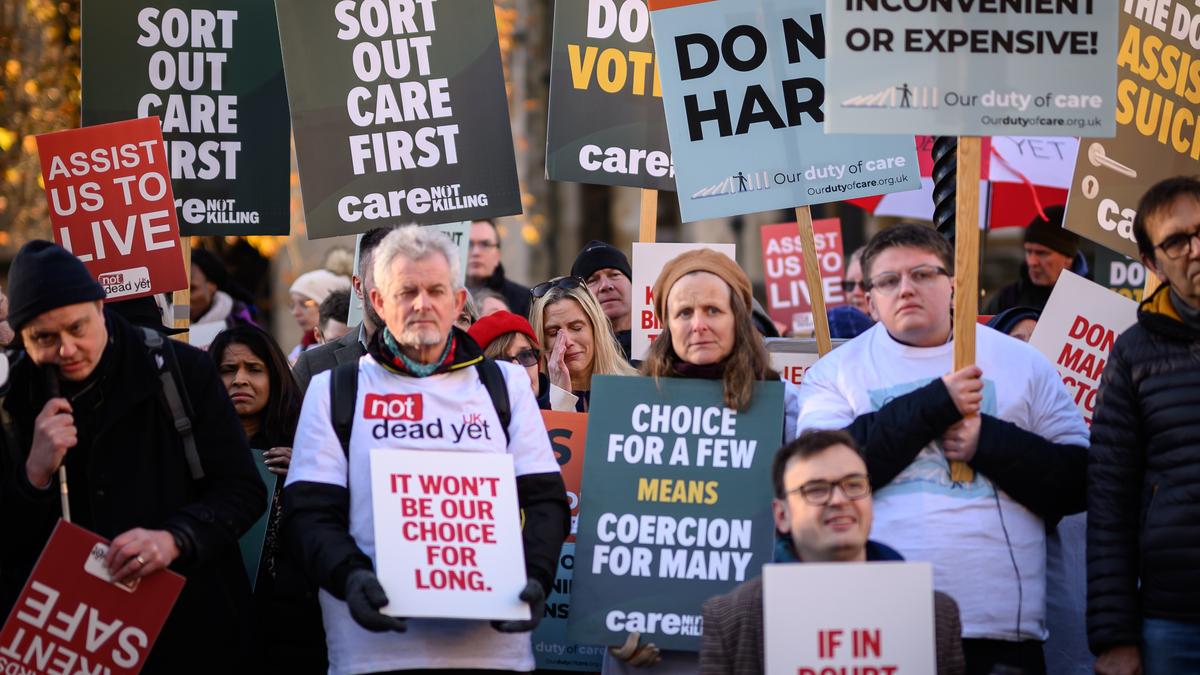
The passage of any legislative framework permitting medically assisted ending of life requires balancing individual autonomy against state-regulated protections. When the UK Parliament's House of Commons initially voted 330 to 275 in favor of the Terminally Ill Adults (End of Life) Bill, it marked a significant shift in British social policy. Rather than a binary debate on the sanctity of life versus the right to die, a rigorous policy analysis reveals that the legislative journey is a complex optimization problem. It requires balancing clinical eligibility, judicial oversight, and systemic healthcare capacity.
By evaluating the structural mechanics of the proposed legislation, we can map out how the bill attempted to navigate these competing priorities before running out of time in the House of Lords, and how its design informs future legislative attempts.
The Tri-Partite Safeguard Architecture
To minimize the risk of coercion—particularly among vulnerable, elderly, or disabled demographics—the draft legislation established a three-tiered verification system. This design separates the clinical, legal, and administrative functions of the process into distinct checkpoints.
+---------------------------+     +---------------------------+     +--------------------------+
|    Clinical Evaluation    | --> |     Judicial Approval     | --> |  Self-Administration     |
|   - 2 independent MDs     |     |   - High Court Judge      |     |  - Direct patient action |
|   - Prognosis < 6 months  |     |   - Verification of intent|     |  - Clinician present     |
+---------------------------+     +---------------------------+     +--------------------------+
1. Clinical Determination
The process begins with two independent medical practitioners who must separately evaluate the patient. They must verify three distinct criteria:
- Prognostic Certainty: The patient must be diagnosed with an incurable illness with a life expectancy of six months or fewer.
- Cognitive Competence: The patient must possess the mental capacity to make a fully informed decision at the time of the request.
- Volitional Intent: The clinicians must establish that the request is voluntary and free from external pressure or financial coercion.
This clinical phase introduces an operational challenge. Calculating a strict six-month terminal prognosis is notoriously difficult in clinical practice, particularly for non-oncological conditions like neurodegenerative or end-stage organ diseases. The margin of error in these clinical forecasts introduces an unavoidable level of subjectivity into what is designed to be an objective entry threshold.
2. Judicial Verification
Unlike systems in Oregon or Canada, the UK framework added a judicial layer. A High Court judge was required to review each case, assess the validity of the application, and confirm that the patient's decision was made freely.
While this judicial layer provides a strong safeguard against abuse, it introduces significant administrative hurdles:
- Throughput Bottlenecks: The Family Division of the High Court would face sudden, time-sensitive caseload increases.
- Equity of Access: Navigating a High Court application requires legal representation, potentially creating a system where timely access is determined by financial resources.
- Systemic Tension: This requirement shifted the final responsibility from medical professionals to the judiciary. During the committee stage, the bill's sponsor even suggested removing this judicial oversight to streamline the process. This highlights the ongoing tension between thorough safeguards and functional access.
3. Self-Administration
The final safeguard requires the lethal substance to be self-administered by the patient. Clinicians are authorized to prepare and deliver the medication, but the physical act of intake must be completed by the patient.
While this ensures the patient retains control until the final moment, it creates a practical barrier. Patients with advanced physical disabilities, such as late-stage Amyotrophic Lateral Sclerosis (ALS), may lose the motor function required to self-administer before they reach the terminal phase. This creates a legal paradox where those with the most severe physical suffering may be physically unable to use the law.
The Economics of End-of-Life Care
The debate around assisted dying cannot be isolated from the broader economic challenges facing public health systems. In the UK, the state-funded National Health Service (NHS) and the independent hospice sector operate under persistent financial strain.
                     ┌───────────────────────────┐
                     │  End-of-Life Care Budget  │
                     └─────────────┬─────────────┘
                                   │
            ┌──────────────────────┴──────────────────────┐
            ▼                                             ▼
┌───────────────────────┐                     ┌───────────────────────┐
│     Palliative Care   │                     │    Assisted Dying     │
│   (High resource,     │                     │   (Low direct cost,   │
│   unfunded mandates)  │                     │   complex safeguard   │
│                       │                     │    infrastructure)    │
└───────────────────────┘                     └───────────────────────┘
A primary concern raised by opponents is the cost differential between high-quality palliative care and assisted dying. Specialist palliative and hospice care in England and Wales relies heavily on charitable donations rather than direct state funding. If assisted dying is integrated into the NHS as a fully funded service, it risks creating a financial imbalance.
Without ring-fenced funding for comprehensive palliative care, the system could inadvertently create a financial incentive for assisted dying. This issue is especially urgent for patients in lower socioeconomic brackets who may lack access to high-quality hospice care.
Legislative Vulnerability: The Private Member's Bill Path
The failure of the Terminally Ill Adults Bill to pass before the end of the 2024–2026 parliamentary session highlights the limitations of using Private Members' Bills (PMBs) for major social reform.
| Metric / Dimension | Private Member's Bill (PMB) Pathway | Government Bill Pathway |
|---|---|---|
| Sponsorship | Backbench MP (e.g., Kim Leadbeater) | Cabinet Minister / Government Department |
| Parliamentary Time | Limited to specific sitting Fridays | Priority scheduling on the main legislative agenda |
| Whip System | Free vote (unwhipped, high variable consensus) | Whipped (party discipline enforced) |
| Resistance Vulnerability | High (susceptible to filibustering and stalling amendments) | Low (government can use closure motions to end debate) |
| Policy Neutrality | Government remains neutral; departments provide technical reviews only | Active departmental policy advocacy and implementation |
Because PMBs have limited parliamentary time, they are highly vulnerable to delay tactics. In the House of Lords, opponents tabled over 1,200 amendments during the committee stage. Without the government scheduling extra time to resolve these amendments, the bill ran out of time and fell.
This outcome demonstrates that complex social legislation is difficult to pass without direct government sponsorship. Neutrality from the government may preserve political capital, but it often leaves technically complex bills without the legislative priority needed to pass.
Palliative Capacity and Systemic Risk
Any future attempt to pass assisted dying legislation in England and Wales must address the capacity of the current palliative care system. Palliative care is not merely an alternative to assisted dying; it is a necessary foundation.
If a patient requests assisted dying because they cannot access effective pain management, the choice is no longer truly voluntary. The integrity of any assisted dying framework depends on the universal availability of high-quality palliative care.
To prevent systemic pressure on vulnerable patients, future legislation must include a statutory requirement that any patient requesting assisted dying must first be assessed by a specialist in palliative medicine. This ensures that every clinical option for pain relief and psychological support is explored before proceeding with an assisted death.