When Minsk opens its doors to a top official from a trans-Atlantic security organization, the headlines almost always follow the exact same script. Pundits immediately start talking about a sudden thaw in East-West relations, or they dismiss the whole thing as empty theater. Both takes miss the actual mechanics of how Belarusian foreign policy operates.
Belarus hosting the leader of a trans-Atlantic security group—most notably the Organization for Security and Co-operation in Europe (OSCE) or similar parliamentary assemblies—isn't a sudden conversion to Western values. It's a calculated survival tactic. If you've followed Eastern European geopolitics for any length of time, you recognize this playbook immediately. Minsk uses high-level diplomatic visits to create breathing room whenever pressure from Moscow gets too heavy or economic sanctions start biting too hard. Meanwhile, you can read other stories here: Why the Obsession With High Stakes Midterms Completely Misunderstands Modern Presidential Power.
The Real Reason Minsk Invites Western Security Chiefs
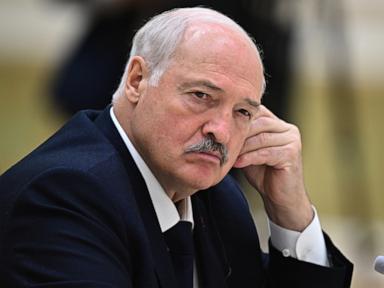
You have to look at geography to understand Alexander Lukashenko's logic. Landlocked between Russia, Ukraine, Poland, Lithuania, and Latvia, Belarus has spent decades trying to avoid becoming a mere province of Russia while refusing to adopt the democratic reforms demanded by the European Union and the United States.
When a high-ranking figure from a trans-Atlantic security body lands in Minsk, the Belarusian Foreign Ministry gets something priceless. They get legitimacy. State television broadcasts images of Belarusian officials shaking hands with respected European and North American diplomats, signaling to domestic audiences and regional neighbors that Minsk isn't totally isolated. To see the full picture, we recommend the recent analysis by USA Today.
Honestly, it's a low-cost, high-reward move for the Belarusian government. Hosting a security chief doesn't require releasing political prisoners right away, and it doesn't force Lukashenko to rewrite election laws. It simply opens a channel of communication that Western capitals find hard to turn down, especially when regional security in Eastern Europe is hanging by a thread.
Why the OSCE Matters More Than NATO Here
People often confuse trans-Atlantic security groups, so let's clear that up right away. Belarus isn't hosting the Secretary General of NATO. Relations between Minsk and NATO remain frozen at a deep chill, with Belarusian state media routinely portraying the military alliance as an existential threat on its western border.
Instead, Minsk engages with bodies like the OSCE and its Parliamentary Assembly (OSCE PA). Why? Because Belarus is actually a full participating state in the OSCE. Unlike the European Union or NATO, the OSCE operates on consensus and includes both Russia and Western democracies. That unique structure gives Minsk a seat at the table where it can argue its case without immediately getting outvoted by Brussels or Washington.
During past diplomatic cycles—such as the years following the 2014 Minsk agreements on Ukraine—Belarus successfully positioned itself as a neutral venue for European security talks. Hosting OSCE leadership allowed Lukashenko to rebrand Minsk from "Europe's last dictatorship" into an indispensable regional mediator, at least for a few years.
What Western Diplomats Actually Hope to Achieve
It's easy to criticize Western officials for traveling to Minsk. Critics argue that showing up in Belarus only rewards authoritarian behavior and gives Lukashenko a propaganda win. That criticism isn't wrong, yet it ignores the practical reality facing European security planners.
When a trans-Atlantic security chief visits Minsk, they usually have three concrete goals on their checklist:
- Preventing accidental military escalation. With thousands of troops stationed along the Polish, Lithuanian, and Latvian borders—and Russian tactical nuclear weapons deployed on Belarusian soil—military communication channels are vital. Security chiefs want direct lines to ensure border incidents don't spiral into wider conflict.
- Advocating for political detainees. Face-to-face meetings allow Western leaders to hand over specific lists of imprisoned journalists, activists, and opposition figures. Quiet diplomacy has occasionally secured the release of individual prisoners when public sanctions failed.
- Gathering ground-level intelligence. Reading diplomatic cables from Vilnius or Warsaw isn't the same as sitting across the table from Belarusian officials in Minsk. Direct engagement helps Western analysts gauge how much autonomy Lukashenko actually retains from the Kremlin.
The Moscow Factor You Cannot Ignore
You can't analyze a single diplomatic move by Belarus without asking what the Kremlin thinks about it. Russia subsidizes the Belarusian economy through cheap energy, preferential loans, and open market access. After the mass protests in Belarus in 2020 and the subsequent Western sanctions, Minsk's dependence on Moscow shot up dramatically.
So why would Vladimir Putin allow Belarus to host a trans-Atlantic security chief?
Because an open backchannel in Minsk actually serves Russian interests too. Whenever Moscow's direct relations with Washington and Brussels hit a brick wall, Belarus acts as a convenient testing ground. Russian strategists watch closely to see what concessions Western diplomats bring to Minsk, what tone they strike, and where cracks might be forming in the Western sanctions regime.
At the same time, Lukashenko knows there's a strict red line. He can flirt with Western security groups, talk about regional stability, and call for "de-escalation," but he can't sign any agreement that threatens Russia's military integration with Belarus. The Union State framework ties Minsk's air defense and military doctrine directly to Moscow's. Any diplomatic outreach to the West happens strictly inside the boundaries Russia tolerates.
Why Previous Attempts at Thawing Ties Collapsed
If this whole scenario feels familiar, that's because we've seen this exact movie before. Between 2015 and 2019, Belarus went through a major diplomatic opening with the West. European foreign ministers visited Minsk, the EU lifted most of its sanctions, and even U.S. Secretary of State Mike Pompeo traveled to Belarus in early 2020 to discuss normalizing relations.
Everything fell apart in August 2020.
When mass protests erupted over disputed presidential election results, the Belarusian security apparatus responded with brutal crackdowns, mass arrests, and forced exiles. Western governments immediately snapped sanctions back into place. Then came the forced diversion of a Ryanair flight in May 2021 to arrest an opposition journalist, followed by the migrant crisis engineered on the borders of Poland and Lithuania, and finally Belarus serving as a staging ground for Russia's full-scale invasion of Ukraine in February 2022.
That history explains why Western diplomats approach any new overture from Minsk with extreme skepticism. Trust isn't just low—it doesn't exist. Security officials know that Minsk's interest in dialogue usually peaks when its economy is hurting or when Lukashenko wants to hedge against Russian pressure, only to vanish the moment domestic political control feels threatened.
How to Read the Signals Behind Diplomatic Visits
When you see news reports about Belarus hosting a trans-Atlantic security official, don't look at the handshake photos. Look at the details that state media tries to bury.
First, check who actually took the meeting. If the visitor only meets with the Foreign Minister, it's routine diplomatic maintenance. If Lukashenko himself sits down with the security chief for two hours on live television, Minsk is actively trying to send a signal to both Washington and Moscow that it wants a broader geopolitical reset.
Second, watch the language used in the official readouts. Belarusian state news agency BelTA will always emphasize "mutual respect," "non-interference in internal affairs," and "lifting illegal sanctions." Meanwhile, the trans-Atlantic organization's press release will focus on "human rights obligations," "regional security," and "border stability." The gap between those two statements tells you how far apart the two sides actually remain.
Third, track what happens in the 30 days after the plane leaves Minsk. Real diplomatic shifts leave behind tangible proof. Look for small, quiet actions: the release of a few high-profile prisoners on humanitarian grounds, a reduction in hostile rhetoric from state broadcasters, or renewed technical cooperation on border management and counter-narcotics. If none of those things happen within a month, the visit was nothing more than a photo op.
To stay ahead of how these diplomatic shifts impact regional security and sanctions policy, monitor the official press releases directly from the OSCE Secretariat alongside independent Belarusian reporting from outlets like Zerkalo rather than relying on syndicated wire summaries. Comparing what Western institutions say they demanded against how Minsk frames the encounter gives you the clearest picture of whether Eastern Europe is seeing a genuine diplomatic opening or just another round of geopolitical stalling.