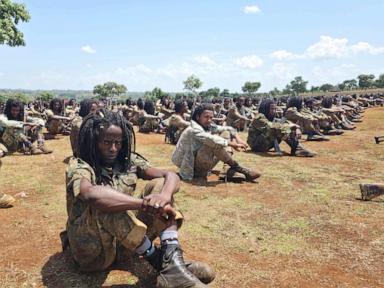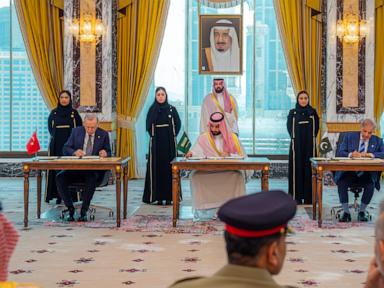
Most defense commentators are reading the Turkish parliamentary committee's approval of a defense pact with Saudi Arabia and Pakistan completely backward. They see an emerging anti-Western military bloc, or some kind of "Islamic NATO" rising out of Ankara, Riyadh, and Islamabad. That's lazy analysis.
If you've spent any time tracking defense procurement across the Middle East and South Asia, you know this isn't about forming a mutual defense treaty where Turkish tanks roll into Kashmir or Pakistani troops guard the Bosphorus. It's about industrial survival, supply chain independence, and cold hard cash. When Turkey's Foreign Affairs Committee clears a trilateral or overlapping defense cooperation agreement involving Saudi Arabia and Pakistan, they aren't signing up for each other's wars. They're locking in a business model that bypasses Western export controls.
Let's be honest about what's actually happening here.
Why the Turkish Parliamentary Committee Approved the Defense Pact Now
Timing tells you everything in foreign policy. For years, Turkey and Saudi Arabia were locked in a bitter regional cold war—clashing over everything from the Muslim Brotherhood to the 2017 Qatar blockade and the murder of Jamal Khashoggi. Pakistan, meanwhile, spent decades trying not to get crushed between Riyadh's checkbook and Ankara's diplomatic support on Kashmir.
That friction stalled serious defense integration. Until the economics changed.
By the mid-2020s, all three countries hit a wall with traditional Western defense suppliers. Turkey got kicked out of the F-35 Joint Strike Fighter program by the United States over its purchase of the Russian S-400 air defense system and faced quiet arms embargoes from European allies during its operations in northern Syria. Saudi Arabia spent years dealing with congressional holds in Washington and export freezes from Germany over its intervention in Yemen. Pakistan has watched the U.S. steadily pivot toward India, leaving Islamabad heavily dependent on Chinese hardware—a reliance Pakistani generals privately worry leaves them with zero strategic breathing room.
So they looked at each other.
- Turkey brings battle-tested drone technology, naval shipbuilding, and armored vehicles—all free from U.S. International Traffic in Arms Regulations (ITAR) restrictions.
- Saudi Arabia brings massive sovereign wealth and an urgent mandate under Vision 2030 to localize 50 percent of its military spending.
- Pakistan brings a massive, combat-experienced military, nuclear-era aerospace engineering through the Pakistan Aeronautical Complex (PAC), and cheap, skilled defense labor.
When the Turkish Grand National Assembly's Foreign Affairs Committee signs off on this framework, it clears the legal path for technology transfers, joint research, personnel exchanges, and co-production agreements. It turns diplomatic handshakes into enforceable defense contracts.
What the Agreement Actually Covers vs. What People Assume
People hear "defense pact" and immediately think of Article 5 of the North Atlantic Treaty—an attack on one is an attack on all. Strip away the sensational headlines, and that's not what's on the table in Ankara.
Defense cooperation agreements passed by Turkey's parliamentary committees follow a well-established legal template. I've read through dozens of similar bilateral frameworks ratified by Ankara over the past decade, from Qatar to Azerbaijan to Malaysia. They are institutional plumbing. Without parliamentary ratification, Turkish defense contractors like Baykar, ASELSAN, Turkish Aerospace Industries (TAI), and Roketsan can't legally share classified blueprints, conduct joint weapons testing, or set up permanent maintenance hubs abroad.
Here is what the ratified framework unlocks on the ground.
First, it establishes formal mechanisms for joint defense manufacturing and technology transfer. Saudi Arabia doesn't just want to buy Turkish drones off the shelf anymore; Riyadh wants factories in the Kingdom building them. Back in 2023, Saudi Arabia signed historic contracts with Baykar to acquire the Bayraktar Akıncı unmanned combat aerial vehicle, explicitly tied to local production and tech transfer. Bringing Pakistan into this ecosystem makes total industrial sense. Pakistan already co-produces the JF-17 Thunder fighter jet with China and has decades of experience maintaining Western and Eastern airframes.
Second, it covers military training, intelligence sharing, and joint exercises. Pakistani pilots have trained Saudi air force personnel for generations. Turkey runs some of the most rigorous drone warfare and electronic warfare training programs in the world. Combining those training pipelines standardizes how all three militaries operate Turkish-made hardware.
Third, it protects classified defense information. You can't co-develop next-generation radar systems or fifth-generation fighter components like Turkey's KAAN aircraft without strict legal guarantees that your partner won't leak the specs to a third party. Parliamentary approval makes those non-disclosure and security protocols binding under international law.
The Industrial Triangle Nobody Talks About
If you want to understand why this partnership has legs, look at Turkey's fifth-generation fighter jet program, the KAAN (formerly TF-X).
Developing a stealth fighter from scratch costs tens of billions of dollars. Turkey has the engineering talent at Turkish Aerospace Industries, and the prototype already flew, but Ankara cannot shoulder the full financial burden alone. They need risk-sharing partners.
Pakistan has been openly eyeing participation in the KAAN program. Pakistani engineers have already worked alongside Turkish counterparts on drone and avionics projects, and Islamabad needs a true fifth-generation stealth platform to counter India's future air force acquisitions. Pakistan has the aerospace engineers and the operational need, even if its economy is perpetually cash-strapped.
Enter Saudi Arabia.
Riyadh has the capital that Islamabad lacks and the appetite for localized defense manufacturing that Ankara wants to feed. When you connect Turkish design and systems integration, Pakistani aerospace engineering and testing infrastructure, and Saudi financing, you suddenly have a viable path to fund and produce high-end military hardware without asking permission from Washington, Berlin, or Paris.
It's a clean division of labor. Nobody is doing anyone a charity favor.
Drones Are Just the Entry Point
Unmanned aerial vehicles get all the media attention because Bayraktar TB2 and Akıncı drones are easy to photograph and have proven track records in Ukraine, Nagorno-Karabakh, and Libya. And yes, drone co-production is the immediate cash cow of this pact.
Look deeper, though. The real money is in naval platforms, air defense, and electronic warfare.
Turkey's MILGEM warship program has already delivered corvettes to Pakistan—the Babur-class vessels built under a landmark deal signed in 2018. Saudi Arabia has been aggressively modernizing its Royal Saudi Naval Forces to secure the Red Sea and the Persian Gulf. With a ratified trilateral framework, Turkish shipyards, Pakistani naval engineers, and Saudi defense funds can streamline everything from combat management systems (like Havelsan's ADVENT) to anti-ship missiles.
Electronic warfare is another huge piece. Turkish firms like ASELSAN have poured massive R&D budgets into jamming systems and radar tech specifically designed to survive contested airspace. For Saudi Arabia—which spent years watching cheap Houthi drones and ballistic missiles slip past multi-billion-dollar Western air defense batteries—having direct access to Turkish counter-UAS and electronic warfare tech isn't a luxury. It's a baseline requirement.
Where This Partnership Could Still Fall Apart
I'm skeptical of anyone claiming this alignment is permanent or friction-free. Middle Eastern and South Asian geopolitics don't work like that. If you're analyzing how durable this pact actually is, you have to look at the fault lines that could stall it overnight.
The India Factor. Saudi Arabia has spent the last decade building a massive economic and energy relationship with New Delhi. India is one of Saudi Arabia's largest oil customers, and millions of Indian expats send billions in remittances home from the Gulf. Riyadh will not let a defense pact with Islamabad and Ankara drag it into backing Pakistan over Kashmir. The moment Pakistan tries to leverage this agreement for diplomatic or military weight against India, Saudi Arabia will hit the brakes.
The China Complication. Pakistan's defense establishment is deeply intertwined with Beijing. From the JF-17 to submarines and ballistic missile tech, China is Islamabad's primary military patron. Turkey, despite all its friction with Washington, is still a NATO member. Sharing sensitive NATO-standard electronic warfare or avionics technology with Pakistan raises immediate red flags in Ankara—and furious phone calls from the Pentagon—over the risk of that tech leaking to Chinese engineers.
Competition for Export Markets. Right now, Turkey designs, Pakistan helps build, and Saudi Arabia buys. What happens in five years when Saudi Arabia's state-owned defense company, SAMI (Saudi Arabian Military Industries), wants to export those jointly produced drones or armored vehicles to third-party buyers in Africa or Southeast Asia? Turkey and Pakistan both rely on defense exports to keep their own factories afloat. Sooner or later, they will be bidding against each other for the same contracts.
Washington's Leverage. Neither Turkey nor Saudi Arabia is walking away from the United States. Riyadh still wants formal U.S. security guarantees and F-35s. Ankara still relies on American engines for some of its platforms—including the General Electric F110 engines powering the early prototypes of the KAAN fighter—and needs congressional approval for F-16 modernization kits. If Washington decides this three-way defense alignment crosses a red line, the U.S. still holds plenty of supply-chain choke points to slow it down.
How to Read the Next Moves in Ankara, Riyadh, and Islamabad
Don't watch the press conferences; watch the corporate registrations and parliamentary gazettes.
Approval by the Turkish parliamentary committee is a major hurdle cleared, because it signals that President Recep Tayyip Erdoğan's ruling coalition has the votes and the political will to push the agreement through the full General Assembly. Once the full parliament ratifies it and it's published in Turkey's Official Gazette, the legal safety catch comes off.
If you're tracking this for geopolitical risk, defense industry investing, or policy analysis, ignore the chatter about a new military alliance and look for three specific indicators over the coming months:
- Joint venture announcements between SAMI, Baykar, and PAC. Look for formal equity stakes or newly registered manufacturing subsidiaries in Riyadh or Kamra, Pakistan, rather than simple buyer-seller procurement contracts.
- Engine and subsystem localization deals. Watch whether Turkish firms like TEI (TUSAŞ Engine Industries) announce joint turbine or propulsion development projects with Pakistani or Saudi backing—that will tell you they are actively trying to design out American and European components.
- Senior military staff talks focused on doctrine, not just sales. When the Turkish Chief of the General Staff, the Saudi Chief of General Staff, and Pakistan's Chief of Army Staff start holding regular trilateral operational planning sessions, the pact has moved beyond arms sales into genuine strategic coordination.
Until those three things happen, treat the Turkey-Saudi Arabia-Pakistan defense pact for what it really is—a pragmatic, hard-nosed industrial alliance built by three countries tired of having their weapons supply chains held hostage by Western politics.