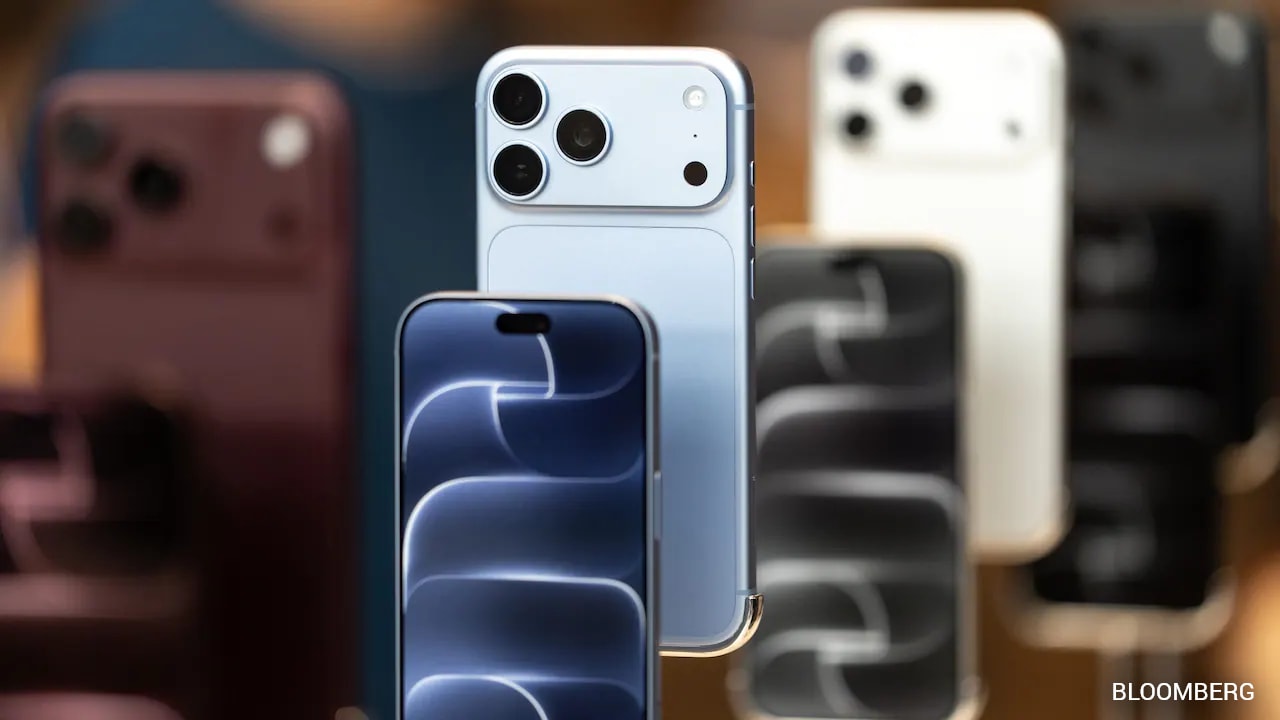
Wall Street loves a simple story, and right now they're selling a fairy tale about Apple in China.
You've seen the headlines. Apple reports record sales growth in China despite rising costs, component inflation, and fierce local competition. On paper, it looks like Tim Cook found a magic wand to make macroeconomic gravity disappear.
He didn't.
If you actually look under the hood of Apple's Greater China performance—and talk to people moving inventory in Shenzhen and Shanghai—the reality is way messier, way more interesting, and way riskier than a celebratory press release suggests. I've spent years tracking hardware margins and supply chain shifts across East Asia, and the pattern here is unmistakable. Apple isn't winning in China because consumers suddenly stopped caring about price. They're winning because they quietly rewrote their playbook on discounting, financing, and services while eating margin compression behind closed doors.
Let's break down what's actually driving these numbers, why rising costs haven't killed the momentum yet, and what investors should actually watch before buying into the hype.
Why Apple Record Sales Growth In China Isn't What It Looks Like
When a company posts record revenue in a mature, hyper-competitive smartphone market, your first instinct should be skepticism. China's smartphone sector isn't expanding rapidly anymore. Data from IDC and Counterpoint Research consistently shows a replacement cycle that has stretched past three years for the average Chinese buyer.
So how does Apple pull record numbers out of a stagnant hat?
First, stop looking at unit volume alone and look at Average Selling Price (ASP) mixed with targeted promotional blitzes. For years, Apple refused to discount its flagship iPhones on major Chinese e-commerce platforms. That era is dead. During major shopping festivals like Singles' Day (11.11) and 618, Apple's official Tmall store and authorized resellers like JD.com have slashed prices by hundreds of yuan—sometimes offering instant rebates exceeding 1,000 RMB on current-generation Pro models.
It works. Chinese consumers are extraordinarily deal-savvy. When an iPhone Pro drops by 12% to 15% during a flash window, fence-sitters jump immediately.
Second, there's the installment financing engine. Apple leaned heavily into 24-month interest-free financing through Alipay, WeChat Pay, and major state-backed banks. When you break a 9,000 RMB phone down into monthly payments that cost less than a few dinners out, the sticker shock vanishes. You aren't selling a luxury lump-sum purchase anymore; you're selling a monthly utility bill.
Third, don't ignore the installed base effect. Hundreds of millions of people in China already own an iPhone. Even if only a fraction upgrades in a given quarter, that baseline churn generates massive revenue—especially when those users are also buying AirPods, Apple Watches, and paying for iCloud storage.
The Hidden Math Behind Rising Costs and Hardware Margins
Here's the part most superficial coverage glosses over. Yes, component costs are climbing. High-bandwidth memory, advanced silicon fabrication on TSMC's leading nodes, and specialized OLED panels aren't getting cheaper. Add in geopolitical friction, compliance overhead, and the sheer expense of maintaining a dual-track supply chain that spans both China and India, and Apple's cost of goods sold (COGS) is under real pressure.
So why haven't margins collapsed?
Because Apple has three shock absorbers that almost no other hardware company on earth possesses:
- Services Revenue as a Margin Shield. Every time a user in China downloads a game from the App Store, subscribes to Tencent Video through Apple's billing system, or buys extra iCloud space, Apple pockets a high-margin cut. Services gross margins routinely sit north of 70%, compared to roughly 36% to 40% for hardware. Even if hardware margins take a two-point hit from memory inflation and Tmall discounts, surging services revenue masks the bruise on the consolidated balance sheet.
- Component Lock-In and Pre-Payments. Apple doesn't buy parts on the spot market like a desperate startup. They deploy billions in advance payments to lock in wafer capacity and display supply years ahead of product launches. While competitors get squeezed immediately when DRAM or NAND flash prices spike, Apple rides out waves on pre-negotiated contracts.
- Storage Tier Upselling. This is the oldest trick in Cupertino's book, and it still prints money. The base storage model gets consumers in the door with an attractive starting price, while the jump to 256GB or 512GB carries a massive retail markup that costs Apple pennies in actual NAND flash chips. In China, where social media apps like WeChat routinely bloat to 50GB or 100GB of cached chat history and video, buying the base model is practically unusable. Consumers are forced up the pricing ladder.
How Huawei and Local Rivals Actually Impact the Numbers
You can't talk about Apple in China without talking about Huawei. When Huawei returned to the 5G flagship arena with its Mate and Pura lineups powered by domestic Kirin chips, pundits predicted an immediate apocalypse for Apple.
That didn't happen, at least not across the board. Instead, the market split cleanly down the middle.
Huawei reclaimed massive share among government employees, state-owned enterprise workers, and fiercely patriotic buyers who view carrying a domestic flagship as a statement of identity. That hurt Apple in specific tier-two and tier-three cities, and it definitely shaved points off Apple's peak market share.
However, a huge demographic of affluent urban professionals in Beijing, Shanghai, Shenzhen, and Hangzhou stayed put. Why? Ecosystem lock-in and app optimization.
If you use a MacBook for work, an iPad for travel, and an Apple Watch for fitness, switching to HarmonyOS means breaking your daily workflow. Beyond convenience, Chinese mobile gamers—a massive, high-spending cohort—still overwhelmingly prefer iOS because major titles from Tencent and miHoYo consistently run with better frame-rate stability and thermal management on Apple silicon.
Vivo, Xiaomi, and Honor are making phenomenal hardware right now. Their camera systems, fast-charging speeds, and foldable designs often beat Apple on pure spec sheets. Yet they still struggle to command the same resale value. In China's massive secondhand electronics market (platforms like Xianyu and Aihuishou), a two-year-old iPhone holds its value far better than an Android flagship. For a pragmatic buyer, that resale value acts as a direct subsidy toward their next phone.
What Most People Get Wrong About Supply Chain Costs in China
There's a persistent myth in Western financial media that Apple is packing its bags and abandoning Chinese manufacturing overnight.
If you've ever walked the factory floors in Zhengzhou or spoken with tooling engineers in Dongguan, you know how absurd that idea is. Yes, Apple has aggressively expanded iPhone assembly in India and AirPods/MacBook production in Vietnam. That diversification is real, and it's smart risk management.
Still, the overwhelming majority of high-precision component manufacturing, glass fabrication, battery assembly, and final flagship engineering happens inside China. Moving final assembly is one thing; replicating a dense network of thousands of specialized tier-two and tier-three suppliers that can spin up 50,000 skilled technicians in two weeks is another thing entirely.
Rising labor costs in coastal China and compliance expenses haven't driven Apple out—they've forced Apple to automate harder. Apple pours billions into proprietary manufacturing equipment and robotics installed directly inside partner facilities like Foxconn and Luxshare. By replacing repetitive manual assembly with precision automation, Apple offsets rising Chinese wages while keeping quality control tight.
The Real Risks Hiding Behind the Record Headlines
I'm bullish on Apple's operational execution, but pretending there aren't serious storm clouds on the horizon would be dishonest. Record sales growth today doesn't guarantee smooth sailing next year. Three specific vulnerabilities stand out:
Artificial Intelligence Rollout Delays
Apple Intelligence is central to Apple's current upgrade pitch globally. In China, rolling out generative AI features requires navigating strict regulatory approvals from the Cyberspace Administration of China (CAC) and partnering with approved local large language model providers rather than relying on OpenAI. Meanwhile, Xiaomi, Honor, and Huawei already have deeply integrated, locally compliant AI assistants running natively on their devices. If Apple lags behind on localized AI features, younger Chinese buyers won't wait around forever.
Discount Dependency
Once you train consumers to expect 1,000 RMB price cuts during shopping festivals, they stop buying at full retail price in October and November. Over time, habitual discounting erodes brand prestige. Apple built its empire on being the one tech brand that never needed to beg with coupons. Chasing volume through e-commerce subsidies is a dangerous habit to break.
Currency Headwinds
A strong US dollar against the Chinese yuan quietly eats away at reported revenue. Even when Apple sells more units and generates record RMB revenue locally, translating those earnings back into US dollars on quarterly financial statements creates a persistent drag. Sometimes "record growth" looks wildly different depending on whether you're measuring in constant currency or reported GAAP dollars.
How to Read Apple's Next China Report Like an Insider
If you're an investor, analyst, or tech operator trying to separate real momentum from corporate spin the next time Apple drops quarterly numbers, ignore the headline revenue figure at first. Look at these four metrics instead:
- Constant Currency Growth vs. Reported Revenue. Always check the footnotes for constant currency performance in Greater China. This strips out exchange rate noise and tells you whether local demand actually grew or shrank.
- Product Gross Margin Trajectory. Watch whether product margins compress sequentially during quarters with heavy Chinese shopping festivals (Q1 and Q3 fiscal quarters). If margins dip while China revenue spikes, Apple bought that growth with discounts.
- Greater China Share of Total Revenue. Historically, Greater China accounts for roughly 17% to 20% of Apple's global top line. If that percentage climbs while overall hardware units stay flat, ASP is doing the heavy lifting.
- Active Installed Base Commentary. Management rarely gives exact country-by-country unit breakdowns anymore, so pay close attention to whether executives specifically call out "all-time highs in active devices" in mainland China. As long as the installed base grows, the services flywheel keeps spinning.
Apple's performance in China isn't a miracle, and it isn't proof that costs don't matter. It's the result of ruthless supply chain leverage, aggressive e-commerce pricing tactics, and a services ecosystem that subsidizes hardware friction. Keep your eye on the margins, watch how fast they solve the local AI bottleneck, and never take a headline number at face value.