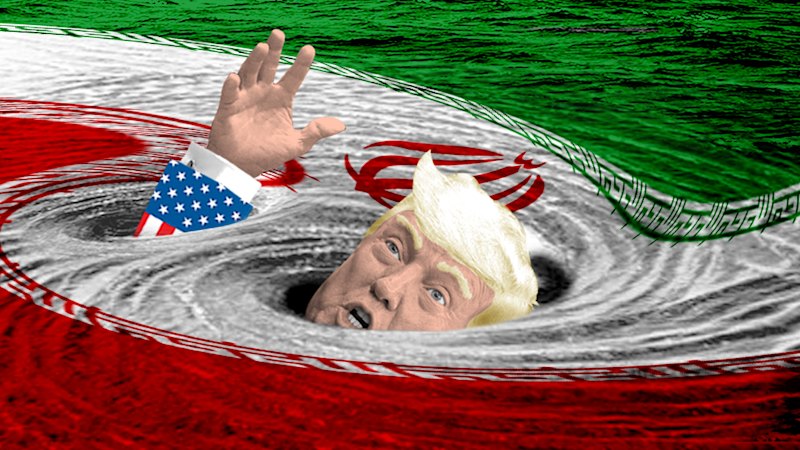
Foreign policy rarely collapses overnight. Instead, it fractures through a series of erratic miscalculations, unheeded warnings, and empty threats. When Donald Trump greenlit military action against Iran, the White House promised a swift realignment of regional dynamics and a crushing blow to hostile proxies. Months later, the reality on the ground tells a radically different story. We aren't just witnessing a localized diplomatic squabble. We are watching the messy, unceremonious unraveling of American hegemony across the Persian Gulf, leaving regional capitals to scramble for their own survival strategies in a post-American reality.
If you want to understand why Washington's grip on the Middle East slipped so fast, look at the Strait of Hormuz. For decades, the foundational promise of U.S. power projection was simple: the world's most critical maritime chokepoints would remain open under an American security umbrella. When that guarantee evaporated because of Tehran's leverage and regional retaliation, the illusion shattered. Lawmakers like Thomas Massie have openly labeled the campaign a historic blunder, pointing out the stark disconnect between grand military ambitions and actual strategic outcomes.
The Cost of Erratic Leadership
The central weakness of the current strategy isn't just military—it's behavioral. Foreign policy demands consistency, predictability, and long-term planning. Right now, the Oval Office runs on whiplash. One day brings fiery rhetoric about total annihilation, and the next brings an abrupt pivot to backroom talks mediated by third parties.
Local allies notice this chaos. Gulf states spent billions tying their security architecture, economic investments, and diplomatic futures to Washington. Watching an erratic administration bounce between extreme confrontation and sudden deals leaves those partners deeply exposed. When you treat international alliances like a reality TV script, your partners stop trusting the script. They start hedging their bets with rival global powers like China, which has quietly spent years trading punches for economic influence without firing a shot.
What Regional Realignment Actually Looks Like
Let's cut through the official spin. The traditional ring of deterrence around Israel and American assets has faced unprecedented stress tests. While Washington deals with domestic pushback, soaring approval lows, and congressional resolutions trying to rein in executive overreach, Middle Eastern capitals are rewriting their own playbooks.
Saudi Arabia and the United Arab Emirates are aggressively diversifying their energy corridors, relying on pipelines that bypass volatile maritime routes entirely. They are keeping communication channels open with actors they used to view strictly as existential threats. Why? Because they know the U.S. Navy cannot be everywhere at once, nor can an unpredictable American president guarantee a stable tomorrow.
The era of unconditional reliance on Washington is dead. Regional players are taking their security into their own hands, forging independent diplomatic paths, and accepting that the superpower across the Atlantic is increasingly distracted by its own internal political theater. The post-American Middle East isn't coming tomorrow. It arrived the moment the first empty threat collided with hard geopolitical gravity.
U.S. President Donald Trump Humiliated In Turkey Amid Iran-Israel-U.S. War
This video provides additional context on recent diplomatic setbacks involving the Trump administration and regional players like Turkey amid ongoing Middle East conflicts.
http://googleusercontent.com/youtube_content/1