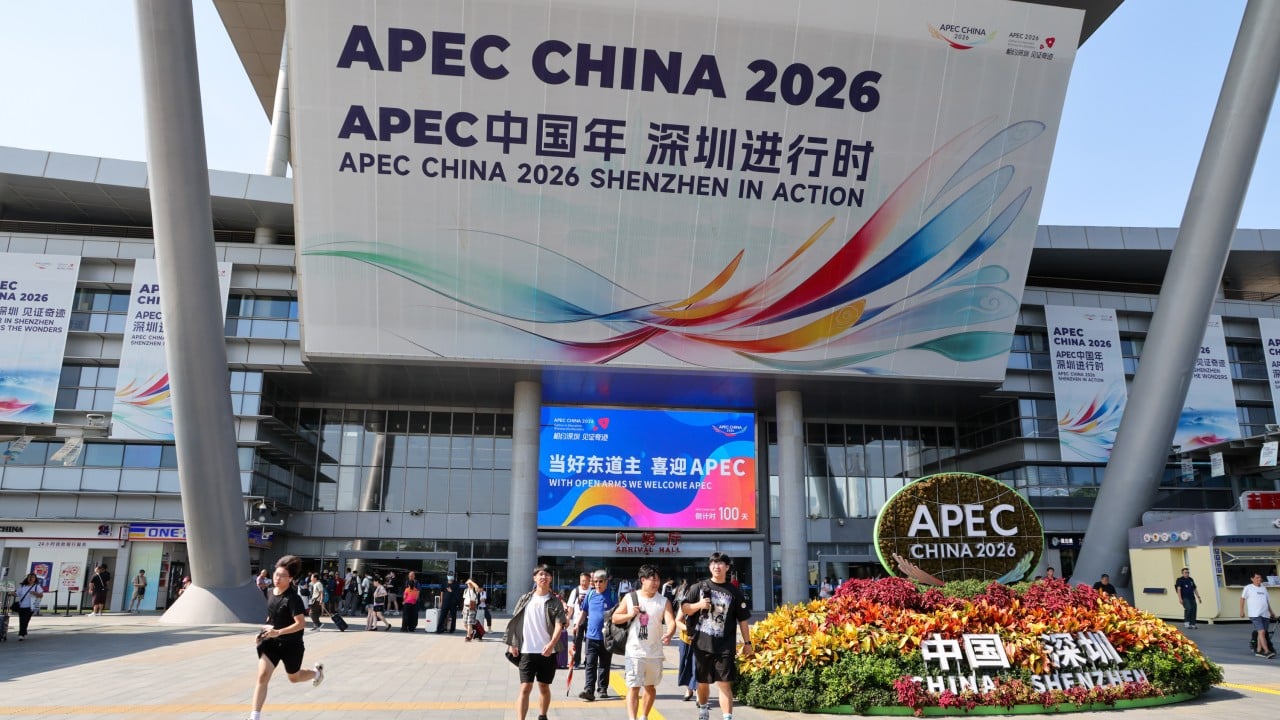
When Beijing extended the registration deadline for the Shenzhen APEC CEO summit yet again, corporate boardrooms in New York and Silicon Valley barely blinked. You would think a high-stakes gathering hosted in China’s tech capital would draw a stampede of global capitalists eager to lock in face time. Instead, many prominent US chief executives found reasons to be anywhere else.
The yawning gap between Beijing's eager invitations and the lukewarm response from American corporate leadership isn't a random scheduling quirk. It exposes a fundamental shift in how multinational companies calculate risk. Pushing back deadlines doesn't create enthusiasm; it highlights a deeper hesitation that extra time simply cannot fix. Also making waves in related news: Kongsberg Poland Plant by the Numbers What Most Analysts Miss.
The White House Dinner Contrast
Timing matters in geopolitics. Weeks before the summit logistics slid into disarray, Washington hosted Chinese President Xi Jinping. High-profile tech leaders like Nvidia’s Jensen Huang and Tesla’s Elon Musk shared table space at executive dinners on US soil.
Yet, when the spotlight shifted across the Pacific to Shenzhen, those same leaders showed little urgency to return the gesture. Beijing’s heavy emphasis on courting executives who had already attended those high-level US events misread the room. Corporate heads don't operate on reciprocal social etiquette. They operate on return on investment and regulatory clarity. If a multilateral forum offers vague agendas and zero policy breakthroughs, a personal invitation loses its pull. More details on this are covered by Bloomberg.
The Regulatory Squeeze on Tech and Capital
Nobody wants to fly halfway across the world to pose for photos while their legal counsel back home scrambles to digest new export controls. Cross-border tech restrictions and tightening national security guardrails make cozy corporate diplomacy difficult.
When structural decoupling and supply chain fragmentation dominate daily operations, a summit speech about open markets rings hollow. Executives are busy redesigning supply chains to withstand geopolitical shocks. Sitting through ceremonial panels in Shenzhen doesn't solve the pressing headache of compliance audits or overseas data security laws.
What Multinational Corporations Actually Track
Beijing treats massive international summits as premier stages to project economic confidence and signal that the market remains open for business. Corporations look past the grand theater. They focus on three gritty metrics:
- Policy Predictability: Will rules change overnight based on domestic political shifts?
- Exit Flexibility: Can capital move freely if local market dynamics sour?
- Competitive Equality: Do foreign firms face structural disadvantages against domestic champions?
Until those answers tilt heavily toward stability, deadline extensions will only act as a megaphone for hesitation.
Moving Past Photo-Op Diplomacy
Corporate attendance at massive international forums has evolved into a cold, calculated transaction. When leaders from companies like Visa, Mastercard, and Boeing touch down in Shenzhen, they come because specific operational footholds require maintenance, not because a deadline was pushed back.
The era of showing up just to show good faith is dead. Modern business strategy dictates that if a summit lacks hard policy deliverables and tangible commercial protections, staying home is simply the more efficient use of a CEO's time.
China slams new US chip curbs ahead of APEC summit in Shenzhen
This video provides context on the technology restrictions and trade frictions that overshadowed the APEC summit in Shenzhen.