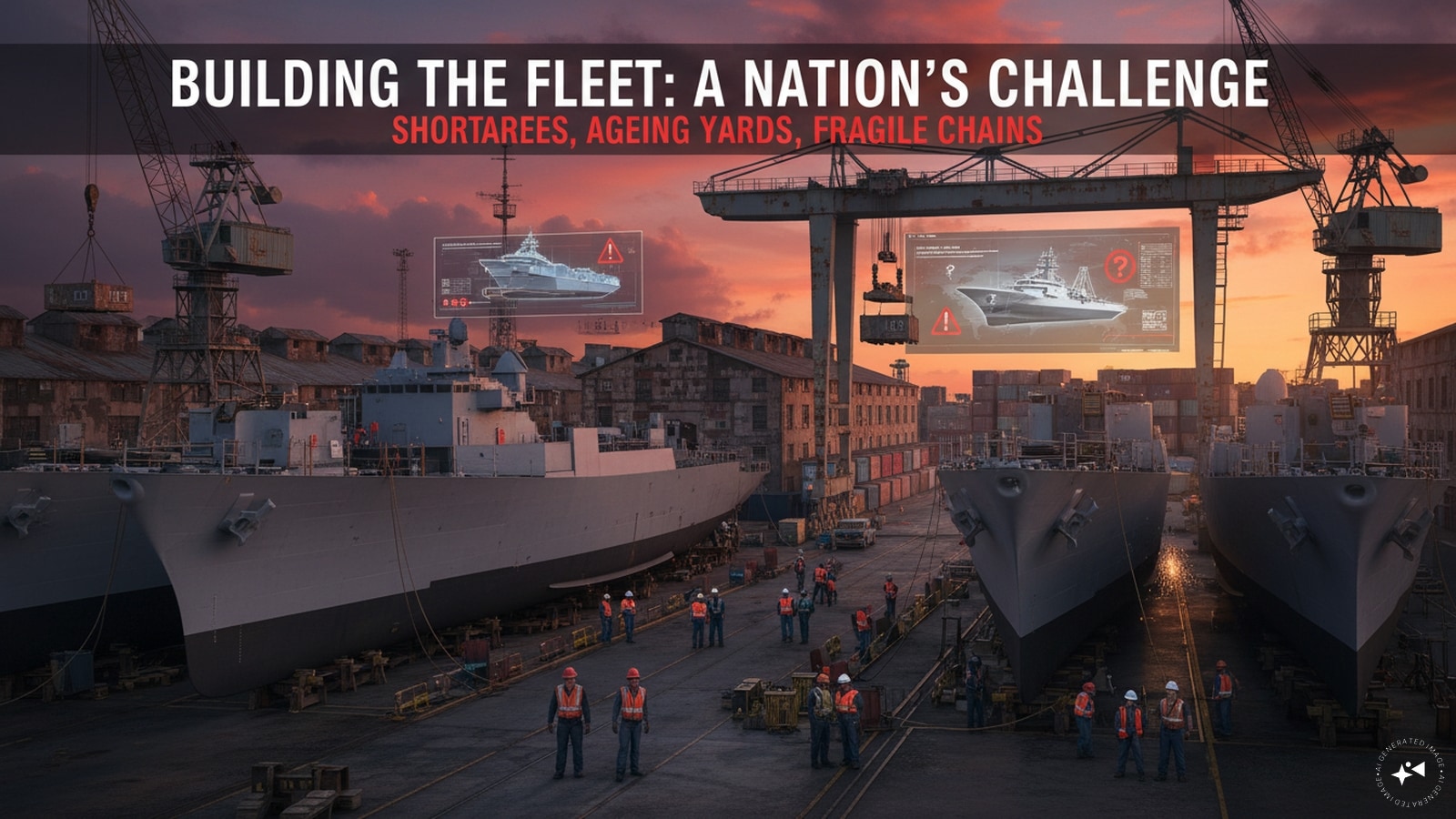
The United States Navy wants a bigger fleet. Congress agrees. Taxpayers fund the budgets. Yet ships barely materialize. Dry docks sit half-empty or outdated. Skilled welders retire without replacements standing behind them.
You hear politicians talk about China's massive shipyards. You hear about global supply chains stretching too thin. But nobody talks about the structural rot eating away at domestic maritime capacity from the inside out.
America can't build the ships it badly needs because decades of consolidation, procurement mistakes, and hollowed-out industrial infrastructure turned shipbuilding into an expensive bottleneck.
Let's look at the actual mechanics behind this crisis.
The Problem With Consolidation
Back in the late twentieth century, defense procurement underwent a massive consolidation wave. Wall Street and Washington pushed defense contractors to merge. They wanted efficiency. They wanted lower overhead.
That logic worked fine for software. It failed completely for heavy manufacturing.
Today, the US Navy relies on a tiny handful of private shipyards to build its entire surface and subsurface fleet. If General Dynamics Electric Boat or Huntington Ingalls Industries hits a snag, the whole national security apparatus stalls. There is no backup yard down the street.
When you eliminate competition, you eliminate resilience. Shipyards don't need to innovate or move fast when they hold a permanent monopoly on nuclear submarine construction. They coast on cost-plus contracts.
Costs spiral. Timelines stretch out by years. Everyone acts surprised when a destroyer delivery slips past its window. It's basic economics. Monopolies breed stagnation.
Where Did All the Welders Go?
You can throw billions of dollars at naval shipbuilding contracts. The money doesn't magically build hulls. Steel does. People do.
The American workforce aged out of heavy industry. For thirty years, high schools pushed four-year degrees while vocational shops got defunded. We told generations of kids that working with their hands was a backup plan.
Now, shipyards face severe labor shortages. Building an Arleigh Burke-class destroyer or a Virginia-class submarine requires hyper-specialized craftsmanship. You need certified nuclear welders, pipefitters, and marine electricians. You can't train those skills in a weekend.
When a shipyard needs five thousand workers, it poaches them from local contractors or brings in transient labor. Training pipelines take years to produce fully qualified talent.
The private sector failed to maintain attractive career paths. Wages stagnated relative to tech or other sectors for a long time. Working conditions in industrial yards are tough, loud, and demanding. Without serious investment in worker pipelines, shipyards will keep missing delivery targets.
The Procurement Trap
Washington loves to micromanage. Every new ship class becomes a moving target of changing requirements.
The Navy designs a ship. Halfway through construction, leadership decides they need a new radar system. Or a different propulsion module. They issue a change order.
In commercial shipping, you freeze the design. You build ten identical hulls because consistency drives down costs. In military procurement, every ship is basically a custom prototype.
When you alter blueprints mid-construction, schedules shatter. Workers have to rip out wiring or cut open bulkheads to fit new gear. Costs skyrocket. The Littoral Combat Ship program stands out as a prime example of this exact design chaos.
Congress also micromanages budgets year by year. Long-term manufacturing requires predictable, multi-decade funding commitments. If a shipyard doesn't know whether Congress will fund the next hull next year, they won't invest in modern robotic welding equipment or facility upgrades.
The Commercial Blindspot
Look globally. South Korea, China, and Japan dominate commercial shipbuilding. They build massive container ships, LNG tankers, and bulk carriers by the hundreds.
China alone accounts for over half of global shipbuilding tonnage.
Why does that matter for the US Navy? Because shipyard capacity is an ecosystem. Commercial volume keeps shipyards humming. It drives down steel prices, keeps supply chains active, and maintains a massive base of trained engineers and suppliers.
The Jones Act requires vessels moving between US ports to be American-built. But high domestic labor and material costs priced US commercial yards out of the international market entirely.
Without a thriving commercial sector, American shipyards rely almost entirely on government contracts. When the government hiccups, the yard hurts.
What Actually Needs to Happen
Fixing this mess requires more than hand-wringing on cable news. It demands hard policy shifts.
First, the Navy must embrace block buys and stable multi-year contracts. Give shipyards the financial certainty to invest in modern facilities.
Second, the federal government needs to subsidize vocational training directly at scale. Partner with community colleges near major naval hubs like Norfolk, San Diego, and Pascagoula to feed talent straight into the yards.
Third, loosen the chokehold of hyper-customization. Build modular, standardized combatants. Let reliability and speed of construction take priority over cramming every experimental gadget onto a single hull.
Finally, open the door to allied capacity where legally possible, while aggressively modernizing domestic infrastructure.
If Washington doesn't overhaul how it buys and builds ships, the fleet will keep shrinking while global competitors pull further ahead. The time for empty advisory panels has passed. The steel needs to start moving.


