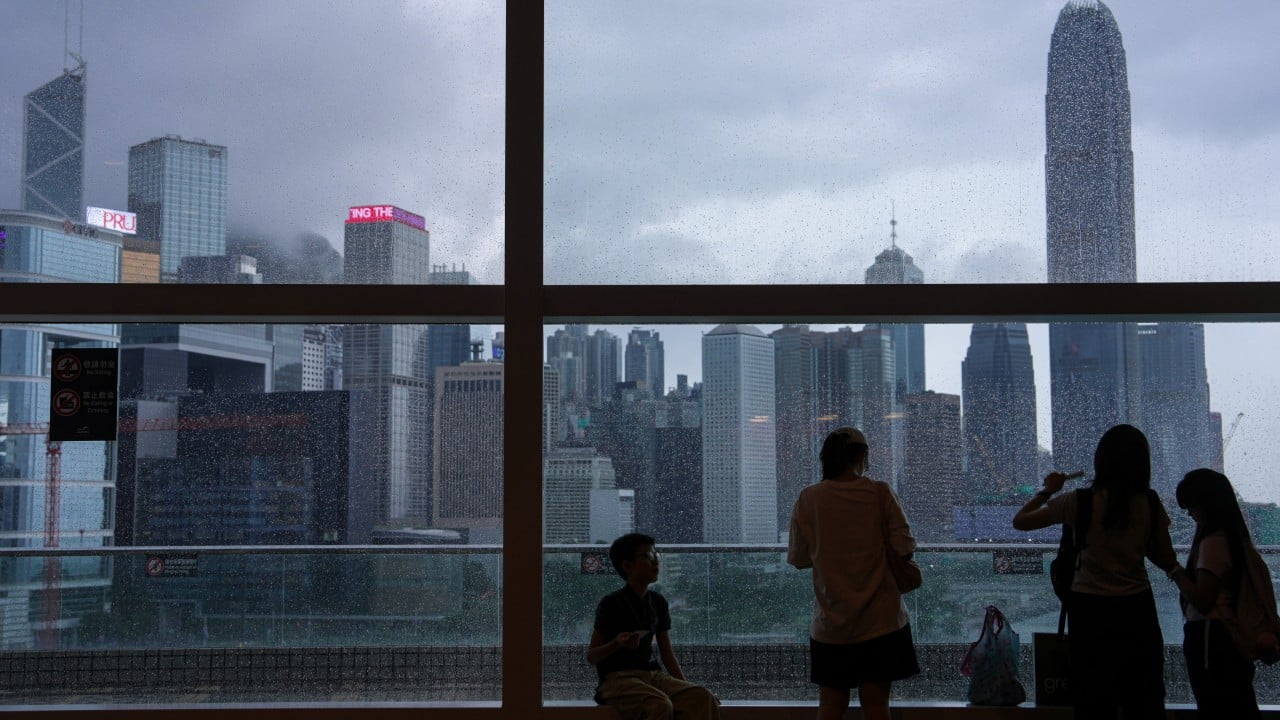
Hong Kong just went through another classic bureaucratic ritual. The skies opened up, classes were disrupted, parents scrambled, and the Hong Kong Observatory dutifully hoisted and then canceled an Amber Rainstorm warning. The media covered it like they always do—reporting the timeline of the downpour, listing the school closures, and treating the warning system as an objective, infallible gauge of public safety.
They are missing the entire point.
The traditional media coverage treats these warning systems as a binary choice between safety and disruption. The lazy consensus is that when the Observatory issues a warning, the system is working, and when they cancel it, the danger has passed. This is a fundamental misunderstanding of how infrastructure, risk management, and human behavior actually intersect in a modern metropolis.
The Amber Rainstorm warning didn't protect Hong Kong. It exposed a rigid, outdated risk-mitigation framework that prioritizes bureaucratic cover over actual urban resilience.
The Flaw of Arbitrary Thresholds
Let us look at what an Amber Rainstorm warning actually means. By definition, it indicates that heavy rain has fallen or is expected to fall generally over Hong Kong, exceeding 30 millimeters in an hour, and is likely to continue.
Think about that metric for a second.
A flat rate of 30 millimeters of rain in an hour means completely different things depending on where it hits. If that volume lands on the steep slopes of Hong Kong Island, the hydrostatic pressure and runoff dynamics are wildly different than if the same volume hits the flat, low-lying plains of the Northern New Territories. Yet, the Observatory issues a blanket warning for the entire territory based on generalized regional data.
[Rainfall Threshold: 30mm/hr]
       │
       ├─► Steep Slopes (High Risk: Flash Flooding & Landslips)
       │
       └─► Low-lying Plains (Moderate Risk: Localized Pooling)
By relying on macro-level thresholds to trigger micro-level societal shutdowns, the system creates a false sense of security in high-risk zones while causing unnecessary economic friction in low-risk zones. I have spent years analyzing urban logistics and risk frameworks, and the pattern is always the same: when you use blunt instruments to measure precise dangers, you get chaotic results.
The High Cost of the Precautionary Theater
The media loves to focus on the immediate inconvenience of disrupted classes. What they fail to quantify is the compounding economic damage of these sudden, reactive cancellations.
When a warning is hoisted and abruptly canceled, it triggers a massive, synchronized surge in human transit. Thousands of parents, students, and workers hit the transport network simultaneously. You are not actually reducing risk; you are simply shifting the risk from the weather event to the infrastructure itself. The congestion on MTR platforms and bus interchanges during a sudden warning change creates a high-density environment that is arguably more hazardous than a standard rainy commute.
Furthermore, the current system breeds a dangerous psychological phenomenon known as warning fatigue. When citizens are repeatedly told to alter their daily lives for an Amber warning that translates to little more than heavy puddles in their specific neighborhood, they stop respecting the system entirely.
The next time a truly catastrophic Red or Black rainstorm imminent threat develops, the public response is sluggish. They assume the bureaucracy is just crying wolf again.
People Also Ask: The Reality Behind the Protocol
Why can't the Observatory predict these downpours earlier?
Because micro-scale convective weather systems are notoriously volatile. The atmosphere above Hong Kong is a chaotic thermodynamic soup, especially during the monsoon season. Expecting meteorologists to predict the exact minute and location of a 30mm-per-hour downpour with absolute certainty is a fool's errand. The error lies not in the forecasting capabilities, but in the policy that links rigid societal shutdowns to these highly volatile forecasts.
Should schools stay open during every Amber rainstorm?
Yes. The physical structures of Hong Kong’s schools are built to some of the most rigorous engineering standards in the world. They are fundamentally safer, drier, and more secure than the transit routes required to send children home in the middle of a sudden downpour. Canceling classes mid-day forces children out into the elements and onto the roads, achieving the exact opposite of public safety.
A Resilient Path Forward
We need to stop managing cities through the lens of total risk avoidance and start managing them through the lens of dynamic adaptation.
First, Hong Kong must transition from a territory-wide color-coded warning system to hyper-localized, grid-based alerts. The technology exists to send targeted push notifications to citizens based on real-time radar data within a two-kilometer radius. If the drainage systems in Mong Kok are reaching capacity, warn Mong Kok. Do not shut down schools in Chai Wan just to maintain bureaucratic symmetry.
Second, the liability framework must change. The current system exists because government departments use the color-coded alerts as a legal shield. If an accident happens while a warning is active, the liability shifts away from the department. We must decoupling legal liability from meteorological metrics, allowing local administrators and school principals the autonomy to make decisions based on the immediate conditions outside their front door.
The downside to this contrarian approach is obvious: it requires individuals to take personal responsibility and exercise judgment, rather than blindly following a government color code. It requires decentralized decision-making, which can look messy on paper. But it is far more effective than a centralized system that fails the moment a cloud shifts five miles to the east.
Stop waiting for the color of the warning to change before you decide how to navigate the city. The bureaucracy is looking out for its own metrics; you need to look at the street.