Two billion.
That is the rough price tag of bringing a single new medicine from a petri dish to a pharmacy shelf, a staggering sum burned through over ten to fifteen years of false starts, dead ends, and heartbreak. For every drug that finally receives regulatory approval, nine others die quietly in clinical trials, taking years of human effort and hundreds of millions of dollars down with them. If you have ever sat in a sterile hospital waiting room, watching the second hand tick across a white wall while a doctor explains that the current standard of care has run out of options, you know that those numbers are not accounting metrics. They are measured in birthdays missed. They are measured in time stolen.
For decades, we accepted this glacial pace as the unchangeable cost of biology. Biology is messy. Proteins fold into origami shapes so complex that mapping a single one used to consume an entire doctoral thesis. Finding a molecule that fits into a specific protein pocket—like cutting a microscopic key for an invisible lock inside a moving hurricane—was treated as an art of educated guessing.
Then, a quiet migration began. The sharpest mathematical minds on earth, engineers who had spent their careers optimizing how long your thumb hovers over a smartphone screen, started walking out of consumer tech giants. They traded recommendation engines for molecular geometry.
Among them was a scientist who helped build the algorithmic backbone of ByteDance, the Beijing-based parent company of TikTok. While the public was debating short-form video feeds and attention spans, he and a cohort of researchers were looking at the same foundational math—deep learning, transformers, and diffusion models—and asking a radically different question. What if the architecture built to predict human behavior could predict how atoms bind together in the dark?
His departure from the world of consumer feeds to lead a specialized artificial intelligence drug-discovery venture did not make the front pages of tabloid newspapers. Yet inside the fiercely competitive corridors of computational biology, his claim sent a tremor through the established order. His team announced a new molecular modeling system that, according to their benchmark testing, outperformed the reigning heavyweight champions of global tech—including the structural prediction giants built by Google DeepMind and major pharmaceutical incumbents.
To understand why a former social media architect challenging Silicon Valley’s biology labs matters to anyone who will ever need a prescription, we have to look at what actually happens when software tries to cure a disease.
The Locksmiths in the Dark
Consider a hypothetical scenario to make the invisible scale of this problem tangible.
Imagine you are standing in front of a warehouse filled with ten octillion keys—that is a one followed by twenty-eight zeros, a number larger than all the grains of sand on every beach on Earth. Somewhere inside that warehouse is the single key that unlocks a door to stop a rare, aggressive cancer from dividing. You cannot see the keyhole clearly because the lock itself is made of flexible, vibrating chains of amino acids that shift shape the moment anything touches them.
Historically, pharmaceutical chemists operated like locksmiths working blindfolded. They would grab a handful of keys, try them one by one in wet labs, fail ninety-nine percent of the time, and slowly adjust the metal teeth based on intuition and luck. It was heroic work, and it gave us antibiotics, insulin, and modern vaccines. It also hit a wall. The low-hanging fruit of medicine has largely been picked. What remains—neurodegenerative disorders like Alzheimer’s, stubborn autoimmune conditions, antibiotic-resistant superbugs, and complex cancers—involves locks so intricate that human intuition simply cannot see the geometry.
In 2020, Google DeepMind cracked the first half of this puzzle wide open with AlphaFold, an artificial intelligence system capable of predicting the three-dimensional structure of nearly every protein known to science. Overnight, humanity went from knowing the exact shape of roughly a hundred thousand proteins to having structural maps for over two hundred million. It was a historic triumph, eventually earning its creators a Nobel Prize in Chemistry.
But knowing the shape of a lock is only half the battle. You still have to design the key.
When a drug molecule enters the human body, it does not simply snap into a static protein like two Lego bricks clicking together. Both the protein and the drug wiggle, flex, and repel each other through subtle electrostatic forces. Predicting how a small molecule will dock into a moving protein—and whether it will stick tightly enough to stop a disease without accidentally sticking to healthy cells and causing toxic side effects—is an exponentially harder mathematical problem.
This is the exact arena where the former ByteDance scientist placed his bet.
From Attention Spans to Atomic Forces
It feels almost absurd at first glance that an engineer from a video-sharing empire would step onto the turf of Nobel laureates and legacy pharmaceutical titans. What could an algorithm designed to serve dance videos and comedy sketches possibly teach us about biochemistry?
Everything, as it turns out, if you look beneath the surface of the code.
At the core of modern artificial intelligence is a deceptively simple concept: finding hidden patterns in massive, noisy streams of sequence data. A video feed is a sequence of frames, audio waves, and user interactions over time. A human language is a sequence of words governed by invisible rules of grammar and context. A protein is a sequence of amino acids governed by the invisible rules of physics and chemistry.
At ByteDance, engineers spent years perfecting multi-modal models that could process staggering volumes of data in milliseconds, learning subtle correlations that human programmers could never explicitly code. When that technical lineage is redirected toward molecular science, the model does not read captions or watch pixels; it reads atomic coordinates, bond angles, and quantum-level interactions.
The system championed by the former ByteDance researcher builds on the same generative diffusion principles used to create digital images from noise, except instead of assembling pixels into a photograph, it assembles atoms into stable, three-dimensional drug candidates. More importantly, it evaluates protein-ligand binding—the exact physical handshake between a medicine and its biological target—with a precision that reportedly beats existing open-source and proprietary benchmarks, including newer iterations of DeepMind's own tools.
Let us be candid about what "beating a benchmark" actually means in science, because healthy skepticism is the bedrock of real progress. In computational biology, models are tested against standardized datasets of known molecular structures—essentially graded exams where the answers are already locked in a vault, and the AI has to guess them without peeking. Scoring higher on these digital exams means the software is better at predicting how atoms arrange themselves in space than its rivals.
It does not mean a pill is sitting on a shelf tomorrow morning. Anyone who tells you an algorithm alone cures a patient is selling snake oil.
The Valley of Death
I remember speaking years ago with a medicinal chemist who had spent eleven years of his life working on a single compound for liver fibrosis. Eleven years. He knew the molecular weight of that compound the way a parent knows their child’s birthdate. He had sacrificed weekends, missed family vacations, and argued with executives to keep the funding alive through two corporate mergers.
In Phase II clinical trials, the drug failed. Not because it didn't hit its target—it bound to the protein beautifully—but because a subtle breakdown product in the human liver triggered severe inflammation in twelve percent of patients. Eleven years of human devotion evaporated in a single Tuesday morning data readout. He told me he sat in his car in the company parking lot for two hours before he could bring himself to drive home and tell his wife.
That is the reality of drug discovery. Software does not feel that grief, which is precisely why we need software to shoulder the failures before a human being ever swallows a capsule.
When a former ByteDance scientist claims his model tops global leaders in molecular prediction, the real victory is not corporate bragging rights between Beijing, London, and Silicon Valley. The real victory is shrinking the size of that warehouse of keys.
If an AI model can accurately simulate how a candidate molecule behaves inside a dynamic protein pocket—not just in isolation, but accounting for water molecules, shifting side chains, and off-target binding—researchers can throw away ten thousand bad ideas on a server cluster in forty-eight hours instead of spending fifty million dollars discovering those failures in animal and human trials.
Consider what happens next when the cost of failure drops by orders of magnitude:
- Neglected diseases suddenly become viable. Pharmaceutical companies rarely chase cures for rare pediatric disorders or tropical diseases because the financial return cannot justify a two-billion-dollar gamble. Cut the discovery timeline from five years to five months, and the math changes overnight.
- Undruggable targets open up. Roughly eighty-five percent of the proteins linked to human disease have historically been labeled "undruggable" because their surfaces are too smooth or too chaotic for traditional molecules to grip. Generative physics models can design entirely novel molecular shapes that human chemists would never sketch on a whiteboard.
- Resistance becomes a moving target we can actually hit. Bacteria and viruses mutate constantly, rendering our best drugs obsolete. Fast, accurate molecular modeling allows scientists to design counter-molecules in weeks rather than years.
The Quiet Arms Race Nobody Watches
There is a deeper geopolitical and cultural undercurrent running beneath this breakthrough, one that rarely gets discussed outside industry conferences.
For the past decade, the narrative around global tech talent was overwhelmingly cynical. Critics rightly lamented that a generation of brilliant mathematicians, physicists, and computer scientists had been lured into optimizing ad clicks, high-frequency trading algorithms, and infinite-scroll dopamine loops. The best minds of our generation were making sure you watched one more thirty-second clip before going to sleep.
That era is cracking.
Across research hubs from Shanghai and Beijing to Boston and San Francisco, a quiet exodus is underway. Engineers who mastered massive-scale distributed computing and transformer architectures inside consumer internet giants are realizing that biology is the ultimate frontier of information theory. Life itself is code—four chemical letters in DNA, twenty amino acids in proteins—compiled over four billion years of evolution.
The former ByteDance scientist stepping forward with a state-of-the-art drug-discovery model represents a broader inflection point. It signals that the barrier to entry for world-leading scientific AI is no longer held exclusively by two or three Western tech monopolies. The architectural breakthroughs of the last five years have democratized the foundational math. Now, the race comes down to who can integrate physics, chemistry, and machine learning most cleanly—and who has the grit to take those digital predictions into messy, unforgiving wet labs.
Because here is the catch that keeps computational biologists awake at night: biology always has the final vote.
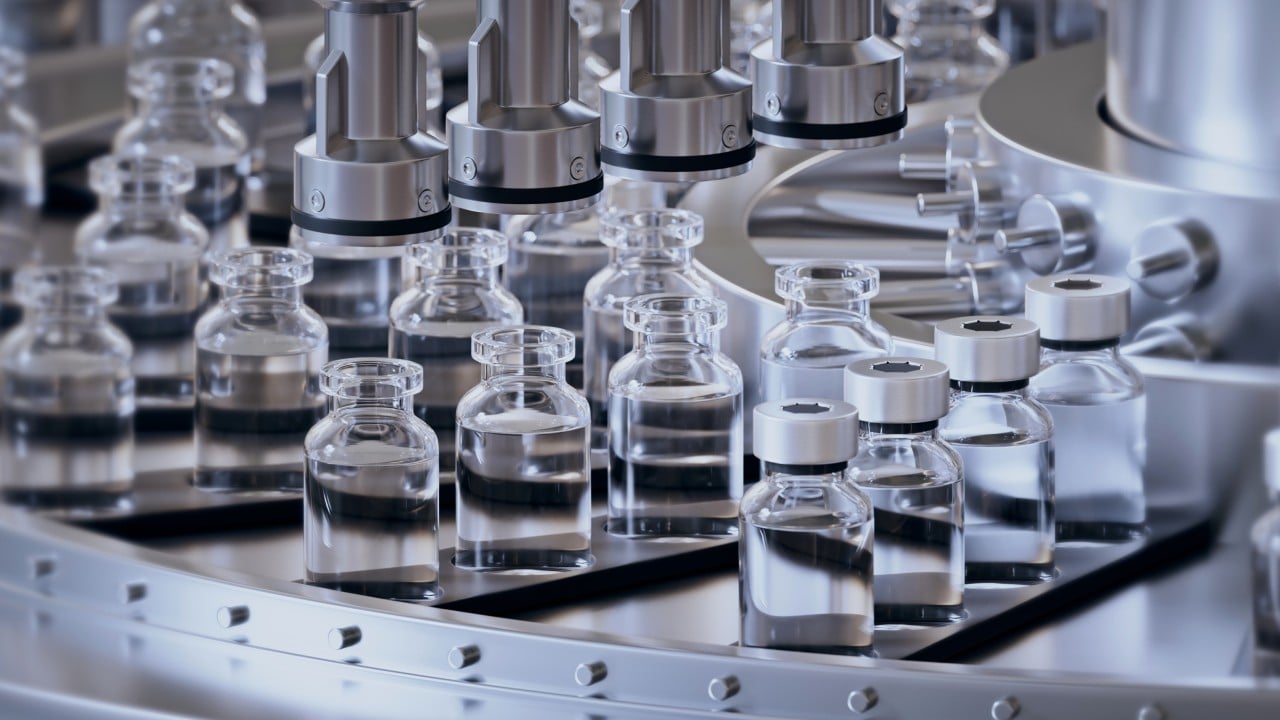
A computer simulation is a map, not the territory. You can model atomic forces down to the angstrom, achieve record-breaking accuracy on protein-ligand benchmarks, and generate thousands of sleek, promising molecules on a screen. Yet the moment you synthesize that white powder in a glass vial and introduce it to living cells, nature loves to introduce variables no training dataset ever captured. A molecule might fail to dissolve in the stomach. It might get chewed up by digestive enzymes before reaching the bloodstream. It might struggle to cross the blood-brain barrier.
Even the most optimistic AI pioneers admit this vulnerability openly. The hype cycle around "AI-designed drugs" has already produced a few high-profile stumbles, where early candidates generated by algorithms entered human trials to breathless headlines only to stall out just like traditional drugs. True scientific trustworthiness requires holding two seemingly opposite truths in your head at the same time: the algorithms are advancing at a breathtaking, exponential pace, and human biology remains stubbornly, humblingly complex.
What Changes When the Guessing Stops
Still, step back and look at the trajectory.
Twenty years ago, sequencing a single human genome cost roughly a hundred million dollars and required an international consortium of laboratories. Today, it costs a few hundred dollars and happens overnight. Ten years ago, predicting how a single unknown protein folded into three dimensions was a grand challenge that stumped supercomputers. Today, a researcher can pull up accurate structural predictions on a laptop before finishing their morning coffee.
Now, we are watching the next domino fall. The ability to predict not just static shapes, but the intricate, dynamic choreography of how medicines bind to targets—driven by talent migrating from the world’s largest consumer algorithms into molecular science—is turning drug discovery from a game of blind chance into an engineering discipline.
You do not need to understand differential geometry or diffusion transformers to feel the weight of what happens if these models keep scaling. You only need to think about the person sitting in that white-walled hospital room, listening to the clock tick, waiting for science to catch up to their diagnosis.
For over a century, medicine moved at the speed of human trial and error. Somewhere inside a server rack right now, an algorithm originally descended from code built to hold human attention is quietly testing millions of molecular keys in the dark, searching for the one that finally turns the lock.