Corporate mergers look great on spreadsheets, but they get incredibly messy when they collide with human culture.
That's the reality hitting Alaska Air Group right now. Following its $1.9 billion acquisition of Hawaiian Airlines, a new dress code policy has sparked intense internal debate. The airline just told roughly 250 Seattle-based flight attendants originally from the Hawaiian Airlines subsidiary that they can no longer wear their signature flower leis, floral hairpieces, or Sig Zane-designed aloha shirts on certain routes.
Instead, when working long-haul international flights marketed under the Alaska Airlines brand out of Seattle-Tacoma International Airport (SEA), these crews must swap out their vibrant island attire for neutral tops accented by Alaska's Aurora Borealis-inspired design.
For flight attendants who have tied a flower in their hair as part of their professional identity for decades, it feels like a punch in the gut. But if you strip away the emotion and look at the operational reality, Alaska’s move isn't an attack on Hawaiian culture. It's a textbook lesson in brand discipline.
The Identity Crisis of a Dual-Brand Merger
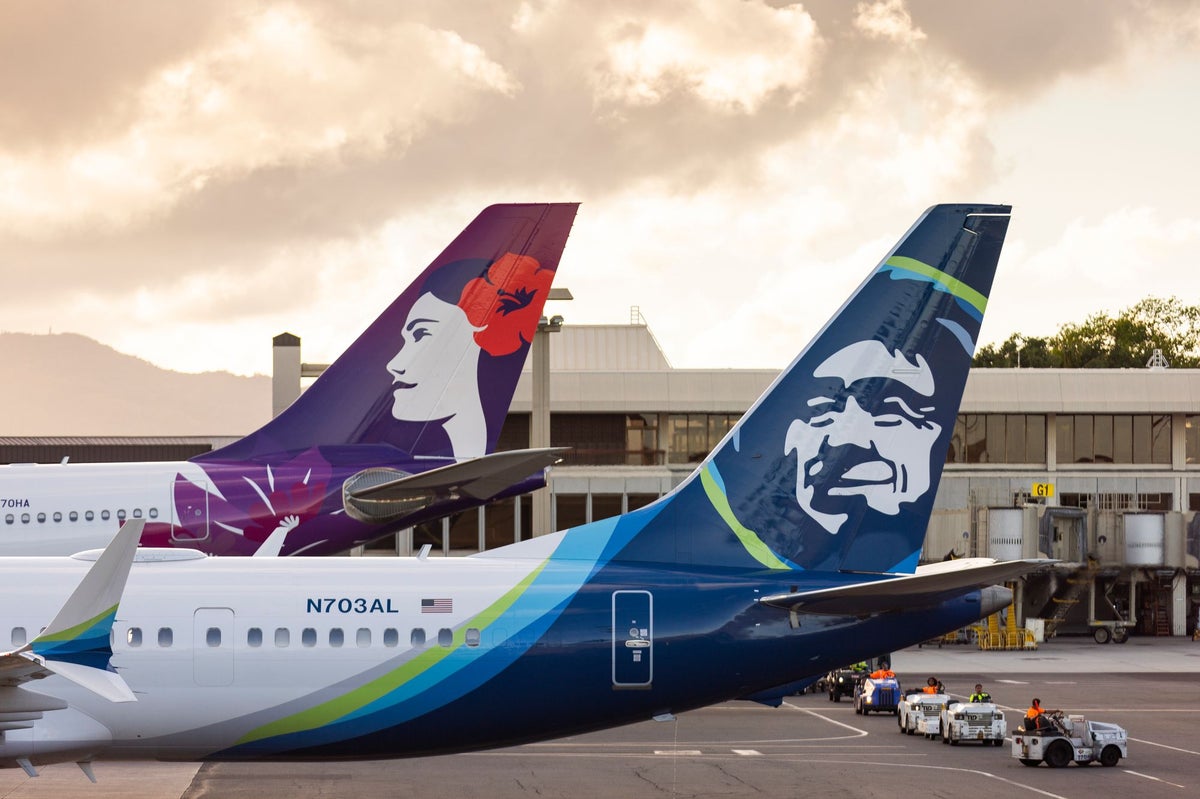
Most airline mergers end with one brand getting completely swallowed up. Think United absorbing Continental or American dissolving US Airways. Alaska Airlines is trying something much more complex: a dual-brand strategy. They want to keep both names alive, running on shared infrastructure behind the scenes while offering distinct customer experiences in the sky.
The problem arises when those two experiences cross paths on the tarmac.
The 250 flight attendants affected by this rule voluntarily bid for positions to staff long-haul international flights out of Seattle, often flying Boeing 787-9 Dreamliners. These specific flights are sold, marketed, and branded entirely as Alaska Airlines flights.
If a passenger buys a ticket on an Alaska Airlines flight from Seattle to Europe, they expect the Pacific Northwest aesthetic. They expect the cool blues, the crisp lines, and the specific service philosophy tied to that brand. If the crew walks down the aisle wearing traditional Hawaiian clothing, it creates immediate cognitive dissonance for the consumer.
Alisa Onishi, managing director of Hawaii marketing for both carriers, didn't sugarcoat the internal friction. She acknowledged that not everyone is happy. However, she emphasized that once the reasoning is laid out, crews understand how vital it is not to blur the lines between the two distinct brands.
What the Outrage Outlines Miss Completely
If you only read the sensational headlines, you'd think Alaska Airlines is running a corporate campaign to stamp out island traditions. That narrative completely ignores the nuances of the actual policy.
- The rule applies only to non-Hawaii routes: Hawaiian cultural elements are still fully permitted on any flight traveling directly to or from Hawaii.
- It cuts both ways: If an Alaska Airlines flight attendant is working a route that touches Hawaii—even on an Alaska-branded aircraft—they are now allowed to wear flowers in their hair and sport a lei.
- The restriction is likely temporary: This policy governs the current messy transition phase as the two operations align before they begin flying under a single operating certificate.
This isn't culture erasure. It's route-based consistency. When you fly to the islands, you get the spirit of the islands. When you fly a standard domestic or international long-haul trunk route under the Alaska banner, you get the Pacific Northwest corporate identity.
The Challenge of Integrating Two Airline Giants
Merging two major carriers with distinct heritages is an operational nightmare. The two companies moved to a single reservation system and are steadily working toward complete operational integration.
Every U.S. airline merger before this has relied on a single visual identity to make the transition easier for the public. Alaska is writing its own playbook here, and the friction over uniforms proves why other executives have traditionally avoided this strategy.
The Association of Flight Attendants (AFA) has publicly stated that they've advocated for Hawaiian to maintain its unique identity from day one, and they intend to hold corporate leadership accountable. The union's pushback highlights the delicate tightrope management has to walk. They need to keep labor happy while building a cohesive commercial product that makes sense to global travelers who might not know or care about the corporate history behind their ticket.
The Path Forward for Crew Members and Passengers
If you're an employee navigating this merger, or a frequent flyer wondering what your next flight will look like, here's what actually matters moving forward:
Pay Attention to the Ticket Brand, Not Just the Tail Cube
As a passenger, look at the marketing carrier when booking. If you want the classic Hawaiian Airlines hospitality experience with the food, beverages, and visual warmth of the islands, make sure you are booking a flight specifically routed through or to Hawaii.
Watch the Uniform Redesign Project
This current dress code friction is a bridge to a permanent solution. The airline group has already commissioned Seattle designer Luly Yang to completely overhaul and redesign the next uniform collection for both Alaska and Hawaiian Airlines. Crucially, they are partnering again with Hilo-based designer Sig Zane to ensure that future uniform iterations retain genuine Hawaiian roots.
The current policy might feel restrictive to some crew members today, but it ensures that the unique value of the Hawaiian brand isn't diluted into meaninglessness on routes where it doesn't belong. For a dual-brand merger to survive, boundaries are mandatory.