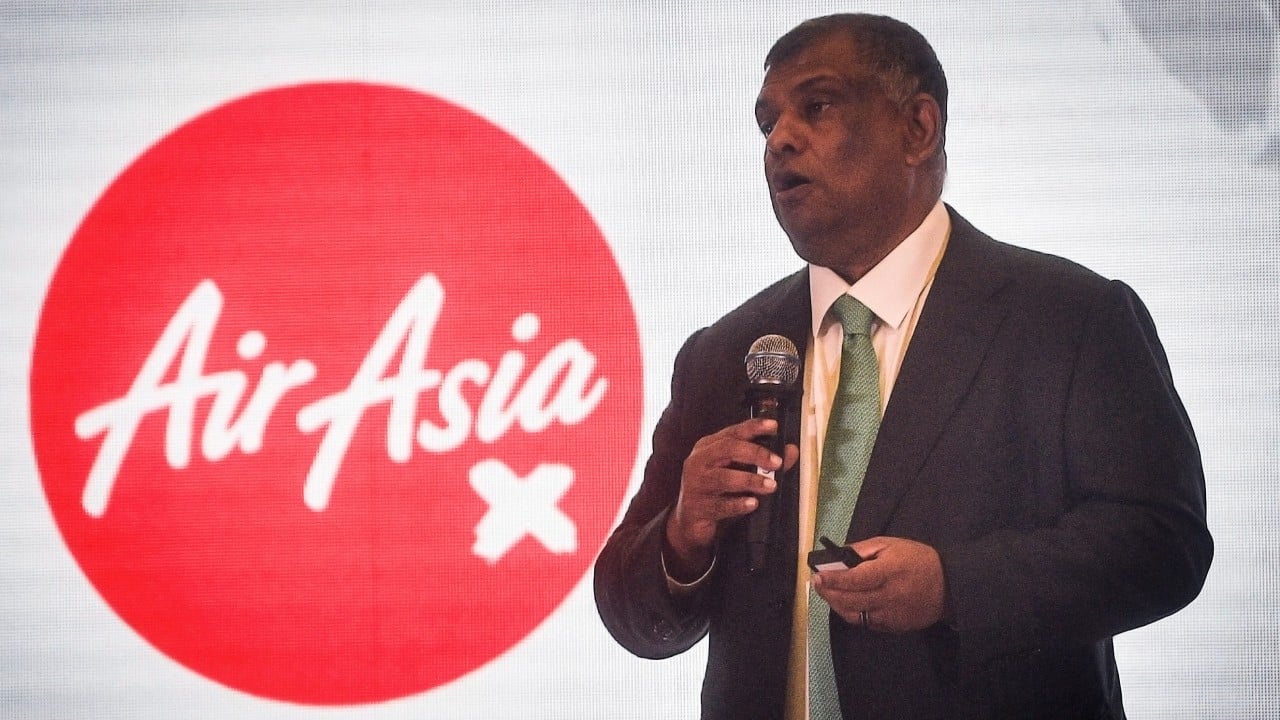
Every aviation journalist in the region is currently obsessing over whether Tony Fernandes had a whispered conversation with a finance minister or shook hands over a state-backed liquidity line. They are tracking flight paths, parsing PR statements, and treating a standard corporate denial like a geopolitical thriller.
It is a complete waste of time.
Focusing on whether AirAsia formally applied for a state bailout misses the structural reality of modern low-cost aviation. In the post-pandemic era of airline economics, the line between private enterprise and state intervention has dissolved. When carriers grow past a certain threshold of domestic employment and tourism dependency, they stop being private businesses. They become national infrastructure.
Let us dismantle the lazy consensus. The debate over whether a low-cost carrier accepted government life support is a sideshow. The real story is why commercial aviation expects taxpayers to underwrite its expansion while privatizing the upside.
The Myth of Pure Free Market Aviation
For decades, the gospel of budget travel has been simple. Strip away the frills, maximize aircraft utilization, cut out the travel agents, and let the market decide who flies and who goes bust. It is a compelling narrative. It also happens to be a fantasy.
I have spent years watching carriers negotiate airport fees, fuel subsidies, and route development funds behind closed doors. Governments do not need to hand over a sack of cash with the word "bailout" stamped on the side to subsidize an airline. They do it through suppressed landing charges, state-owned fuel monopolies that offer preferential pricing, and tourism board marketing funds that conveniently funnel millions into specific booking engines.
When a low-cost carrier scales to dominate forty percent of a nation's domestic capacity, it possesses structural leverage. If that carrier collapses, regional economies grind to a halt. Hotels empty. Tax revenues evaporate. Regional supply chains fracture.
Knowing this, governments cannot afford to let them fail. They do not write giant checks labeled bailout because optics matter. Instead, they restructure debt through state-linked banks, grant moratoriums on lease payments via government-owned leasing entities, or engineer equity injections through sovereign wealth funds disguised as institutional investors.
Denying a bailout while accepting structural state support is a masterclass in semantic gymnastics. The media falls for it every single time because reporters confuse formal paperwork with financial gravity.
Scale Trap
The fundamental flaw in the low-cost carrier business model is that it is built on perpetual hyper-growth. To service debt on massive aircraft orders, an airline needs a constant influx of passengers, expanding route networks, and high load factors.
When macro shocks hit—whether currency fluctuations, jet fuel spikes, or global disruptions—the margins vanish overnight. Fixed costs do not care
Why Government Bailout Denials are Actually the Ultimate Bullish Signal
business, travel
When an airline boss stands up in front of the press and aggressively denies touching state funds, the entire corporate media chorus sings a predictable tune. Headlines scream about denial, insider leaks, and imminent financial ruin. Observers wag their fingers, shaking their heads at corporate arrogance, forecasting a swift and fiery collapse.
It is a completely amateur reading of high-stakes capital mechanics.
I have spent two decades watching airline executives walk the razor's edge between insolvency and survival. When a carrier publicly rejects government lifelines while insiders whisper about secret talks, people think they are looking at a PR crisis or a cover-up. They are missing the structural reality. In modern aviation, public denial is not a defense mechanism against scandal. It is a calculated pricing strategy for the negotiating table.
If you believe a denial means the balance sheet is clean, you are naive. If you believe a denial means bankruptcy is certain, you are economically illiterate.
Let us break down what is actually happening beneath the fuselage.
The Theater of Capital Preservation
Let us look at the mechanics of distress in low-margin aviation. When a massive carrier faces systemic liquidity crunches, asking for a state bailout openly is political suicide. It triggers immediate regulatory overreach, forces punitive equity dilution, and hands control of your operational pricing to bureaucrats who think fuel hedging is a moral failing.
No competent founder wants the state on their cap table. Inviting politicians into the boardroom is the corporate equivalent of feeding your legs to an alligator because you have a minor cramp.
So, what do insiders leak? They leak smoke. They leak partial truths, half-baked treasury memos, and anonymous murmurs about backroom meetings. Why? Because the market needs to price in risk, and creditors need to know that someone—anyone—has a liquidity backstop.
When the founder steps up and denies it all with righteous indignation, they are executing a classic leverage play. They are signaling to the Ministry of Finance: You want us to keep flying regional routes to unprofitable secondary airports? You want to protect employment figures ahead of the election? Then you need us more than we need your cash. Put a better, quieter, less intrusive deal on the table, or watch us ground the fleet and let the job losses pile on your desk.
Denial is not the end of the negotiation. It is the opening salvo of a hostile refinancing.
The Lazy Consensus is Killing Your Financial Intuition
The common narrative surrounding airline bailouts relies on a kindergarten understanding of corporate finance. The lazy consensus goes like this: profitable companies never need help; companies that need help are dying; if leadership denies help, they are liars protecting their stock options.
Every single part of that assumption is garbage.
Airlines are uniquely capital-intensive, margin-starved cash-burn machines. They operate in a hyper-competitive oligopoly where capacity discipline is illegal under anti-trust laws, yet macroeconomic shocks like jet fuel spikes or currency devaluation hit them like a freight train. In this environment, a state-backed liquidity facility is not a badge of shame. It is an insurance product.
When AirAsia or any other massive regional titan dances around the bailout question, they are managing a multi-stakeholder psychological war.
- Creditors want stability.
- Suppliers want cash-on-delivery guarantees.
- Regulators want social stability.
- Shareholders want dilution minimized.
You cannot satisfy all four by telling the truth on CNN. You satisfy them by creating strategic ambiguity. The denial creates a vacuum of certainty. In that vacuum, bondholders blink first, lessors renegotiate lease terms downward to avoid a total default, and state treasuries quietly draft non-dilutive credit lines that never cross the public register.
The Mechanics of Quiet State Support
If you think a government bailout only looks like a direct, check-writing ceremony captured on evening television, you understand nothing about public finance.
States rarely write blank checks to airlines anymore. The optics are terrible. Instead, they engineer invisible lifeboats.
Imagine a scenario where a national carrier faces a five-hundred-million-dollar bond maturity wall. The commercial banking syndicate gets cold feet. The sovereign wealth fund steps in, not as a direct equity investor, but through a convoluted series of infrastructure-backed loans, state-guaranteed vendor financing, or deferred airport landing fee concessions that stretch out over a decade.
Technically, legally, and semantically, there is no "state bailout." No taxpayer cash changed hands to buy equity. The founder can look investors in the eye and say, "We have received zero state funds." And they are legally correct.
Operationally, however, the state just acted as the ultimate lender of last resort, absorbing systemic risk so the airline could continue undercutting competitors on margin.
This is the nuance the financial press completely misses. They look for the smoking gun of a direct Treasury transfer, and when they find empty hands, they declare the company entirely self-reliant. Meanwhile, the airline is thriving on a diet of hidden sovereign guarantees and regulatory forbearance.
How to Trade the Noise
If you are evaluating companies caught in this crossfire of denial and rumor, stop listening to the press releases and stop reading the panic porn on financial blogs. Look at three concrete data points:
- Credit Default Swap Spreads: If insiders are claiming zero bailout talks while the cost of insuring the company's debt against default is plummeting, someone with deep pockets is quietly backstopping the risk. Capital doesn't lie; PR departments do.
- Lease Restructuring Velocity: Watch the aircraft lessors. If an airline is truly on the brink of unassisted collapse, lessors start repossessing winglets and engines within forty-eight hours. If lessors are quietly agreeing to payment holidays and asset-backed debt swaps, a structural rescue package—state-backed or otherwise—is already locked in.
- Capacity Discipline: A dying airline liquidates assets and cuts routes to conserve cash. A resilient airline backed by quiet liquidity expands capacity into distressed competitor markets to swallow market share while everyone else is panicking.
When an executive denies a bailout while expanding routes, buy the dip. They aren't drowning. They are negotiating from a position of aggressive, ruthless strength.
Stop treating corporate denials as moral statements. They are weapons.
And if you are still waiting for the government to issue a press release confirming your investment thesis, you deserve to get wiped out.
The game isn't rigged. You're just playing by the rules they printed for the tourists.