The United States military wants to ship 100 tons of cargo to any point on Earth in under an hour. It sounds like science fiction. It sounds impossible. But the U.S. Air Force is actively pouring millions into making point-to-point space logistics a reality, and they just tapped engineers in Colorado to help figure out the math.
We aren't talking about traditional supply lines here. No slow cargo ships. No vulnerable transport planes crawling through contested airspace. Instead, the Pentagon wants to pack equipment into a massive rocket, blast it into space, and land it directly in a conflict zone or a disaster area.
Moving heavy gear through orbit presents massive technical hurdles. You can't just drop a multi-million dollar rocket onto a dirt strip without some serious preparation. That's exactly why the Air Force Research Laboratory brought in specialized engineering talent from Colorado to solve the hardest problems of the Rocket Cargo Vanguard program.
The Reality of Point to Point Space Delivery
Logistics wins wars. It saves lives during humanitarian crises too. Right now, if the military needs to get critical supplies to a remote location, it takes days. Large transport aircraft need overflight permissions. They need refueling. They need secure runways.
Rocket cargo changes the timeline completely. A rocket launched from the coastline of the United States can reach the other side of the planet in roughly 45 minutes. It flies above the atmosphere, bypassing sovereign airspace restrictions entirely.
The Air Force designated Rocket Cargo as a Vanguard program. This means it gets fast-tracked funding because the technology could completely change how the military operates. They aren't building their own rockets from scratch. That would cost too much time and money. Instead, the military is looking to utilize commercial space vehicles that are already in development. Think of massive platforms like SpaceX's Starship or Blue Origin's New Glenn.
But commercial rockets are designed to launch from pristine pads and land on perfectly flat, reinforced concrete surfaces. The military rarely operates in pristine conditions.
Why Colorado Engineers Hold the Keys to Orbit
Colorado has quietly become the absolute epicenter of military space engineering. The state houses major bases like the provisional headquarters of U.S. Space Command and Schriever Space Force Base. It also hosts a dense network of aerospace contractors and top-tier research universities like the University of Colorado Boulder.
When the Air Force needed experts to analyze how massive rockets interact with unprepared landing sites, they looked directly at Colorado's engineering hub.
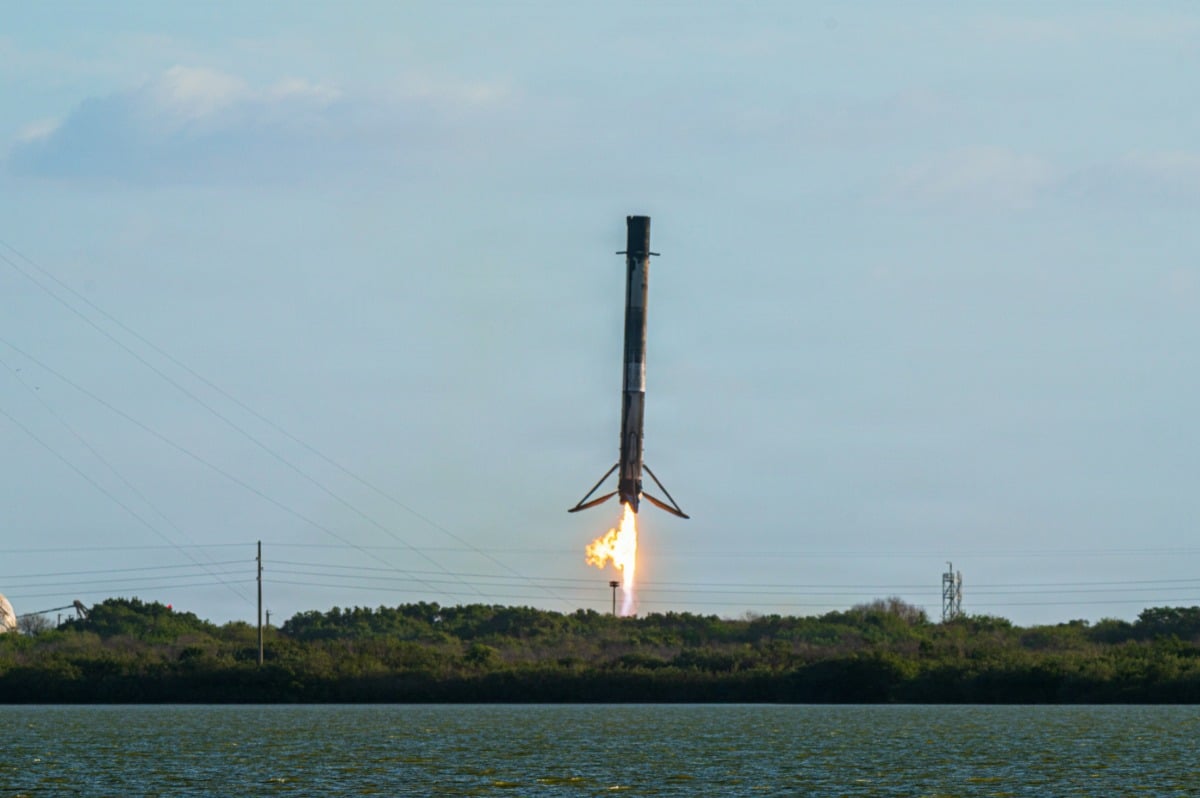
The main problem is environmental impact. When a 200-foot-tall rocket engine burns its way down to a landing, it creates an artificial hurricane of heat and pressure. If that rocket lands on sand, gravel, or dirt, the exhaust plumes will kick up massive debris fields. Those rocks and particles turn into supersonic shrapnel. They can destroy the rocket itself or wipe out nearby buildings and personnel.
Colorado researchers are focusing heavily on rocket plume dynamics. They use complex computational fluid dynamics to model exactly what happens when superheated gas hits different types of soil. They want to know if a rocket will dig its own grave upon landing or if the ground can withstand the force long enough for a safe touchdown.
Solved Problems vs Unsolved Nightmares
People often think the rocket ride is the hardest part. It isn't. Commercial space companies have already proven they can launch, guide, and land reusable boosters with incredible precision. The real nightmare starts when the rocket actually touches the ground.
Consider the sheer weight of the cargo. If you land 100 tons of medical supplies, food, or vehicles in a remote area, how do you get them out of the rocket? Commercial space vehicles are tall. The cargo bay on a massive rocket might sit eight or ten stories above the ground.
You can't just use a standard forklift. Colorado teams are looking at innovative ways to automate offloading in austere environments. They need cranes, elevators, or drop-systems that can deploy reliably without a ground crew waiting to help.
Then there is the question of the rocket itself. Is it a one-way trip? In a humanitarian disaster, you might just leave the rocket hull behind or scrap it. In a prolonged conflict, leaving a massive piece of advanced aerospace technology sitting on the ground is a massive security risk.
Refueling a rocket for a return trip requires a massive infrastructure footprint. You need cryogenic propellants like liquid oxygen and liquid methane. You need launch towers. If the landing zone doesn't have those things, that rocket is stuck. Colorado engineers are analyzing the trade-offs of single-use cargo hulls versus the logistics of field-refueling.
Distinguishing Hype From Hard Military Utility
The aerospace industry loves big promises. It's easy to get caught up in the excitement of space travel and miss the practical realities. Critics of the Rocket Cargo program rightly point out the exorbitant costs. Even with fully reusable commercial rockets, launching a payload into space costs significantly more than flying a C-17 Globemaster transport plane.
The Air Force knows this. They aren't planning to use rockets for everyday mail delivery or routine troop movements. The financial cost only makes sense for high-value, time-critical missions.
Imagine a scenario where an air defense system in a allied nation fails during an active bombardment. Shipping a replacement radar component via traditional transport might take 48 hours. A rocket can deliver that component before the next wave of missiles arrives. That is the true value proposition. It's about speed, not economy.
The collaboration with Colorado institutions brings a much-needed dose of realism to the project. Academic and industrial engineers look at the structural integrity of materials, the thermodynamics of the landing pads, and the acoustic vibrations that could ruin sensitive cargo during transit.
The Immediate Road Ahead for Space Cargo
The transition from theoretical physics to actual hardware deployment requires a systematic approach. The Air Force Research Laboratory is moving through phases of testing, starting with simulated drops and computer modeling before moving to physical containment tests.
Engineers are currently designing specialized cargo containers that can survive the extreme g-forces and vibrations of a rocket launch and rapid atmospheric re-entry. Standard military shipping containers will crack under these conditions. The contents inside would be pulverized before they ever hit the dirt.
Colorado's aerospace cluster is uniquely positioned to build and test these advanced enclosures. They have the vacuum chambers, the vibration tables, and the specialized test ranges needed to simulate the brutal environment of spaceflight.
If you want to track the true progress of the Rocket Cargo program, look away from the flashy rocket launches in Texas or Florida. Pay attention to the quiet engineering labs in Boulder and Colorado Springs. The success of this entire military experiment relies completely on the boring, granular details of dirt, heat, and cranes being solved by engineers on the ground.


.png?width=1200&auto=webp&trim=0%2C0%2C0%2C0)