Most wealthy 19th-century barons built high walls to keep the public out. Adolph Sutro did the exact opposite.
In 1881, the former San Francisco mayor and silver tycoon bought 22 windswept acres perched directly above the Pacific Ocean. Instead of hoarding the staggering views of the Golden Gate and Seal Rocks, he spent a fortune transforming the rugged cliffside into a sprawling, eccentric European wonderland. Then, he threw open the gates.
If you visit Sutro Heights Park today, you might miss the sheer scale of what used to stand here. Most of the grand structures are gone. But the ghosts of Sutro's populist vision remain buried in the fog and the clipped lawns.
Building a Gilded Age Playground on the Edge of San Francisco
Sutro didn't just plant a few flowerbeds and call it a day. He engineered a microclimate.
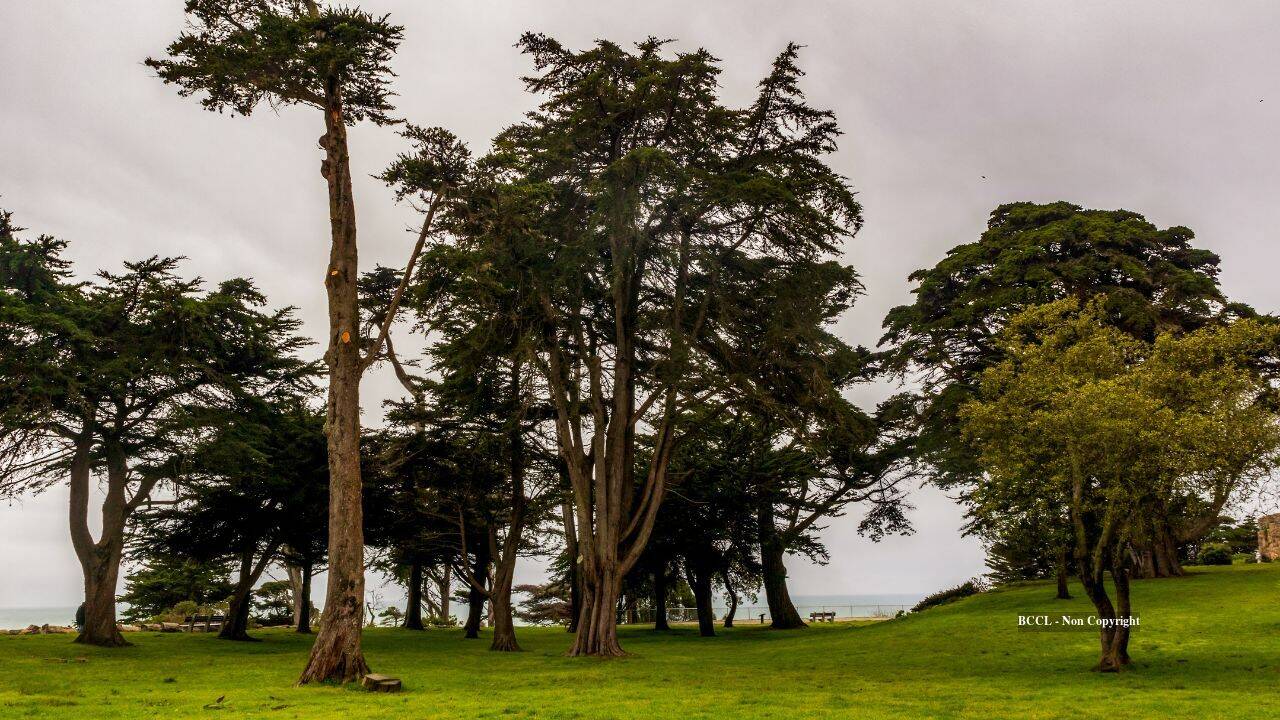
The site at Lands End took a ferocious beating from ocean gales. To fix this, Sutro constructed massive windbreaks and terraced the earth into distinct garden rooms. He imported thousands of trees—cypress, pine, and eucalyptus—to anchor the soil and create deep pockets of shade.
Once the landscape was tamed, he decorated it with staggering ambition. The estate featured:
- Over 200 classical Greek and Roman statues cast in Belgium
- A massive glass-paned plant conservatory
- Intricate hedge mazes and sprawling parterres
- A 250-foot-long oceanfront balcony known as the Dolce Far Niente
He employed a massive crew of seventeen gardeners, machinists, and drivers just to keep the grounds pristine.
Opening the Gates to the Working Class
What makes Sutro’s project fascinating isn't just the opulence. It’s who he let inside.
Starting in 1885, everyday San Franciscans could stroll through the private gardens for the price of a single dime. That small fee helped fund the maintenance, but it also sent a clear message. Sutro believed ordinary working people deserved access to beauty, fresh air, and high culture.
He didn't just tolerate visitors; he entertained them. Presidents, poets, and local social clubs mingled on the lawns. The estate hosted massive public events, including an open-air production of Shakespeare's As You Like It that drew a crowd of 5,000 people.
The Slow Decline and Demolition
Gilded Age fortunes rarely last forever. After Sutro died in 1898, the immense cost of upkeep caught up with his heirs.
His daughter, Emma Sutro Merritt, lived in the estate's central Victorian mansion for decades, watching the property slowly succumb to the elements. Salt air corroded the ironwork. Vandals chipped away at the imported statues. Economic pressures mounted during the Great Depression.
By the time the family finally donated the 22-acre property to the City of San Francisco in 1938, the mansion was too far gone to save. The Works Progress Administration stepped in a year later, tearing down the main house and hauling away most of the decaying statuary.
What You Can Still See Today
Don't expect to find a sprawling European palace if you walk the grounds now.
The park is peaceful, quiet, and intensely coastal. Yet if you look closely past the modern walking paths, history still pokes through the dirt. The original stone entrance gates are anchored by two lonely stone lions. You can still trace the foundation tiles of the old conservatory glowing under the grass, and the stone observation parapet still frames the crashing waves of the Pacific just like it did in 1885.
Grab a jacket, skip the crowded tourist hubs nearby, and walk the bluff where a 19th-century billionaire decided to share his backyard with the world.


