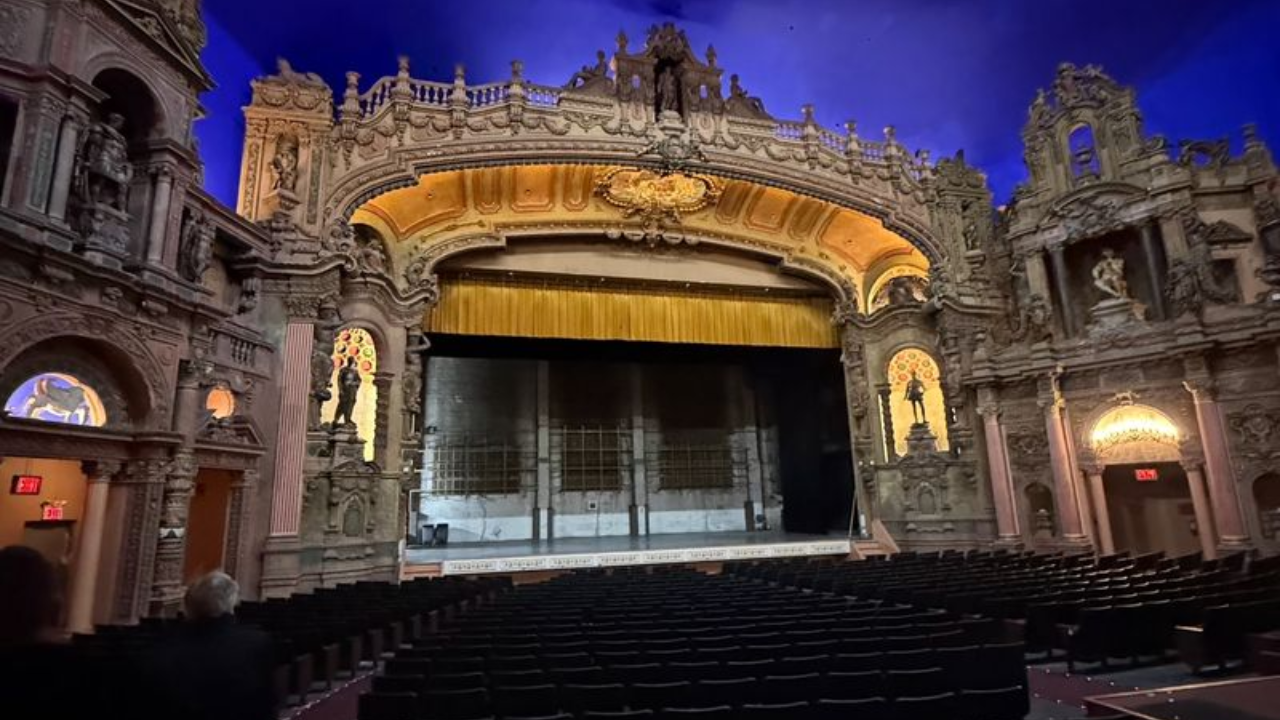
Most people write off old theaters as ghosts of a vanished city. They look at crumbling facades and assume the wrecking ball is inevitable. But grand historic spaces refuse to stay dead quietly. On the Grand Concourse in the Bronx, a legendary 1929 movie palace is staging one of the most ambitious comebacks in New York City history, transforming into the second-largest theater in the five boroughs.
You have to understand what these buildings meant to working-class neighborhoods. Back in the roaring twenties, movie palaces weren't just places to catch a flickering silent film or an early talkie. They were dream factories. Architects like John Eberson designed them as fake Mediterranean courtyards or baroque gardens, complete with twinkling fiber-optic stars on plaster ceilings and ornate gargoyles gazing down at popcorn-munching crowds. They offered pure escapism during the Great Depression. Then came decades of suburban flight, urban decay, multiplexes, and streaming services. Most of those gilded cathedrals were bulldozed into parking lots or carved up into carpeted budget supermarkets.
This particular Bronx landmark survived fires, structural abandonment, foreclosure battles, and years operating as a megachurch. That survival alone separates it from the graveyard of lost architectural gems. But preservation without a working purpose is just an expensive museum piece. That is why the current rebirth matters so much. Converting a nearly century-old atmospheric auditorium into a modern performance powerhouse requires defying every standard real estate playbook.
The Architectural Blueprint of a Golden Age Relic
Walking inside these spaces reveals craftsmanship you simply cannot buy today. Plasterers spent months hand-carving cherubs, gilded moldings, and soaring arches that mimic European palaces. John Eberson invented the atmospheric style specifically to trick the eye. You sat under a dome painted like a midnight sky while hidden projectors threw moving cloud effects across the ceiling.
Yet historic preservation in New York is a blood sport. Developers want square footage for luxury condos. Community advocates want cultural anchors. When a building carries landmark status, every nail you drive requires navigating layers of bureaucracy. The restoration team had to strip away decades of religious alterations, water damage, and botched DIY repairs without destroying the historic fabric underneath.
Consider the sheer scale of the auditorium. Building a venue of this magnitude from scratch today would cost astronomical sums and face endless zoning hurdles. By utilizing an existing structure, the project preserves urban heritage while injecting state-of-the-art theatrical technology into a vintage shell. Acoustic engineering in these spaces requires balancing modern line-array speaker systems with hard plaster surfaces that bounce sound in unpredictable ways. Sound designers spend weeks mapping reflections to ensure a heavy metal concert sounds crystal clear without rattling the antique chandeliers overhead.
Surviving Fire and Financial Collapse
History hasn't been gentle to the Grand Concourse. During the devastating fiscal crises of the 1970s and 1980s, disinvestment choked the Bronx. Many historic buildings burned down or were gutted. This theater weathered close calls with fire codes, roof collapses, and severe financial distress that killed neighboring businesses.
When congregations took over iconic theaters in the late twentieth century, they often painted over murals or erected drywall to fit their needs. Undoing those modifications takes painstaking precision. Conservators use scalpels and solvents to peel back modern paint layers, uncovering original gold leaf and vibrant pigments hidden for generations. You cannot rush art restoration, especially when dealing with plaster that has weathered decades of neglect and heat fluctuations.
Insurance inspectors, structural engineers, and fire marshals scrutinize every square inch of a ninety-seven-year-old venue undergoing transformation. Old wiring has to be completely gutted and replaced with heavy-duty conduits capable of powering modern concert lighting, digital projection, and massive touring sound rigs. Meeting modern seismic and fire safety standards inside a historic masonry envelope requires engineering feats that test the patience of even the most seasoned project managers.
Becoming the Second Largest Stage in New York City
Size matters in the live entertainment economy. Broadway houses are cramped, historic jewels that max out seating counts, leaving mid-sized touring acts and massive spectacles fighting for space. By repositioning this Bronx giant into New York City's second-largest theater, investors are betting on a massive underserved market north of Manhattan.
Think about the economics. Independent promoters struggle to find venues holding thousands of people that aren't corporate sports arenas. Stadiums feel sterile and cost a fortune to rent. A restored historic theater fills that exact sweet spot. It offers acoustic richness that modern concrete boxes lack, combined with modern rigging, state-of-the-art sound systems, and sightlines designed for cinematic grandeur.
When a venue reaches a multi-thousand-seat capacity, it unlocks national tours that previously bypassed the Bronx entirely. Major comedians, musical acts, theatrical productions, and dance troupes now have a viable home in the borough. That shifts booking strategies across the entire tri-state area. Promoters no longer have to force every uptown fan to trek down to Manhattan or Brooklyn for major arena tours.
What This Means for the Local Economy
Culture drives neighborhoods. When thousands of theatergoers descend on the Grand Concourse for a Friday night concert or theatrical residency, local restaurants, bars, and transit hubs feel the pulse. Too often, cultural investment stays trapped below 96th Street. Pumping capital into uptown infrastructure changes the geographic center of gravity for New York nightlife.
Business owners along the avenue are already preparing for the foot traffic. Job creation spans technical stage crews, hospitality staff, security, and box office management. This isn't just about saving an old building for nostalgia's sake. It's about driving sustainable economic vitality into a borough that has weathered systemic underinvestment for generations.
Local chambers of commerce note that anchor cultural institutions act as magnets for secondary investment. When people travel to an area for an evening event, they often arrive early for dinner or stay late for drinks. That secondary spending creates resilient small businesses that survive economic downturns better than retail shops reliant solely on daytime foot traffic. Public transit access along the Concourse makes the venue uniquely positioned to handle massive crowds without overwhelming local parking infrastructure.
The Reality Check on Historic Restorations
Let's be completely honest. Massive restoration projects rarely run on schedule or under budget. Supply chain bottlenecks for specialized craftspeople who know how to restore 1920s plasterwork create endless delays. Zoning boards, historic preservation commissions, and neighborhood stakeholders all demand a voice at the table.
You also face the challenge of modern building codes. Fire safety exits, ADA compliance, and modern HVAC integration cannot ruin the aesthetic integrity of a 1920s auditorium. Striking that balance takes engineers who treat historic structures with surgical care rather than brute force.
Funding models for these projects are complex mosaics. They combine private equity, historic tax credits, municipal grants, and philanthropic backing. If one funding stream stumbles, the entire timeline shifts. Yet overcoming these hurdles is what separates a successful urban revival from an abandoned construction site.
Navigating Neighborhood Change and Community Identity
Gentrification and displacement remain sensitive topics across New York City. Whenever a massive cultural venue opens in a historically working-class neighborhood, residents ask tough questions. Who is this theater actually for? Will ticket prices price out long-term locals? Will neighborhood rent spikes force out small mom-and-pop shops?
Successful venue operators address these concerns head-on by building deep community partnerships. Free community programming, local youth arts initiatives, discounted ticket tiers for neighborhood residents, and hiring pipelines centered on local workforce development are non-negotiable elements for long-term survival. A theater that alienates its immediate neighbors rarely thrives in the long run. Building trust takes years, but it vanishes overnight if the venue feels like an alien fortress dropped into an established community. Listening sessions, advisory boards, and transparent communication keep local stakeholders engaged and protective of the venue's success.
Stepping Inside the Future
The curtain is rising on a new era for Uptown New York. As construction wraps up and opening night approaches, the real test begins. Can a historic Bronx movie palace pull crowds away from Brooklyn clubs and Manhattan mega-venues? If the sheer hunger for authentic, awe-inspiring cultural spaces in the outer boroughs is any indicator, the answer is a resounding yes.
Grab a ticket when the doors open. Walk under those painted stars. You are standing inside a survivor.