The teleprompter operator at the United States Army War College in Carlisle, Pennsylvania, must have felt a cold sweat break out yesterday. He was suspended. The charge? Betting money on the President's upcoming speech. It is a strange, modern detail, a tiny crack in the massive wall of theater that is a modern presidential address. But it reveals a fundamental truth: we have started treating our democracy like a high-stakes roulette wheel, waiting to see which color the ball lands on.
Tonight, at 9:00 PM in Washington, the lights in the Oval Office will catch the dust motes in the air, and Donald Trump will look directly into the camera.
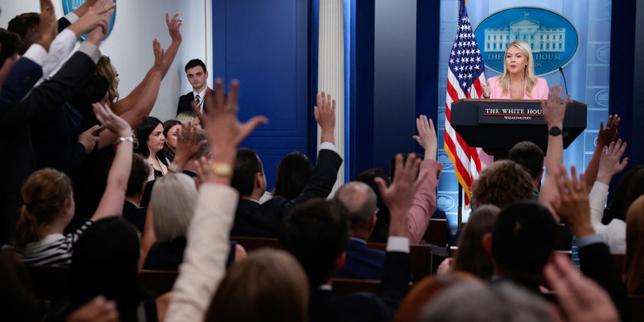
The White House press secretary, Karoline Leavitt, promised that this address to the nation would focus on a single, heavy phrase: "protecting the integrity of our elections." She promised that Americans would feel "relieved" by what they hear.
But relief is a rare commodity in America right now.
Consider Sarah. She is a fictional composite, but her reality is lived by millions of election workers across fifty states. Sarah is fifty-four, a grandmother who helps coordinate a small voting precinct in a suburban county. For twenty years, her job was simple: hand out stickers, check names off a printed paper ledger, and make sure the coffee pot in the church basement stayed full. Election night was long, but it ended with a sense of quiet pride.
Now, Sarah looks at her email with a tightness in her chest. She has had to attend safety seminars. She has had to think about bulletproof glass. When she hears terms like "election integrity" or "unprecedented vulnerabilities," she does not feel relieved. She feels like a target.
To understand why a 9:00 PM speech can cause such a tremor, you have to look at the landscape of our doubts. The President, now eighty years old, has secured two terms in the White House, in 2016 and 2024. Yet, the language of stolen victories and systemic rot remains his most potent currency. With the midterm elections looming just months away—and with his party facing a grueling, uphill battle—the timing of this address is anything but accidental.
What is actually at stake when we talk about "integrity"?
The administration points to a series of executive actions and legislative pushes, like the SAVE America Act, which would demand strict, government-issued proof of citizenship to register to vote. To supporters, it sounds like common sense. Why wouldn't you show an ID? But beneath that simple question lies a labyrinth of human bureaucracy.
Think of a college student whose state ID doesn't match their current address. Think of an elderly voter born at home in rural America who never had a formal birth certificate. Think of a naturalized citizen who has lost their papers in a house fire. Academic studies, like those from the Brennan Center, estimate that millions of eligible voters do not have immediate, easy access to these documents. One person’s security protocol is another person's locked door.
But the President’s address tonight is expected to go far beyond local administrative rules. Word from the intelligence corridors suggests he will point to something much larger, much more terrifying: foreign interference. Specifically, new allegations of Chinese operations designed to compromise American ballots.
This is the classic magic trick of modern political communication. When the domestic front gets too hot, you point to the horizon.
And the domestic front is very hot. The administration is currently wrestling with a sluggish economy, a paralyzed shipping route in the Strait of Hormuz, and a deeply unpopular military involvement in Iran. When gas prices rise and foreign entanglements deepen, a leader needs a unifying narrative. Nothing unites quite like an external phantom, a ghost in the voting machine.
If you speak to the people who actually run our elections, they will tell you a very different story about integrity. They will tell you that the American voting system is actually a chaotic, decentralized miracle. It is not one massive database that a single hacker in Beijing or St. Petersburg can infiltrate. It is a patchwork of thousands of independent jurisdictions, run by neighbors, schoolteachers, and retirees. It is secured by paper trails, double-blind audits, and strict physical custody of machines.
The system is safe precisely because it is local. It is hard to hack a church basement.
Yet, when the bully pulpit of the White House is used to broadcast systemic doubt, the local level begins to fray. Trust is not a resource we can mine; it is a delicate web we spin between each other. Once you tell half the country that the very act of casting a ballot is a rigged game, you cannot easily convince them to trust the tally, no matter how many paper receipts you show them.
The real danger of tonight’s address isn't that the President might reveal some hidden vulnerability in our voting machines. The danger is that the speech itself is the vulnerability.
At 9:00 PM, millions of people will tune in. Some will look for validation of their deepest anxieties. Others will watch with a sense of exhaustion, wondering if we can ever return to a time when an election was just an election, and not a national existential crisis.
When the red light on the camera finally fades, the podium will be empty, but the words will remain, hanging in the air like smoke. And tomorrow morning, thousands of people like Sarah will wake up, pour their coffee, and wonder if their neighbors still trust them to count the votes.