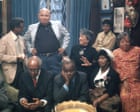
The entertainment press is currently high on its own supply of righteous indignation. The occasion? A long-lost, 50-year-old documentary capturing the twilight of the Harlem Renaissance has finally secured a global premiere.
Cue the predictable, copy-pasted narratives from film critics and cultural commentators. They are calling it a "triumph over systemic suppression," a "belated victory against Hollywood gatekeepers," and a "hidden masterpiece rescued from the jaws of institutional racism."
It is a comforting, simplistic fairytale. It is also entirely wrong.
The lazy consensus loves a villain, and institutional bias is an easy target. But attributing a half-century delay exclusively to malicious censorship or racial gatekeeping misses the far more boring, far more destructive reality of media economics. As someone who has spent two decades navigating the archival clearance minefield and negotiating distribution rights for independent media, I can tell you exactly why this film sat in a vault. It was not a conspiracy. It was a combination of legal incompetence, financial insolvency, and a fundamental misunderstanding of how intellectual property works.
By framing this 50-year delay as a purely political martyrdom, we ignore the actual structural mechanics that keep vital cultural history locked in basement vaults today. If we want to prevent the next great historical document from rotting in a storage unit, we need to stop romanticizing the delay and start analyzing the logistics.
The Archival Clearances Lie
Every independent filmmaker starts with a vision; too many of them end with a lawsuit. The most dominant reason a documentary gets shelved for decades has nothing to do with executive malice and everything to do with third-party licensing.
In the 1970s, independent documentarians operated in a wild-west environment. They rolled cameras in jazz clubs, captured street corners with ambient radio music blaring, and interviewed subjects who signed release forms on napkins—if they signed them at all.
To a film festival crowd, that is raw, authentic filmmaking. To a corporate distributor’s legal department, that is a multi-million-dollar liability nightmare.
Consider the mechanics of a global premiere. A distributor cannot just stream a film; they must clear every single piece of intellectual property contained within the frame. This includes:
- Synchronisation Rights: Every bar of a jukebox track playing in the background of a Harlem diner requires a license from the publisher and the record label.
- Performance Rights: A live snippet of a poet reading their work requires explicit, documented permission from their estate.
- Biographical Rights: Visual depictions of real people used to drive a commercial narrative require publicity waivers to avoid defamation or right-of-publicity claims.
When a film sits for 50 years, the paperwork chaos compounds. Original production companies dissolve. Estates fragment among multiple, warring heirs. Record labels get acquired by mega-conglomerates.
Imagine trying to clear a two-minute audio clip of a 1930s jazz icon when the original master recording has changed hands four times, the artist died intestate, and three different publishing administrators claim exclusive ownership of the catalogue. I have seen projects with millions of dollars in backing collapse under the weight of a single unfindable heir who refuses to sign a piece of paper for less than six figures.
The competitor outlets screaming about "institutional suppression" do not understand the sheer inertia of copyright law. The system did not lock this documentary away because it was afraid of the content. The system locked it away because the production lacked clean chain of title.
The Myth of the Benevolent Archival Rescue
Another narrative dominating the coverage is the idea that modern streaming platforms or prestigious film foundations are acting out of pure, altruistic devotion to cultural preservation.
Let us dismantle that immediately. Preservation is a luxury good; distribution is a cold, calculated business transaction.
The sudden availability of a 50-year-old documentary usually means one of two things has happened. Either the underlying copyrights have finally expired and entered the public domain—meaning the film is suddenly cheap to exploit—or a distributor figured out how to use the "lost masterpiece" narrative as a marketing hook to offset the astronomical cost of retroactive legal clearances.
Marketing a historical documentary to a modern, fragmented audience is an uphill battle. If you market it as "an interesting look at elderly writers in 1970s New York," your opening weekend numbers will be non-existent. But if you market it as "The Forbidden Film Hollywood Hid For 50 Years," you have a compelling, click-worthy hook.
The delay itself becomes the product. The alleged suppression becomes the selling point.
The downside to this contrarian reality is bleak: it means that hundreds of equally valuable historical films will never see the light of day simply because they lack a dramatic, marketable backstory to justify the expense of clearing their legal liabilities. If an archive piece cannot be weaponized for a press release, it stays in the vault.
The False Premise of the Gatekeeper
People often ask: Why do major networks and studios reject culturally significant documentaries if they aren't actively trying to suppress them?
The question itself assumes that media executives care enough about the underlying political message to actively suppress it. They do not. The reality is far more transactional: documentarians historically failed to build sustainable distribution frameworks outside of the traditional gatekeeper model.
For decades, filmmakers viewed public broadcasting, elite film festivals, and major studios as the only valid avenues for validation. If PBS or a major network did not buy the film, the filmmaker took their reels and went home, convinced the world was not ready for their truth.
This was a failure of imagination, not just a failure of the market. Even in the pre-digital era, alternative distribution networks existed—community centers, universities, independent theater circuits, and grassroots syndication. The films that survived and built a cult following did so because their creators spent as much time on distribution logistics as they did on creative direction.
Relying on the very institutions you critique to validate and distribute your critique is a fundamental paradox. The 50-year delay is proof that relying on centralized gatekeepers to preserve counter-cultural history is a losing strategy.
Stop Preserving and Start Digitizing
The actionable lesson here for modern creators, historians, and archivists is simple: stop waiting for institutional permission, stop waiting for the perfect distribution deal, and stop holding out for a prestigious premiere.
If you are sitting on historical footage, cultural interviews, or independent documentation of marginalized movements, the traditional festival-to-streaming pipeline is a trap. The moment you enter that ecosystem, you are bound by the same bureaucratic, legal, and financial constraints that strangled this Harlem Renaissance documentary for half a century.
Do this instead:
- Prioritize Access Over Monetization: If the goal is cultural preservation, holding out for a lucrative acquisition deal is counter-productive.
- Utilize Decentralized Archiving: Upload raw, high-fidelity footage to decentralized, non-profit repositories like the Internet Archive or community-governed digital vaults before copyright entanglements can freeze the assets.
- Crowdsource the Legal Defense: Instead of paying corporate law firms to hunt down obscure rights holders, open-source the metadata. Let the community assist in identifying sources and securing open-access permissions.
The celebration surrounding this global premiere is unearned. A film appearing 50 years late is not a victory for film culture; it is an indictment of an IP framework and a distribution model that treats history as a financial liability. Stop applauding the fact that the vault finally opened, and start demanding that we burn the vault down entirely.