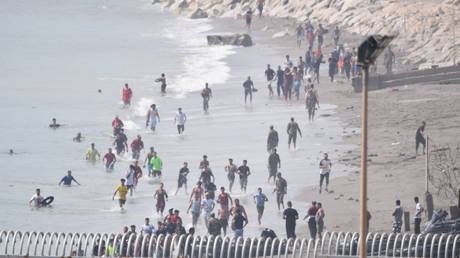
Over 48,000 migrants crossed into Spain’s North African enclave of Ceuta, only to turn right back around within forty-eight hours. It sounds impossible. Yet, according to Spain's Interior Ministry, that is exactly what happened after an unprecedented surge overwhelmed the border.
Social media rumors promised an open door to mainland Europe. Reality delivered a completely different picture.
If you look past the initial panic headlines, the sudden reversal reveals how misinformation collides with harsh logistical walls. Let's break down what actually happened during the Ceuta border crisis and why tens of thousands chose to return.
The Social Media Myth That Triggered the Surge
Why did roughly 50,000 to 60,000 people suddenly rush the border? The catalyst wasn't a coordinated political movement. It was viral content.
Days before the breach, false narratives flooded online platforms, claiming that Spain's heavily guarded border fences were wide open. Young people in Morocco saw videos suggesting that anyone who crossed into Ceuta could walk straight into mainland Europe.
They packed light. They expected a smooth journey.
Instead, they hit a dead end. Ceuta spans just about 20 square kilometers. It is geographically isolated, heavily policed, and completely unequipped to absorb a population surge equal to a massive chunk of its own residents.
What Migrants Found Inside Ceuta
Reaching Spanish territory turned out to be the easy part. Surviving the aftermath was entirely different.
Local reception centers hit maximum capacity almost instantly. Supermarkets closed their doors. Prices for basic goods skyrocketed, with reports of simple food items selling for absurd amounts. Thousands slept outdoors in the rain, shivering in soaked clothes, with zero access to running water or proper shelter.
The atmosphere soured fast. Local residents and neighborhood groups pushed back against the gridlock. Police cordoned off zones, and hopes of catching a ferry to mainland Spain evaporated because strict European Union border rules require rigorous identity checks at official ports.
You can't just slip past the Schengen border controls. The migrants realized they weren't entering Europe. They were trapped in an open-air bottleneck.
The Reality Check on Voluntary Returns
By Friday evening, Spain's interior ministry confirmed that roughly 48,300 people had crossed back over the frontier into Morocco.
Some left because Spanish security forces and local containment measures tightened the screw. But a massive portion went back voluntarily. Exhausted, starving, and broke, they preferred heading home over sleeping on concrete.
"I honestly don't know why I came," one Moroccan returnee told reporters at the border. "People are dying here. Please, for those who haven't come yet, don't."
Tragically, the human cost was severe. At least 57 migrants died during the chaos, either drowning in the rough waters or getting crushed in stampedes along the breakwater barriers.
Wider Shockwaves Across Europe
The sudden influx triggered immediate panic across the European Union.
Italian officials demanded emergency border restrictions, and neighboring France heavily multiplied its security checks along the Spanish border. Prime Minister Pedro Sánchez flew to Ceuta, condemning the crossings as a violation of territorial sovereignty while praising swift bilateral cooperation with Morocco to restore order.
Spain quickly moved to install inflatable maritime barriers and reinforce troop presence to prevent future breaches.
The crisis subsided almost as quickly as it flared up. It stands as a stark warning about how unchecked digital misinformation can manipulate vulnerable populations into dangerous stunts with zero practical payoff.