Martha sits at her kitchen table in Scranton, Pennsylvania, with a calculator that hasn't moved in three days. Beside it lies a glossy flyer from the 2024 campaign trail promising "unprecedented" relief for seniors. Martha isn't looking for a miracle. She is looking for $342. That is the gap between her monthly Social Security check and the price of the medication that keeps her blood from clotting into a terminal event.
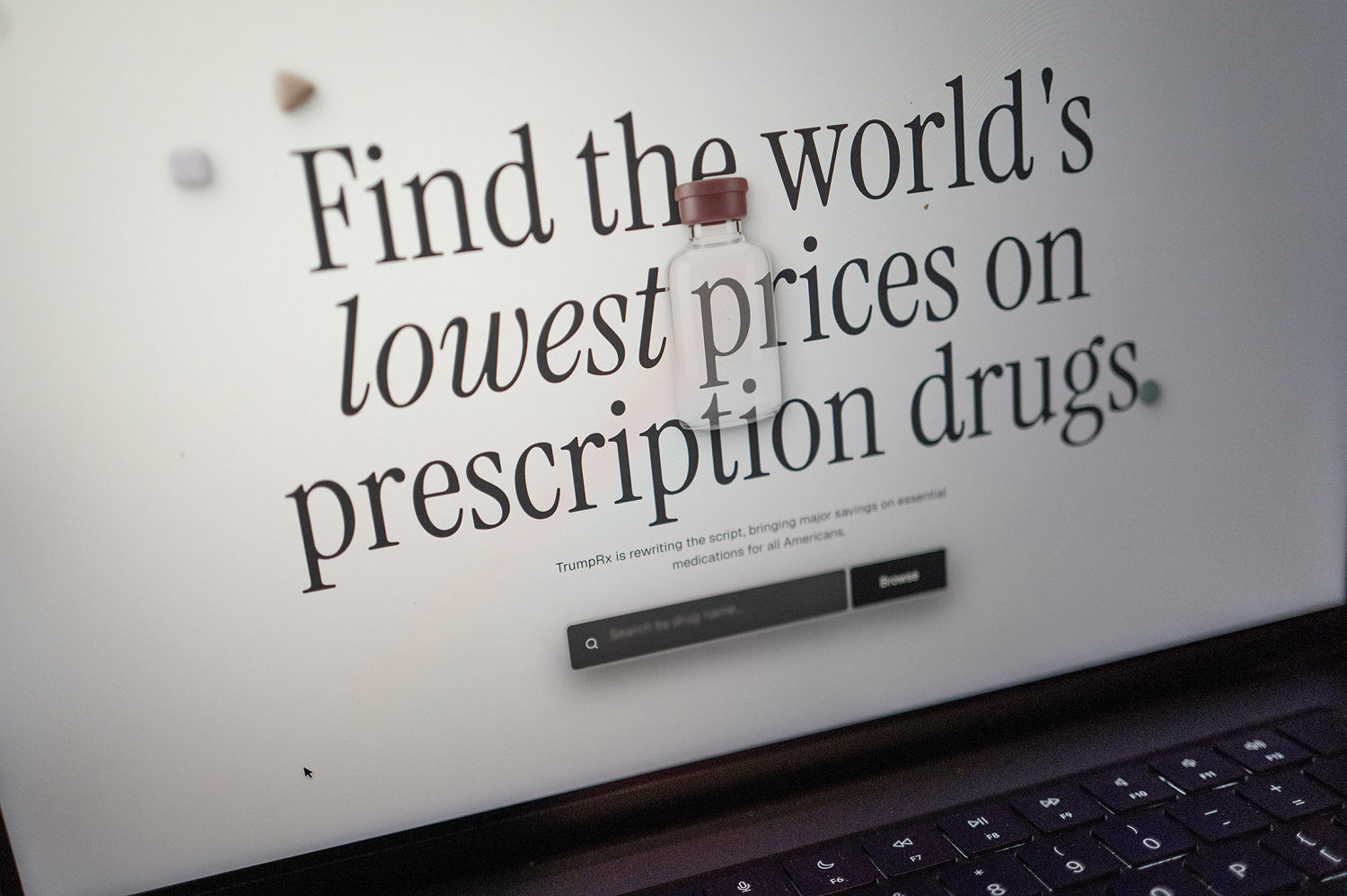
For years, the political airwaves have been thick with the promise of "TrumpRx" or similarly branded salvos against the pharmaceutical industry. We were told the art of the deal would finally be applied to the windowless rooms where drug prices are set. We were told that the "most favored nation" status—a policy designed to ensure Americans don't pay more than citizens in Paris or Tokyo—would level the playing field.
The reality? The field is still tilted. Martha is still staring at her calculator.
The struggle to lower drug prices in America isn't a failure of willpower. It is a failure to understand the architecture of a ghost industry. To understand why those campaign promises often hit a brick wall, we have to look past the podiums and into the labyrinth of Pharmacy Benefit Managers (PBMs), patent thickets, and the strange, circular logic of medical rebates.
The Invisible Middleman
Imagine you want to buy a loaf of bread. In a normal world, you give the baker five dollars, and he gives you the sourdough. In the American pharmaceutical world, there is a man standing between you and the baker. This man tells the baker what he is allowed to bake. He tells you which bread your insurance will cover. Then, he takes a "rebate" from the baker behind his back, which actually raises the price of the bread for everyone else.
These are the PBMs. They were originally designed to process claims and negotiate bulk discounts. Over time, they morphed into the gatekeepers of the American medicine cabinet.
When a political administration vows to lower costs, they often target the manufacturers. It makes sense. Big Pharma is an easy villain. But if you force a manufacturer to lower their list price, the PBM might simply remove that drug from their "formulary"—the list of covered medications—because a lower price means a smaller rebate for the middleman.
It is a hostage situation where the patient is the only one without a weapon.
During the first Trump administration, various executive orders attempted to bypass this by tying Medicare prices to international benchmarks. It sounded revolutionary. If Germany pays $50 for an insulin pen, why should an American pay $300? But the policy faced an immediate, bruising defeat in the courts. The legal system isn't built for "deals." It is built on statutes, and the existing laws give pharmaceutical companies a nearly infinite set of tools to protect their margins.
The Patent Thicket
Consider the curious case of "evergreening."
When a company develops a breakthrough drug, they get a patent. This is the reward for the massive risk and cost of R&D. For twenty years, they own the throne. But as that twentieth year approaches, something magic happens. They change a single molecule. They switch the delivery method from a pill to a film that dissolves on the tongue. Or they change the coating so it lasts twelve hours instead of eight.
Suddenly, they have a "new" patent. The generic competitors, ready to flood the market with affordable alternatives, are pushed back another decade.
This isn't an edge case; it’s the business model. For a patient like Martha, this means the "affordable" version of her medicine is always five years away. It is always just over the horizon. When politicians promise to "bring down prices," they are often talking about the list price—the sticker price on the box. But the list price is a fiction. The real price is determined by these overlapping layers of legal protection and secret back-room deals.
The "TrumpRx" approach relied heavily on the idea that a strong executive could bully these prices down through sheer force of personality. But the pharmaceutical industry is a $1.5 trillion machine. It doesn't move because someone shouts at it. It moves when the underlying incentives are dismantled.
The Rebate Trap
There is a specific kind of cruelty in the "rebate" system.
When a drug company gives a rebate to an insurer or a PBM, that money rarely goes directly into Martha’s pocket. Instead, it’s used to lower the overall "premiums" for everyone in the plan. On the surface, this sounds like a win. Everyone's monthly bill goes down by a few dollars.
But for the person actually standing at the pharmacy counter, the cost remains astronomical. Martha is effectively subsidizing the healthy people in her insurance pool. She is paying the full, un-rebated price at the point of sale, while the "discount" is sucked up by the system to keep the headline numbers looking pretty.
Breaking this cycle requires more than a signature on an executive order. It requires a fundamental decoupling of drug prices from the profit motives of the middlemen.
We often hear about "transparency" as a cure-all. The theory is that if we see the prices, they will go down. But transparency in medicine is like looking at the blueprints of a haunted house while you’re trapped in the basement. Knowing how the walls are built doesn't help you get out. You need a hammer.
The Human Cost of Delay
While the policy wonks in D.C. debate the merits of "Reference Pricing" versus "Inflation Caps," the stakes are measured in heartbeats.
I spoke to a man named David last year. David is a retired contractor. He has a condition that requires a specialized biologic—a drug grown from living cells. These drugs are the miracles of modern science. They are also the most expensive substances on earth, sometimes costing more than $100,000 for a year of treatment.
David was told his "out-of-pocket" cost, even with Medicare, would be $12,000 for the first three months.
He didn't scream. He didn't write a letter to his congressman. He just went home and started "rationing." He took half-doses. He skipped Tuesdays. By the time he was rushed to the ER, his condition had progressed to the point where the $100,000 drug wouldn't have worked anyway.
The political failure isn't just a failure of economics; it’s a failure of empathy. When we talk about "market-based solutions" or "government intervention," we are using bloodless language to describe the difference between a grandfather attending a wedding or being buried before it.
The Illusion of the Quick Fix
Why hasn't the "TrumpRx" model, or any subsequent attempt, fundamentally shifted the needle?
Because the system is designed to absorb shocks. If you cap the price of one drug, the companies raise the price of ten others. If you demand a rebate, they hide the money in a different subsidiary. It is a game of whack-a-mole played with life-saving vials.
The most effective changes have been the quietest ones. The recent $35 cap on insulin for those on Medicare wasn't a "grand deal" struck in a gold-leafed office. It was a targeted, legislative strike that focused on a single, ubiquitous drug. It lacked the theatricality of a massive overhaul, but for the millions of diabetics who suddenly have an extra $200 a month for groceries, the theatre doesn't matter.
We are often told that the high cost of drugs is the price we pay for innovation. We are told that if we squeeze the companies too hard, the "cures of tomorrow" will never be discovered.
It is a powerful argument. It is also a convenient one.
Much of the foundational research for these "miracle drugs" is funded by taxpayers through the NIH. We pay for the seeds, and then we are charged a premium for the fruit.
[Image comparing public vs private funding in pharmaceutical research]
Martha doesn't care about the R&D budgets of a multinational conglomerate. She cares about the $342 gap. She cares that the person she voted for promised that the "days of global freeloading" were over, yet her bill is exactly the same as it was four years ago.
The hard truth is that "fixing" drug prices isn't a single event. It isn't a "Mission Accomplished" banner on a carrier deck. It is a grinding, unglamorous war of attrition against lobbyists, lawyers, and legacy systems. It requires a level of detail and persistence that rarely fits into a campaign slogan or a two-minute news segment.
Martha puts her calculator away. She decides, as many do, to split her pills. She knows she isn't supposed to. She knows the risks. But she also knows that $342 doesn't exist in her world, no matter how many times the men on the television talk about the art of the deal.
The light in the kitchen flickers. The flyer on the table, with its bold fonts and promises of a "New Era in Healthcare," catches the glare. Martha doesn't even look at it as she turns off the light. She has already learned that in the high-stakes world of pharmaceutical politics, the only thing that moves faster than the prices are the excuses.
Would you like me to analyze the specific legislative hurdles that prevented the "Most Favored Nation" drug policy from being implemented?