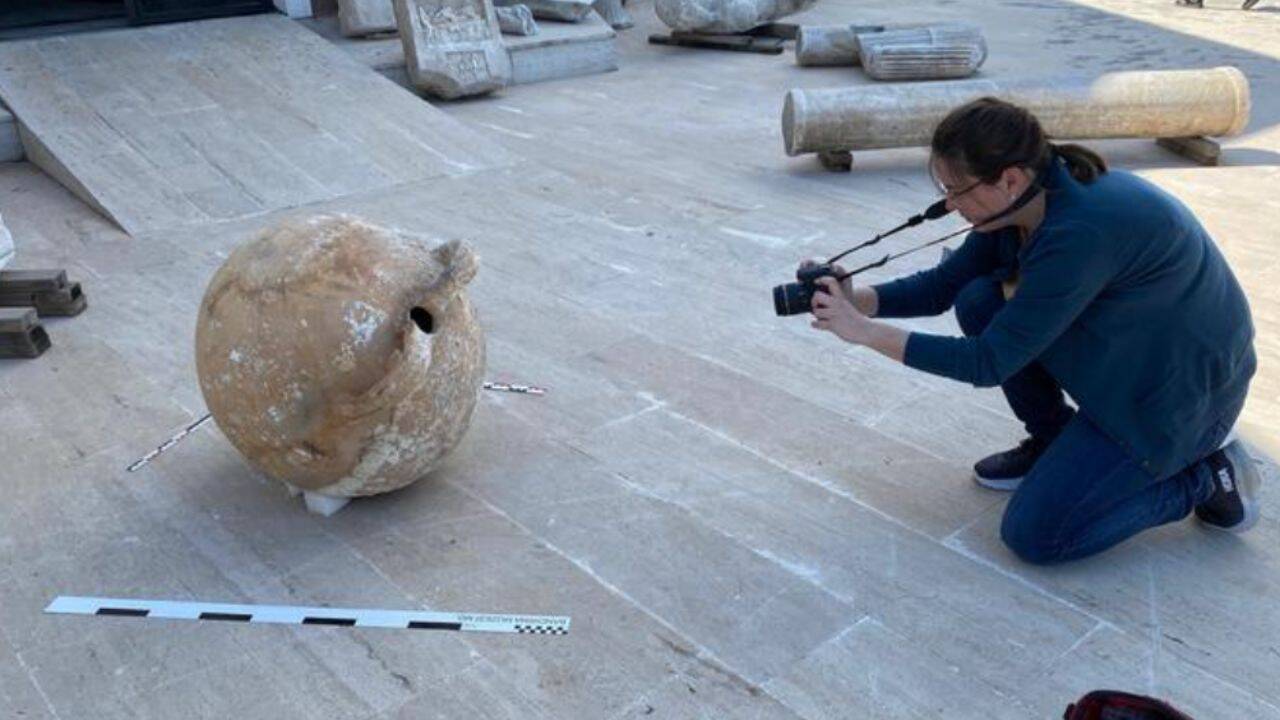
Museum basements are full of broken promises. Thousands of shattered ancient vessels sit in dark drawers, waiting for a conservator to find the right fragment or glue the wrong pieces together with reversible resins. It's slow work. It's expensive. Most importantly, it completely ignores what happens to those artifacts after they go back on display.
Researchers are now changing that entirely. They are building 3D-printed pottery replacements that don't just fill physical gaps in broken vessels—they actually listen to the objects they repair. By embedding tiny micro-sensors directly inside customized ceramic patches, scientists can track structural stress, moisture levels, and environmental shifts in real time.
If you think this is just a neat lab trick, look closer. This technology sits right at the intersection of material science, archaeology, and Internet of Things engineering. It solves a massive blind spot in preservation work: the fact that museum pieces degrade from the inside out, often long before anyone notices a crack on the surface.
Why Traditional Restorations Fail Artifacts
For centuries, museum restoration meant plaster, epoxy, and a lot of guesswork. Conservators would eyeball a missing handle or a broken rim, mold a replacement out of synthetic materials, and paint it to match the original glaze.
It works visually. Structurally? Not so much.
Traditional fillers react differently to temperature and humidity than ancient clay. Over decades, seasonal expansions cause micro-fractures right along the glue lines. Humidity gets trapped. Salt crystals form inside the ceramic pores and blow the artifact apart from the interior.
Conservators basically had to guess when a repaired piece was failing. They would pull items for routine checks, but that handling alone introduces risk. Every time you move a five-thousand-year-old amphora, you put it in danger.
Sensors change the dynamic completely. Instead of waiting for a piece to snap, the artifact tells you when it hurts.
How 3D-Printed Smart Ceramics Work
You can't just shove a modern computer chip into a fragile clay pot. The materials have to match, and the electronics have to survive the firing process or be integrated cleanly without ruining the historic aesthetic.
Researchers use high-resolution photogrammetry or laser scanning to map the exact geometry of a missing ceramic section. Once they have the digital void, they design a custom infill using advanced computer-aided design software.
The manufacturing process usually involves specialized ceramic 3D printing techniques, such as direct ink writing or binder jetting. During printing, micro-channels or cavities are left open within the structure. Tiny piezoresistive sensors or capacitive moisture sensors slide into these pockets.
- The outer shell matches the texture, porosity, and color of the original artifact.
- Internal channels house conductive traces or wireless micro-tags.
- The sensor node communicates stress distribution across the weak points of the vessel.
You get a repair that supports the physical weight of the vessel while quietly gathering diagnostic data.
Moving Beyond Museums
While museums get the press releases, the implications reach far outside climate-controlled galleries.
Civil engineers deal with subterranean infrastructure made of concrete and clay pipes that face the exact same structural decay. When a municipal water main or a historic brick sewer line starts shifting underground, digging it up to inspect it costs a fortune.
Applying smart ceramic patch technology to critical infrastructure creates self-monitoring assets. Imagine a municipal drainage system where replacement sections report their own load capacity and internal pressure directly to a maintenance dashboard.
Archaeologists working in active field sites also benefit. Instead of hauling fragile, incomplete shards back to a lab just to study structural integrity, field teams can print provisional smart patches on-site. They get immediate data on how environmental fluctuations in an open trench affect fragile, unbaked earthenware.
The Technical Hurdles Nobody Talks About
Let's be realistic. This isn't a plug-and-play solution yet.
Power is a nightmare. You cannot wire an ancient Greek kylix to a wall outlet. Researchers are experimenting with passive radio-frequency identification tags and ambient energy harvesting, but keeping sensors powered over decades without bulky batteries remains a massive engineering bottleneck.
There is also an intense ethical debate in the conservation community. Purists hate the idea of altering an ancient object with modern electronics. Is a 3D-printed infill with a microprocessor still an authentic artifact? Where do we draw the line between restoration and modification?
Museum boards are conservative by nature. Getting approval to embed foreign technology into irreplaceable cultural heritage items takes years of safety testing. Nobody wants to be the curator whose high-tech repair project overheated and ruined a priceless neolithic jar.
What Comes Next for Smart Preservation
The tools are dropping in price. High-resolution ceramic printers that used to cost six figures are shrinking into desktop footprints. Material scientists are formulating conductive clay pastes that can be fired in standard kilns alongside traditional binders.
If you work in heritage preservation, stop viewing 3D printing as a cheap way to make visual replicas. Look at it as a structural platform. The next generation of conservation won't just keep broken history together—it will let history speak for itself, reporting its own status directly to your phone.