History loves a massive price discrepancy. In 1862, a sprawling chunk of Colorado wilderness changed hands for roughly thirty cents an acre. Nobody involved had any grand ecological vision. The owners viewed the property as a distant, abstract asset they never even bothered to visit.
That dirt-cheap transaction set off a chain reaction spanning over a century. It ultimately transformed a neglected private investment into the cornerstone of the Great Sand Dunes National Park and Preserve. If you want to understand how modern conservation actually works, you have to look past the scenic overlooks and trace the messy path of real estate speculation, water rights, and multi-million dollar buyouts.
The Origins of the Baca Location
The story starts way before Colorado became a state. In 1823, the Mexican government awarded a massive land grant to Luis María Cabeza de Baca in what is now New Mexico. After the United States took control of the Southwest following the Mexican-American War, that original claim dissolved into a legal nightmare with federal authorities.
To settle the dispute, the government let the Baca heirs select an equivalent amount of land elsewhere. They chose a massive 99,000-acre parcel in the San Luis Valley of Colorado, sitting right at the base of the rugged Sangre de Cristo Mountains.
Here is the kicker. The Baca family never set foot on their new Colorado property. To them, it was just paper wealth sitting in a drawer. They wanted cash, not mountains and scrubland.
In 1862, the heirs offloaded the entire tract to William Gilpin, who would soon become Colorado's first territorial governor, for pennies. At thirty cents an acre, Gilpin got a steal. But he also inherited a remote landscape that required heavy capital to make productive.
From Open Range to Working Ranch
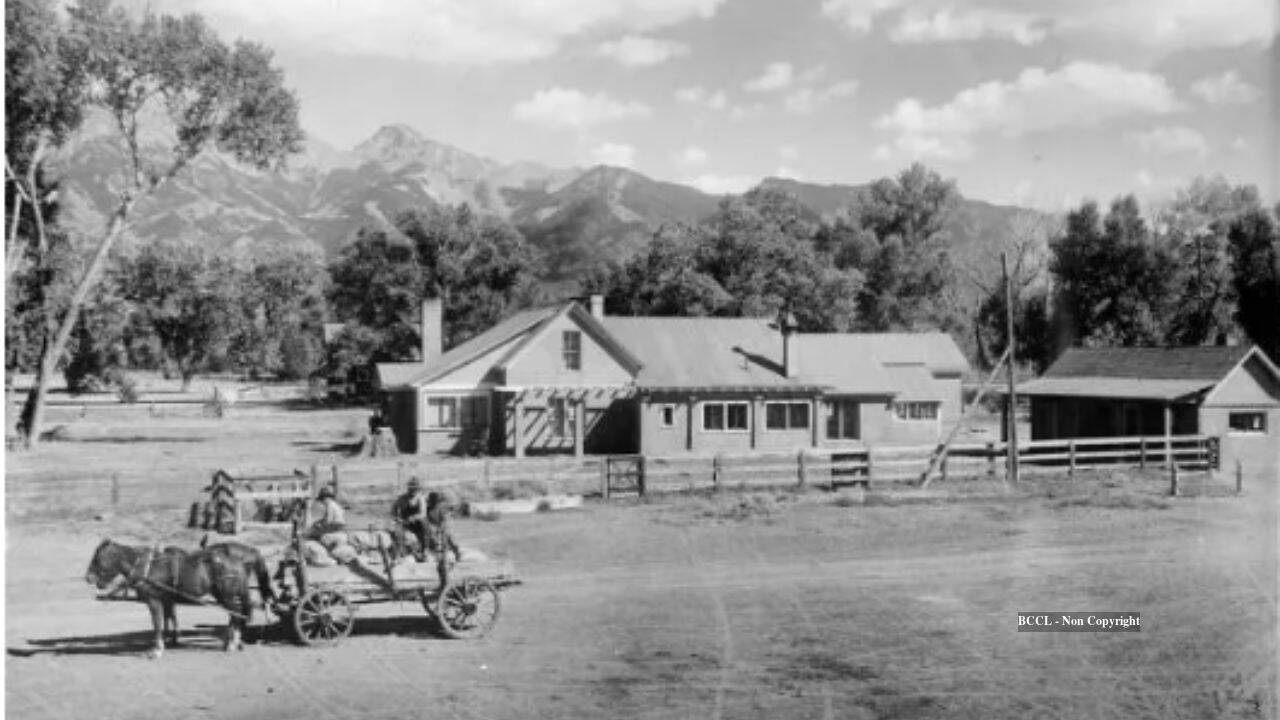
Once Gilpin took title, the property transitioned into a hard-working cattle ranch. Local operators leased the grazing rights, turning the quiet valley into a domain of barbed wire, irrigation ditches, and seasonal cattle drives.
During the 1870s, a cattleman named George Adams heavily developed the property, adding corrals, outbuildings, and formal water channels. For generations, the Baca Ranch operated as an economic engine for the San Luis Valley. It wasn't an untouched wilderness. It was a rugged commercial enterprise where cattle grazed beneath 14,000-foot peaks and snowmelt fed the valley floor.
Local ranchers understood the land through its utility. Water was life. Grass was currency. Nobody imagined that the remote ranch would one day become a battleground for national preservation.
The Water Wars That Saved the Valley
By the late twentieth century, the quiet rhythm of the ranch hit a wall. Rapid urban growth along Colorado’s Front Range created an insatiable thirst for water. Speculators and corporate entities cast their eyes toward the San Luis Valley's vast underground aquifers.
Plans emerged to pump massive amounts of water out from beneath the Baca Ranch and pipe it across the continental divide to growing cities. If those projects succeeded, the local agricultural economy would collapse. The unique hydrological system feeding the neighboring sand dunes would dry up completely.
Local residents didn't back down. They organized, fought legal battles, and pushed back against corporate water extraction. They realized that protecting the valley meant controlling the land surrounding it.
A Thirty-Million-Dollar Turning Point
The standoff ultimately triggered federal intervention. In 2000, Congress authorized a complex purchase to acquire the massive Baca Ranch. The price tag came out to $31.28 million.
The acquisition was anything but straightforward. It required a coalition of federal agencies, local communities, private conservation groups like The Nature Conservancy, and even institutional donors like Yale University.
When the dust settled, the land was carved up for public good. Portions of the historic ranch became the Baca National Wildlife Refuge, while other sections expanded the old Great Sand Dunes National Monument into a full-scale national park and preserve.
The park grew to nearly four times its original size. More importantly, the purchase secured the entire ecological loop—from alpine tundra down through the wetlands, forests, and towering sand dunes.
Why This History Matters Today
When you visit the northern sections of the Great Sand Dunes today, you are walking across former Baca Ranch land. Elk herds and pronghorn roam freely through grasslands framed by cottonwood creeks.
The contrast between the 1862 sale and the 2000 buyout highlights how human definitions of value shift over time. What started as a cheap piece of paper traded by absent heirs became a vital ecosystem shield.
If you plan to explore the San Luis Valley, take time to look beyond the massive sand piles. Drive the backcountry roads, study the old irrigation canals, and recognize that the landscape exists in its current wild state only because local residents fought to keep corporate pipelines at bay. Conservation isn't just about drawing lines on a map. It requires understanding the economic pressures and water rights that dictate who controls the dirt beneath our feet.