A check arrives at a small, cramped office in a forgotten corner of an American city. The roof leaks when it rains. The staff of four people spent the morning arguing over whether they could afford to fix the copy machine or if they should route that money to the community food pantry. The organization does not have a development director. They do not know how to write a ninety-page grant proposal that conforms to the labyrinthine requirements of traditional corporate foundations. They just feed people. They keep kids safe after school.
Then, the mail carrier drops off an envelope. Inside is an unrestricted check for two million dollars. There are no strings attached. There is no requirement to put a billionaire’s name on the side of a brick building. No quarterly reports are demanded to prove the money wasn't wasted on printer ink.
This is not a hypothetical fable. It is happening in real time.
Over the last few years, MacKenzie Scott has quietly transferred $26.3 billion of her personal wealth to thousands of local organizations just like that one. She does it through an operation called Yield Giving, utilizing what her peers call a trust-based philosophy. She finds people already doing the work, hands them the capital, and steps back into the shadows.
But in the rarified air of the ultra-wealthy, this silence is treated as an act of aggression. To some of the most powerful men on Earth, a billionaire giving away fortunes without demanding a monument in return looks less like charity and more like a systemic threat.
The Calculus of Control
To understand why a woman giving away her own money can cause an international uproar, you have to understand how modern power works.
For decades, elite philanthropy operated on a strict, unspoken transactional agreement. A tycoon builds an empire, accumulates a fortune that rivals the gross domestic product of a small nation, and then establishes a private foundation bearing their own name. The foundation gives away exactly enough money to satisfy tax requirements, usually focusing on high-profile institutions like elite universities or gleaming hospital wings. The giver retains control. The capital stays safely ensconced in investments that often generate more returns than the foundation distributes.
Scott broke the machine.
She did not build a fortress-like foundation to hoard the wealth. She simply started emptying the safe. In 2025 alone, her donations accounted for more than one-third of all individual megagifts across the entire United States. While standard institutional philanthropy requires nonprofits to jump through endless administrative hoops, Scott’s team uses quiet research to identify organizations that support underserved communities, sending large checks with zero red tape.
This brings us to the core tension of our modern economic landscape. When you give away billions with no strings attached, you are doing something radical: you are trusting ordinary people to solve their own problems.
To Elon Musk, this brand of trust is not just inefficient. It is dangerous.
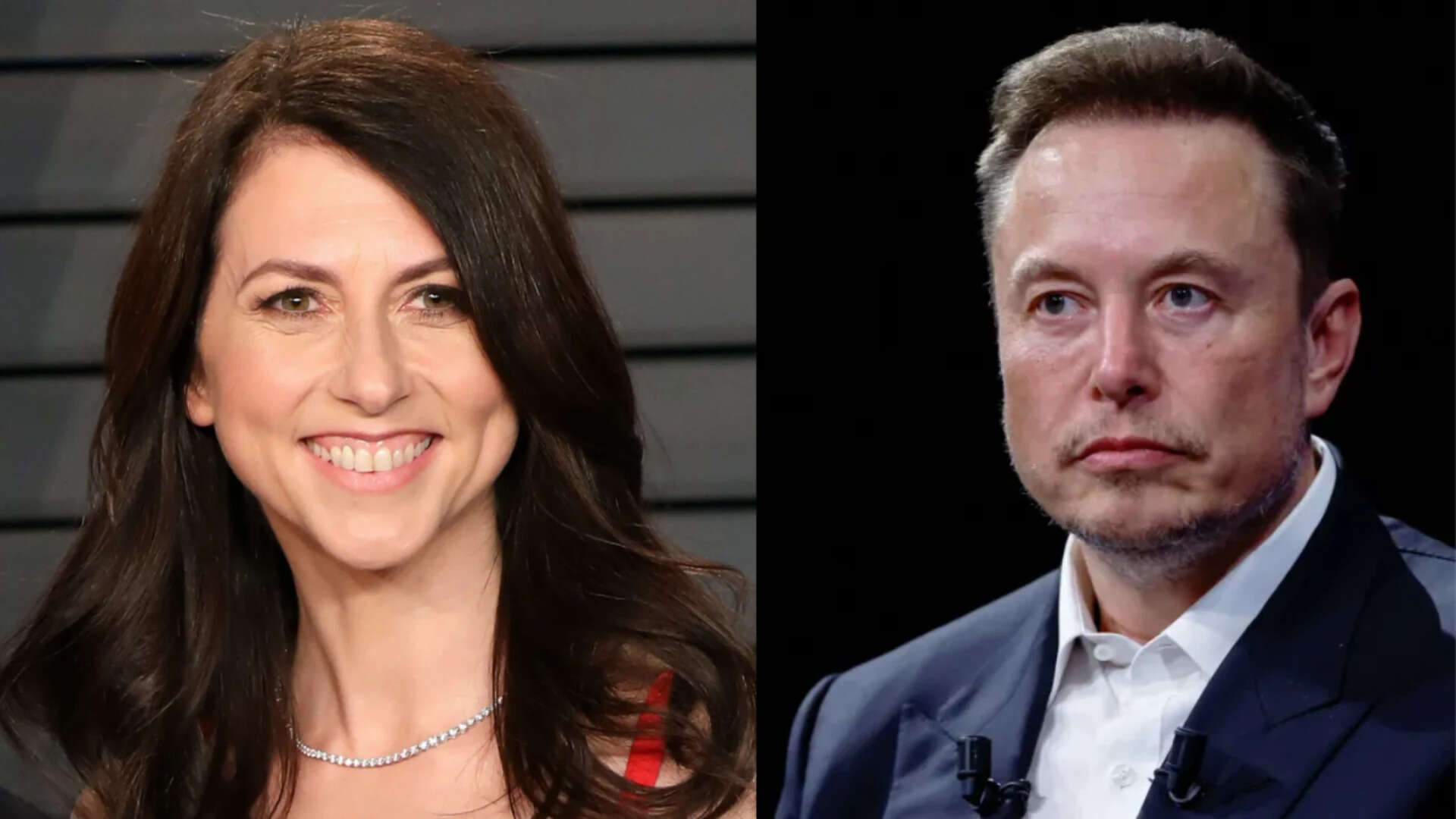
Responding on his social media platform to criticisms of Scott’s philanthropic focus—which heavily favors grassroots organizations working on race, gender, climate, and marginalized communities—Musk didn't mince words. He agreed with assertions that her spending is making the world a worse place. It followed a previous, now-deleted post where he suggested that super-rich ex-wives who hate their former spouses should be listed among the reasons Western civilization died.
The friction here isn't just political. It is ideological. It is a clash between two fundamentally opposing views of human capability.
Two Ways to Rule the Future
Look closely at the two titans at the center of this cultural debate.
On one side is Musk, a man who believes humanity can only be saved by grand, centralized, top-down engineering. In his worldview, progress is driven by singular geniuses who build rockets, rewrite code, and engineer artificial intelligence. Money, in this framework, must be concentrated in the hands of the visionary so they can deploy it with maximum leverage. For a man trying to colonize Mars, sending a few million dollars to a community college or a local women's shelter looks like wasting precious fuel on an engine that isn't moving the world forward.
Musk’s own foundation operates with a skeleton crew, holding massive assets on paper while distributing a fraction of a percent of his total wealth to independent public charities. The wealth remains centralized under the pilot's control.
On the other side is Scott. Her philosophy assumes that the people closest to a problem are the ones most qualified to fix it. If a neighborhood is struggling with affordable housing, you don't need a tech mogul to design a modular smart-pod; you need to give the local housing trust the capital to buy the apartment building down the street before a private equity firm does.
It is the difference between a monument and a ecosystem. One is designed to be looked at from afar. The other is designed to grow from the dirt up.
Consider what happens next when these two philosophies collide in the public square. When criticized for her focus on diversity and equity initiatives, Scott didn't engage in an online shouting match. She didn't buy a billboard. She didn't tweet a meme.
Instead, she doubled down. She opened up an application process that ultimately distributed even more money to hundreds of community-focused groups. Her response to the accusation that she was destroying civilization was simply to accelerate the rate at which she was funding it.
The Paradox of the Empty Safe
There is a strange, mathematical irony built into Scott’s crusade. She has stated a desire to keep giving until the vault is entirely empty. Yet, because her wealth is tied to the relentless appreciation of Amazon stock, her net worth still hovers around $30 billion even after giving away more than $26 billion. The system generates wealth faster than she can disburse it through her quiet, unburdened methodology.
This frustrates the gatekeepers of traditional philanthropy. Organizations like the Chronicle of Philanthropy have struggled to even track her giving because her representatives refuse to provide the standard public relations packets or validation data. She is missing from lists she dominates by volume alone, simply because she refuses to participate in the performance of generosity.
We live in an era obsessed with metrics, tracking, and personal branding. We are told that every action must be optimized, broadcast, and monetized. In that environment, a person who quietly moves billions of dollars into the hands of strangers without asking for a receipt or a thank-you note feels deeply disruptive. It exposes the fiction that elite philanthropy is solely about helping others.
It proves that for many, charity is about keeping score.
The real discomfort surrounding MacKenzie Scott isn't the dollar amount, nor is it the specific list of nonprofits she funds. The discomfort stems from the mirror she holds up to the billionaire class. She is demonstrating that it is entirely possible to divest from massive wealth without needing to control the world in the process.
The cash arrives in the mail. The roof gets fixed. The kids have a place to go after school. The world keeps turning, not because a single visionary commanded it to, but because thousands of invisible hands were finally given the resources to hold it up.