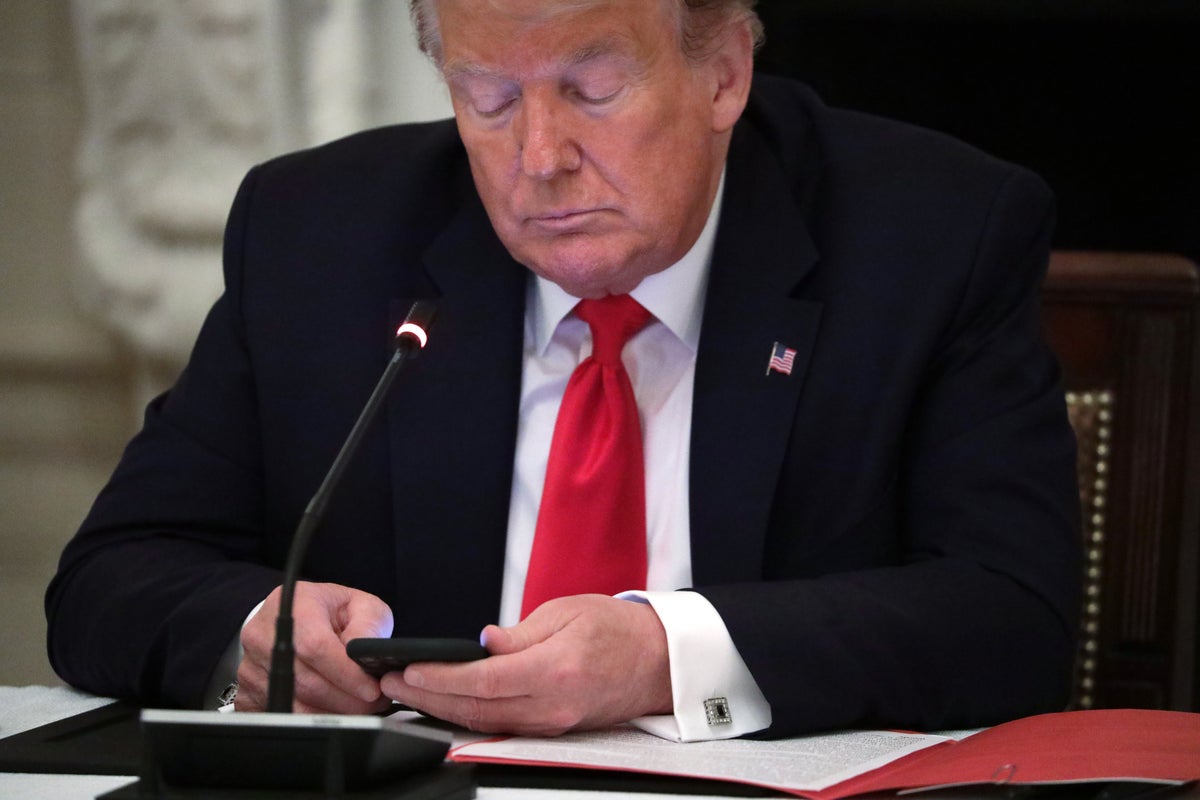
The mainstream media is obsessed with the biological clock. They see a timestamp of 2:14 AM and immediately pivot to armchair psychology. They scream about "instability," "lack of sleep," or "erratic behavior." It is a tired, lazy narrative that misses the entire point of modern asymmetrical communication.
While journalists are tucked in their high-thread-count sheets, waiting for the morning briefing to tell them what to think, a massive psychological operation is unfolding in real-time. A third of the President’s posts happen during the "graveyard shift," and the pundit class treats this like a bug. Meanwhile, you can explore other developments here: Mali Doesn't Have Traitors It Has A Business Model.
It’s not a bug. It’s the feature that breaks the traditional news cycle’s back.
The Death of the Morning Edition
For decades, the media controlled the narrative through a predictable, linear process. A politician says something at 10 AM, the networks process it by 6 PM, and the newspapers print it for the next morning. It was a filtered, sanitized, and slow-moving stream. To understand the full picture, check out the excellent analysis by TIME.
By posting at 2 AM, the President bypasses the filters entirely. He doesn't just enter the conversation; he owns the conversation before it even starts. When the "Morning Joe" producers wake up at 4 AM to build their show, the script has already been written for them—not by their editors, but by the man they claim is "unhinged."
This is the First-Mover Advantage applied to consciousness. By the time a rebuttal is drafted, the original post has already racked up millions of impressions, shaped the mood of the base, and forced the opposition into a defensive crouch. You aren't watching a man who can't sleep; you're watching a man who understands that in a 24-hour digital war, whoever sleeps last wins the first three hours of the next day.
Direct Pipeline vs. Corporate Filters
The "report" everyone is buzzing about frames nocturnal posting as a sign of isolation. That is a fundamental misunderstanding of how digital influence works.
In the corporate media world, every word is vetted by seventeen lawyers and three PR consultants. The result is a bland, beige slurry of "on-background" quotes and "sources familiar with the matter." It has no soul. It has no teeth.
When a post drops at midnight, it carries the weight of authenticity. It feels raw. It feels unmediated. In an era where trust in institutional media is at an all-time low, "unfiltered" is the highest form of currency. The late-night timestamp is a badge of proof that you are hearing directly from the source, not a sanitized version approved by a committee in a glass office building.
I’ve seen billion-dollar brands spend months trying to "humanize" their CEOs. They hire "authenticity coaches" and script "impromptu" videos. It never works. People can smell the artifice. The President’s late-night habits achieve in thirty seconds what a Madison Avenue agency couldn't do with a $10 million budget: they create a direct, visceral connection with a following that feels they are part of a private, late-night conversation.
The Algorithmic Void
Let's talk about the mechanics of the "dead hours." Between 11 PM and 5 AM, the volume of noise on social platforms drops significantly. Most "high-authority" accounts are silent. Most news organizations are running automated "Best of" threads.
When you post into this void, your engagement-to-competition ratio sky-rockets.
- Higher Visibility: With fewer total posts entering the feed, the platform's algorithm has fewer options to show active users. Your content occupies a larger percentage of the available "real estate."
- Global Reach: 2 AM in Washington D.C. is 7 AM in London and 3 PM in Tokyo. While the domestic media is asleep, the global narrative is being set.
- The "Breaking" Effect: Because the news cycle is slowest at night, any activity is treated as a "breaking" event. A post that might get buried during the 2 PM chaos becomes the lead story during the 4 AM news cycle simply because it is the only new thing that happened.
Psychological Dominance and the "Rent-Free" Effect
There is a concept in military strategy known as the OODA loop (Observe, Orient, Decide, Act). The goal is to cycle through these steps faster than your opponent. If you can act and react faster than the enemy, you eventually break their ability to respond coherently.
By posting at all hours, the President keeps his detractors in a state of permanent "Observe and Orient." They are constantly reacting to him. They cannot set their own agenda because they are too busy decoding his.
Imagine a scenario where a political rival spends three days crafting a policy rollout. They’ve done the focus groups. They’ve bought the airtime. Then, at 3:15 AM on the day of the launch, a single Truth Social post pivots the entire national conversation toward a completely different topic. The rival’s "big moment" is dead on arrival.
This isn't "habitual" behavior. It’s tactical disruption. It forces the media to live on his timeline. It makes them dependent on his insomnia for their ratings. They hate the late-night posts because it forces them to work harder, yet they can't look away because their business model depends on the outrage those posts generate.
The Risk of the Counter-Intuitive
Is there a downside? Of course. Perpetual conflict is exhausting. It creates a high-friction environment that can alienate the "normies" who just want a quiet Tuesday.
But we aren't living in a quiet era. We are living in an era of high-stakes attention economics. In this market, the most dangerous thing you can be is predictable. The most dangerous thing you can be is silent.
The "lazy consensus" says a President should be well-rested and disciplined. That is a 20th-century view of leadership. In the 21st century, leadership is about who controls the digital atmosphere. If you are sleeping while your opponents are scrolling, you are losing.
The Modern Command Center
Stop looking at these posts as "tweets" or "truths." Look at them as precision-guided munitions aimed at the traditional media’s monopoly on truth.
The report claiming a third of the posts happen at night is meant to be a critique. It’s actually a measurement of a work ethic that refuses to acknowledge the "off" switch the establishment relies on to regain control.
When you see a post at 3 AM, don't ask why he's awake. Ask why his opponents are still asleep, thinking they can win a war that never stops.
The era of the "9-to-5" presidency is over. The era of the "18-hour-agitation" is here. If you think the timestamp is the problem, you’ve already lost the battle.
Go back to sleep. The world will be different by the time you wake up.