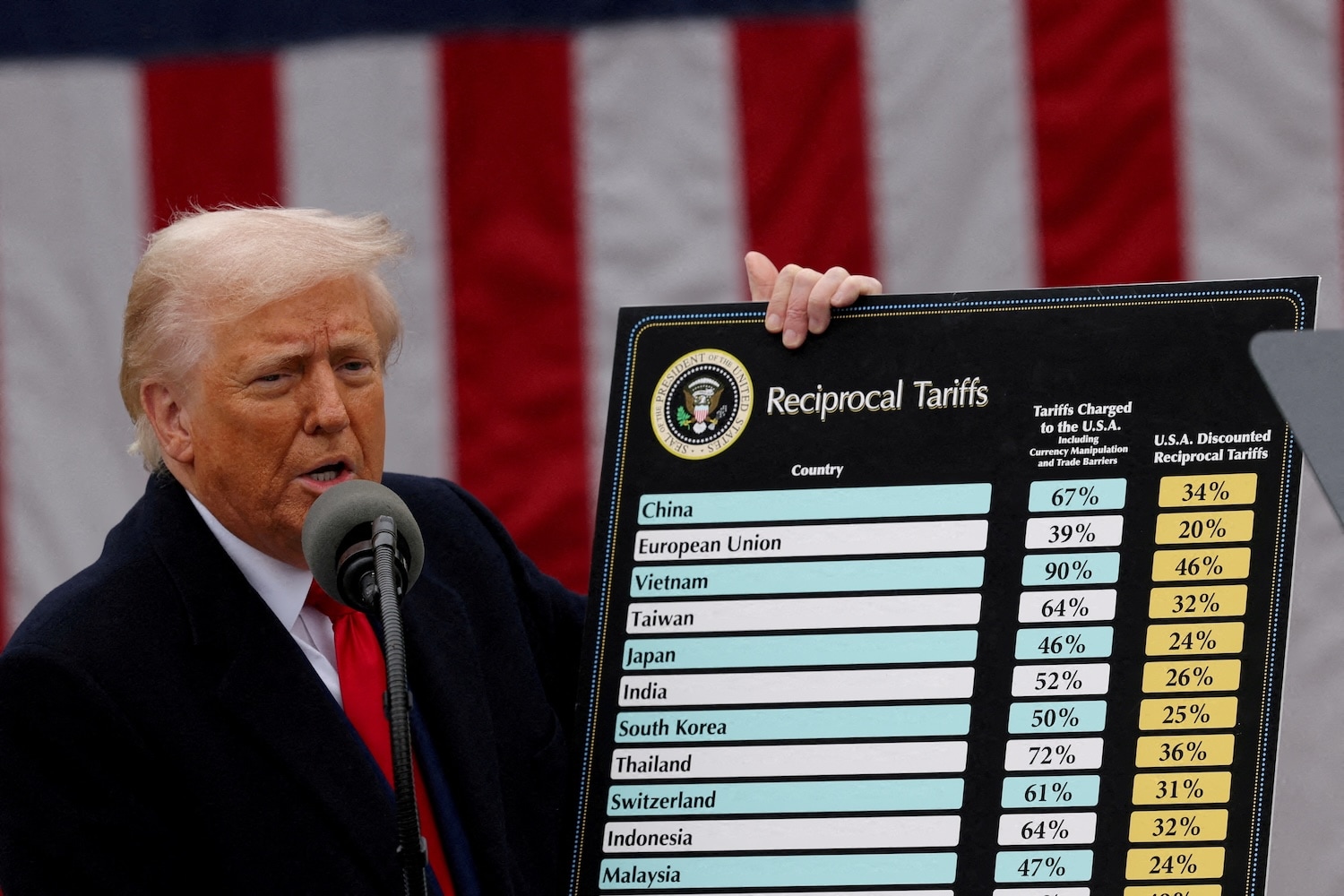
The United States Treasury faces a massive structural deleveraging of its trade enforcement accounts following the Supreme Court’s decision to quash the rule governing reciprocal tariff collections. This shift necessitates the immediate liquidation of approximately $166 billion in contested duties, an amount that represents a significant percentage of annual customs revenue. This is not merely a bureaucratic refund process; it is a systemic unwinding of a specific protectionist mechanism that failed the test of constitutional or statutory scrutiny.
The Constitutional Breach and the Mechanism of Failure
The core of this fiscal event lies in the "Reciprocity Rule," a regulatory framework that allowed the executive branch to bypass standard legislative oversight to impose duties on imports based on the perceived unfairness of foreign trade barriers. The Supreme Court identified a fundamental misalignment between the executive's delegated powers and the implementation of these specific tariffs.
The failure can be categorized into three distinct layers:
- Statutory Overreach: The administration utilized broad emergency powers to address what were essentially routine trade imbalances. The Court ruled that the "National Security" or "International Emergency" justifications used to trigger these tariffs did not meet the evidentiary threshold required by the underlying statutes.
- Due Process Deficits: The mechanism for collecting these tariffs lacked a transparent appeal process, effectively denying importers the ability to challenge the valuation or the necessity of the duties at the point of entry.
- Legislative Encroachment: By setting rates based on foreign behavior rather than domestic economic impact, the executive branch assumed a taxing power that resides exclusively with Congress under Article I of the Constitution.
Quantifying the Liquidity Shock
The $166 billion figure does not exist in a vacuum. It represents capital that has been extracted from the private sector—specifically from the supply chains of automotive, electronics, and agricultural industries—over several fiscal cycles. The refund process creates a unique set of macroeconomic ripples that will affect both the public deficit and private sector balance sheets.
The Refund Priority Matrix
The Department of the Treasury and U.S. Customs and Border Protection (CBP) must now triage these disbursements. The refund hierarchy is dictated by the statute of limitations and the specific legal status of the import entries.
- Type A: Protested Entries: Importers who filed formal protests at the time of payment hold the highest priority. These claims are legally "ripe" and require immediate settlement, often including interest accrued from the date of the protest.
- Type B: Unliquidated Entries: Shipments that have entered the country but whose final duty assessment has not been finalized by CBP. These are technically the easiest to resolve, as the government can simply zero out the duty requirement before finalization.
- Type C: Closed Entries: These represent the greatest hurdle. For entries where the 180-day protest window has closed, the government must create a special administrative vehicle to reopen the files, as the Supreme Court ruling effectively renders the original collection void ab initio.
Strategic Bottlenecks in the Disbursement Pipeline
The administrative burden of returning $166 billion is unprecedented. CBP’s automated systems are designed for collection, not mass-scale retroactive auditing and refunding.
The Verification Gap
Every refund claim requires a one-to-one match between the original entry summary (CBP Form 7501) and the proof of payment. Discrepancies in valuation, exchange rates at the time of entry, and changes in corporate ownership (mergers or acquisitions of the importing entities) create a massive data verification bottleneck.
The Interest Rate Liability
Under 19 U.S.C. § 1505, the government is generally required to pay interest on overpayments of duties from the date of payment to the date of refund. With the federal funds rate at its current levels, the interest component of the $166 billion could add an additional 4% to 7% to the total payout, depending on the vintage of the entry. This transforms a $166 billion refund into a potential $175 billion+ liability.
Supply Chain Reinvestment Dynamics
The infusion of $166 billion back into the private sector will act as a targeted stimulus for specific industries. However, the impact is not uniform across all sectors.
The Automotive Sector
Vehicle manufacturers and Tier 1 suppliers paid a disproportionate share of reciprocal tariffs on steel and aluminum components. The return of this capital will likely be diverted into two streams:
- R&D Acceleration: Specifically for electric vehicle (EV) battery chemistry and autonomous driving software, where capital intensity is highest.
- Debt Reduction: Many firms took on high-interest short-term debt to maintain liquidity while their capital was locked in contested tariff accounts.
The Electronics and Semiconductor Vertical
The tariffs on high-tech components often reached 25%. For companies operating on thin margins in consumer electronics, the refund represents a recovery of nearly two years of lost net profit.
The Risk of Inflationary Pressure
There is a non-trivial risk that the sudden injection of $166 billion in liquidity will counteract the Federal Reserve’s efforts to maintain price stability. Unlike standard government spending, which is budgeted and phased, these refunds arrive as lump-sum payments to corporations. If these funds are used for aggressive stock buybacks or large-scale capital expenditure in a supply-constrained environment, they may trigger localized price spikes in industrial commodities.
Legal Precedents and Future Trade Policy
The quashing of this rule sets a high bar for future "reciprocal" trade actions. Any future administration attempting to implement a "tit-for-tat" tariff regime must now ensure:
- Specific Congressional Authorization: Broad delegations of power will no longer suffice; the tariff rates and triggers must be explicitly defined by statute.
- Built-in Sunset Clauses: To avoid the accumulation of massive refundable liabilities, future rules will likely include mandatory review periods where the economic necessity of the tariff must be re-proven.
The legal fallout also extends to international trade relations. By admitting the domestic illegality of these tariffs, the U.S. may inadvertently strengthen the position of trading partners in World Trade Organization (WTO) disputes. Trading partners can now argue that the U.S. itself has acknowledged these duties were not "regularly cleared" under its own legal system.
Operational Strategy for Affected Entities
Corporations expecting refunds must move from a passive "wait and see" posture to an aggressive audit-ready state. The government's refund process will be slow and prone to administrative errors.
- Reconcile Entry Data Immediately: Use automated trade management software to aggregate all Form 7501s from the affected period. Do not rely on CBP’s records, which may have gaps for entries older than five years.
- Calculate the Interest Delta: Independent of the principal refund, firms must calculate the statutory interest owed. This is frequently miscalculated by the government, and the burden of proof for the higher amount lies with the importer.
- Evaluate Tax Implications: These refunds are not "found money." They are a recovery of previously deducted expenses. This will create a significant taxable event in the fiscal year the refund is received, potentially offsetting the liquidity benefits if not managed through strategic tax planning.
- Prepare for Partial Settlements: The Treasury may attempt to negotiate bulk settlements or phased payouts to avoid a single-day drain on the General Fund. Legal counsel should evaluate the net present value (NPV) of a rapid partial settlement versus a full, multi-year payout.
The $166 billion correction marks the end of an era of "unilateral reciprocity" in trade policy. It restores the primacy of the rule of law over executive discretion in the economic sphere, but the cost of this restoration is a massive administrative and fiscal burden that will take years to fully resolve. Firms must prioritize the integrity of their historical trade data to ensure they are not left at the back of the disbursement queue.