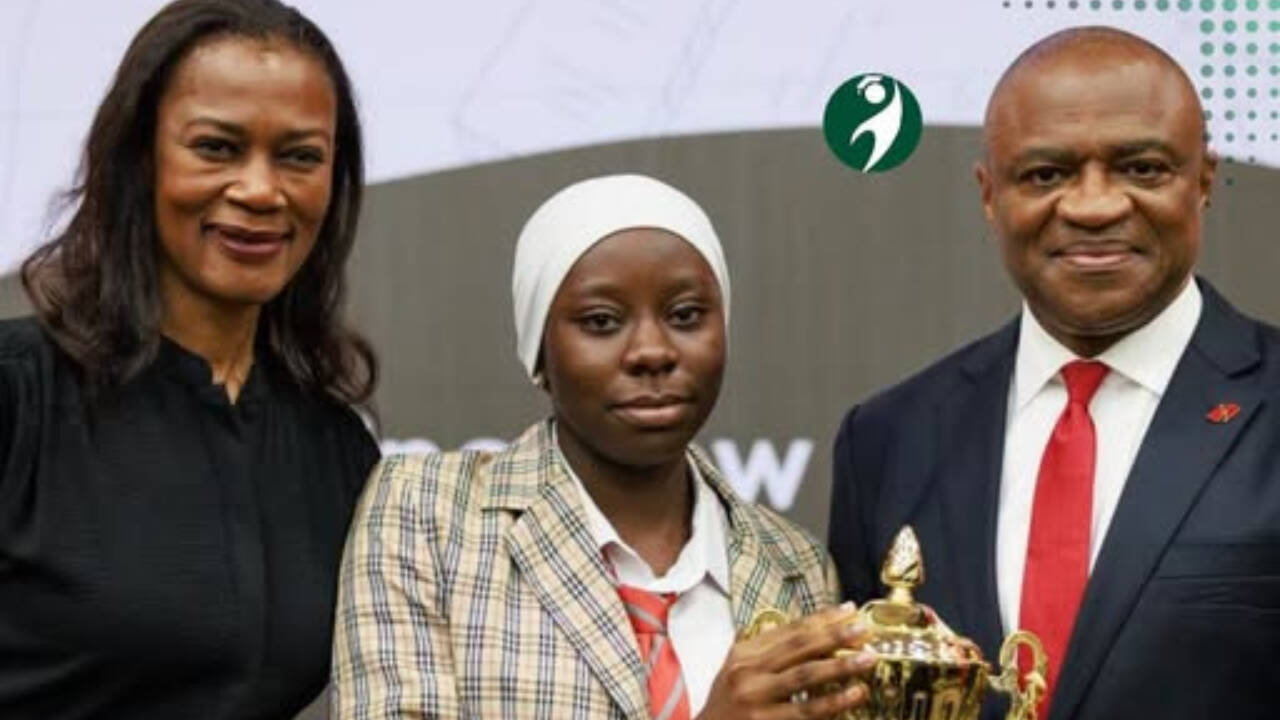
When a 15-year-old secondary school student in Abuja walks away with a ₦15 million grant from a national essay competition, the press releases write themselves. Local outlets celebrate the individual brilliance of the teenager, congratulate the school administration, and file the story under feel-good youth achievement. Yet focusing purely on the trophy misses the real story. Beneath the surface of an adolescent winning a life-changing sum of money lies a complex web of corporate philanthropy, shifting educational incentives, and the harsh economic realities of funding secondary and tertiary education in Nigeria.
The victory is genuine, and the financial windfall is substantial. For a teenager in Nigeria's Federal Capital Territory, ₦15 million represents far more than pocket money or a modest scholarship. Depending on how the grant is structured—whether as an educational trust, seed capital for a proposed project, or direct tuition coverage—it effectively eliminates the financial barriers to higher education, both locally and internationally. Still, to understand why this specific win matters, we have to look past the podium and examine the machinery of national academic competitions in West Africa.
The Anatomy of a Modern Essay Grant
Decades ago, winning a national writing contest in Nigeria meant a handshake from a ministry official, a stack of encyclopedias, and perhaps enough cash to cover a single term's school fees. Today, the stakes have shifted dramatically. Corporate sponsors, non-governmental organizations, and private foundations have stepped into the vacuum left by underfunded public education budgets, transforming essay competitions into high-stakes financial events.
Why the sudden generosity? Follow the incentives.
First, corporate social responsibility (CSR) budgets in sectors like telecommunications, banking, and oil and gas require visible, measurable impact. Funding a ₦15 million grant generates immediate, positive media coverage that traditional advertising cannot buy. It aligns the sponsoring brand with youth empowerment, intellectual rigor, and national development. Unlike building a borehole or renovating a classroom block—projects that often suffer from maintenance neglect and bureaucratic delays—handing a massive grant to a articulate 15-year-old provides a clean, compelling narrative with a human face.
Second, the criteria for these competitions have evolved. Modern national essay contests rarely reward purely literary flair or creative fiction. Instead, they demand policy proposals, economic analyses, and actionable solutions to pressing national problems—ranging from renewable energy transition and digital financial inclusion to agricultural self-sufficiency and civic governance. When a 15-year-old wins ₦15 million today, they are usually not being paid for pretty prose; they are being funded for presenting a coherent, well-researched argument that sounds like it came from a junior policy analyst.
The Abuja Advantage and the Geographic Divide
It is no coincidence that the winner hails from Abuja. While brilliance is distributed equally across Nigeria's 36 states, opportunity is heavily concentrated in major urban centers like Lagos, Abuja, and Port Harcourt. Looking closely at the roster of winners in high-value national competitions over the past decade reveals a distinct geographic and socioeconomic pattern.
Students in Abuja benefit from an ecosystem that quietly tilts the playing field in their favor:
- Access to Reliable Infrastructure: Writing a winning national essay requires hours of deep research, uninterrupted internet access, and stable electricity. In many parts of the country, students spend their evenings battling power outages and prohibitively expensive mobile data. In Abuja's middle- and upper-tier neighborhoods, high-speed broadband and backup power are standard household utilities.
- Institutional Coaching: Top-tier private and federal unity schools in the capital treat national competitions like varsity sports. Dedicated English and debate teachers actively scout promising 14- and 15-year-olds, drill them on persuasive rhetoric, edit their drafts, and guide them through the citation process.
- Proximity to Policy: Growing up in the seat of federal power exposes teenagers to daily conversations about governance, economics, and national development. When an essay prompt asks how to reform a specific sector, an Abuja student often absorbs the vocabulary of public policy simply by listening to the adults around them.
None of this diminishes the hard work of the winning student. Writing a standout essay against thousands of peers requires discipline, sharp critical thinking, and the ability to perform under pressure—especially when finalists are subjected to live defense panels to prove they actually wrote their submissions without adult or artificial intelligence interference. However, acknowledging the structural advantages of Abuja highlights a sobering reality: raw talent in rural Kebbi or Ebonyi faces a much steeper climb to reach that same ₦15 million stage.
How Essay Competitions Became the New Venture Capital
To understand the true value of a ₦15 million grant, you have to look at the purchasing power of the naira and the changing nature of youth funding. Inflation and currency fluctuations over recent years have eroded the value of traditional stipends. A ₦100,000 prize, once considered generous, barely covers a semester's textbooks and living expenses at a private university today. To make headlines and genuinely alter a student's trajectory, organizers had to add zeros to the check.
At ₦15 million, the award crosses a psychological and practical threshold. It stops being a mere prize and becomes capital.
In many contemporary competitions, organizers no longer hand over a lump sum of cash to a minor or their parents without strings attached. Experience has taught foundations that sudden windfalls can be diverted toward immediate family emergencies rather than the student's future. Consequently, most multi-million-naira grants are now disbursed through strict escrow arrangements or milestone-based tranches.
A hypothetical breakdown of how a typical ₦15 million educational or project grant is structured usually looks like this:
- Tuition and Academic Escrow: Roughly 60 to 70 percent is ring-fenced for university tuition, accommodation, and academic materials, paid directly to the institution of higher learning once the student matriculates.
- Project Implementation: If the essay required proposing a community intervention or social enterprise, a portion of the funds is released in phases to execute that idea under the supervision of assigned mentors.
- School and Teacher Rewards: Organizers frequently carve out a percentage—sometimes 10 to 15 percent—to upgrade the winning student's school library or reward the supervising teacher, ensuring institutional buy-in for future editions of the contest.
This structure turns a teenager into a steward of capital before they have even sat for their final secondary school examinations. It forces a 15-year-old to learn budget management, reporting, and accountability—skills rarely taught in a standard classroom.
The Unspoken Gatekeepers of National Contests
Whenever a massive prize is announced, skepticism inevitably follows. In an era where generative AI tools can draft a passable 1,500-word essay in thirty seconds, and where ambitious parents have been known to hire ghostwriters for their children, how do organizers ensure a 15-year-old genuinely earned ₦15 million?
The vetting process behind legitimate national competitions has had to become ruthless. Submission is only the first hurdle.
Top-tier panels now run every entry through multiple layers of plagiarism and AI-detection software, though seasoned judges know these tools are imperfect. The real test happens during the oral defense. Finalists are typically brought to a physical venue—often in Abuja or Lagos—and placed before a panel of academics, industry executives, and journalists.
There, the teenager is asked to defend their thesis without notes. Judges probe the gaps in their arguments, ask them to define obscure terms they used in the text, and challenge their data sources. A student who relied on a parent or an algorithm crumbles within three minutes of cross-examination. A student who actually wrestled with the ideas, drafted the arguments, and internalized the research lights up the room.
When a 15-year-old survives that gauntlet and takes home the top prize, it signals something specific to universities and future employers: this individual possesses genuine intellectual ownership.
What This Win Means for the Broader Education System
The danger of celebrating individual triumphs like an Abuja teenager winning ₦15 million is that they can create an illusion of systemic health. One student's extraordinary success does not fix overcrowded classrooms, outdated curricula, or underpaid teachers across the broader educational landscape.
In fact, the growing reliance on private competitions to fund bright students underscores a quiet privatization of educational opportunity. Instead of a public system that reliably identifies and nurtures talent at scale, we have a lottery-style meritocracy where a handful of exceptional teenagers win life-changing sums while millions of others struggle for basic literacy and numeracy.
Yet, within that imperfect reality, these competitions serve a vital function. They establish a visible benchmark of excellence. For every 15-year-old who wins ₦15 million, thousands of other students across Nigeria spend weeks reading, researching, outlining, and revising their work. Even those who do not make the shortlist walk away sharper writers and more informed citizens than they were before they saw the essay prompt.
The student in Abuja who claimed this grant has secured a massive head start, bypassing financial anxieties that derail too many promising academic careers in West Africa. The real test begins now—not in how well the teenager can string sentences together on paper, but in how effectively that ₦15 million translates into long-term intellectual and civic impact over the next decade.