In the late 1990s, a quiet stretch of degraded cattle pasture inside Costa Rica's Guanacaste Conservation Area received an industrial dumping volume that would trigger corporate warfare, legal battles, and a profound scientific reckoning. One thousand truckloads carrying roughly 12,000 metric tons of discarded orange peels and pulp arrived from a nearby juice processing plant. To the casual observer, it was illegal dumping masquerading as a corporate disposal shortcut. To the corporate competitors watching from the sidelines, it was an offense worthy of the Supreme Court.
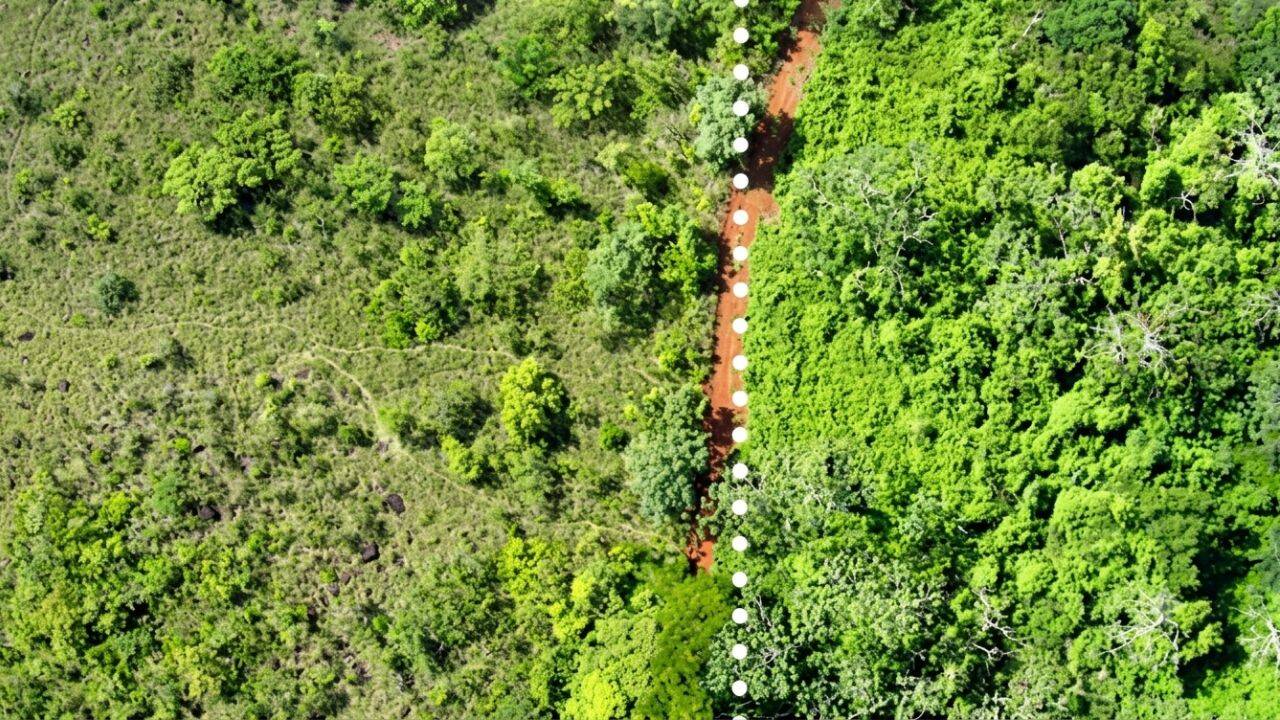
Sixteen years later, researchers surveying the forgotten plot discovered something astonishing. The barren, wind-scoured earth choked by invasive jaragua grass had transformed into a towering, dense tropical forest. Aboveground woody biomass had surged by 176 percent compared to adjacent control plots, while tree species diversity had expanded exponentially. The citrus rind payload, initially dismissed as rotting garbage, had engineered a masterclass in ecological restoration. Yet the true story of the Costa Rican orange experiment is not merely about trees growing on trash. It is a cautionary tale regarding bureaucratic inertia, the blind spots of modern environmental litigation, and the friction that occurs when industrial refuse collides with rigid statutory frameworks.
The Anatomy of a Pragmatic Alliance
The initiative began not out of corporate altruism, but through a calculated exchange orchestrated by ecologists Daniel Janzen and Winnie Hallwachs, alongside orange juice manufacturer Del Oro. Janzen and Hallwachs understood a fundamental bottleneck of tropical conservation: protecting land on paper does nothing to heal land that has been historically decimated by cattle ranching. Centuries of grazing strip soil of vital nutrients, compact the earth, and leave behind stubborn turf grasses that actively block native forest seeds from taking root.
Simultaneously, Del Oro faced an expensive disposal problem. Millions of pounds of wet orange rinds accumulated daily at their facility. Hauling them to municipal landfills incurred high transportation costs and created methane-heavy environmental hazards. The proposed arrangement appeared mutually beneficial. Del Oro agreed to donate a massive tract of primary forest to the Guanacaste Conservation Area. In exchange, the park permitted the company to unload its organic waste onto a ruined, unproductive three-hectare pasture.
No advanced biotechnology was deployed. No public funds were requested. Thousands of tons of sticky, acidic citrus waste simply tumbled out of truck beds onto dead earth. Within months, the physical properties of the dump site shifted violently. Microorganisms, fly larvae, and fungi tore through the thick carpet of rinds, converting the acidic layers into a rich, dark, loamy matrix.
When Legalism Trumps Ecological Reality
The project's swift momentum alarmed industry competitors. TicoFruit, a rival juice producer, filed a high-stakes lawsuit against Del Oro. Their primary argument centered on the literal interpretation of environmental protection laws: dumping industrial refuse inside a national park boundary constituted a defilement of public resources, regardless of intent or biological outcome.
The case escalated through the judicial system until it reached the Supreme Court of Costa Rica. The court ruled in favor of TicoFruit, terminating the agreement and prohibiting the continuation of the initiative. The legal logic was stark and uncompromising. Statutes designed to keep chemical runoff and industrial trash out of protected zones made no distinction between toxic heavy metals and nutrient-dense agricultural biomass. The trucks stopped rolling. The project was shuttered. The site was quietly abandoned to whatever fate awaited it under the shadow of a judicial prohibition.
For over a decade, the legal defeat cast a long shadow over the plot. Environmental regulators considered the matter closed, a failed regulatory loophole safely slammed shut. The site drifted into obscurity, marked only by a fading yellow warning sign swallowed entirely by aggressive vines.
The Blind Spot in Modern Conservation Economics
When Princeton researchers eventually audited the plot years later, the biological findings challenged conventional wisdom regarding waste management and land recovery. The orange peel layer had done something herbicides and mechanical tilling could never achieve. By forming a dense, nutrient-rich blanket over the soil, the citrus waste physically smothered the invasive jaragua grass that normally starves out native saplings.
As the peels decayed, they injected an abundance of nitrogen, phosphorus, and potassium directly into the exhausted earth, while dramatically increasing moisture retention. Canopy-forming tree species, carried by wind or dropped by birds from the surrounding forest, found an optimal nursery. By the time researchers cut through the dense foliage to measure the boundaries, the treated zone supported massive figs and thriving populations of local wildlife, standing in sharp contrast to the stagnant, barren pasture across the dirt road.
This stark divergence highlights an ongoing structural failure in global environmental policy. Regulatory frameworks are overwhelmingly punitive and static, designed to police bad actors rather than optimize biological outcomes. When laws treat organic agricultural byproducts with the same hostility reserved for electronic waste or chemical sludge, society loses out on efficient, cost-negative carbon sequestration opportunities.
The juice industry generates millions of tons of wet biomass annually across the globe. Much of it is burned, landfilled, or managed at significant financial expense, releasing methane as it rots in anaerobic municipal pits. Meanwhile, millions of hectares of deforested tropical land sit crippled by depleted soils and invasive grasses, waiting for expensive, grant-funded replanting efforts that rarely scale.
The Cost of Rigid Compliance
The reluctance to replicate the Costa Rican model stems from institutional risk aversion. Corporate legal teams look at the Supreme Court ruling against Del Oro and see a flashing warning light. Municipalities fear public backlash over visible dumping, conflating the controlled application of biodegradable agricultural pulp with illegal fly-tipping.
This creates a perverse incentive structure. Food processors pay millions to dispose of organic waste in environments where it creates pollution, while conservation groups spend millions of dollars buying chemical fertilizers and managing manual tree-planting campaigns that frequently fail due to poor soil health.
The barrier is not scientific. The mechanism is proven, reproducible, and remarkably inexpensive. The barrier is entirely procedural. Modern environmental compliance lacks the institutional flexibility to distinguish between an act of industrial pollution and a targeted ecological inoculation.
Until policy frameworks evolve to accommodate biological reality over rigid administrative definitions, opportunities to turn agricultural liabilities into carbon sinks will continue to be tied up in courtrooms. The forest in Guanacaste grew not because the law allowed it, but because nature was given sixteen years of uninterrupted silence to correct the mistakes of human bureaucracy.