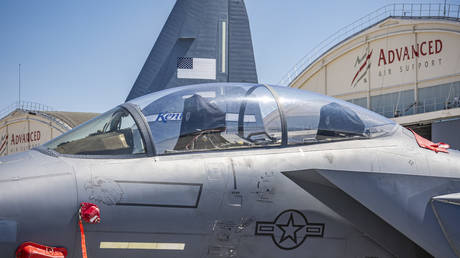
The headlines are screaming "heroism." The pundits are weeping over "the most daring operation in history." They want you to feel a surge of patriotic adrenaline because a downed pilot was plucked from Iranian soil under the cover of darkness.
They are selling you a movie script. I am here to show you the invoice.
When a superpower risks a multi-billion dollar diplomatic framework, dozens of elite Tier 1 operators, and the very real possibility of a regional conflagration to recover a single human being, it isn't a victory. It is a massive, structural vulnerability masquerading as a triumph. We just handed Tehran a masterclass in how to bait the American war machine into an asymmetrical trap.
The Myth of the Daring Rescue
The consensus view is that this mission proves American reach. The reality is that it proves American desperation.
In modern warfare, the "rescue" is often the most telegraphed move in the playbook. We operate under a rigid moral constraint that our adversaries don't share: we cannot leave a man behind. While that is a noble ethos for a platoon, it is a catastrophic liability for a global hegemon.
Iran didn't "lose" that pilot. They used him as a tether.
By allowing the extraction to proceed—or by creating the conditions where an extraction was the only option—Tehran forced the U.S. to commit high-value assets to a non-strategic objective. While we were high-fiving in the Situation Room over one life saved, the geopolitical cost of that rescue was being calculated in Rial.
The Math of Human Sentiment vs. Strategic Logic
Let’s look at the cold, hard calculus that the "Most Daring Operation" narrative ignores.
The cost of a single downed F-35 pilot rescue operation involves:
- The Opportunity Cost: Diverting satellite reconnaissance, SIGINT (Signals Intelligence), and carrier strike group focus away from broader regional deterrence.
- The Intelligence Burn: To pull this off, we likely burned three to five deep-cover assets or technical backdoors that took a decade to build. Those are gone now.
- The Escalation Premium: We just proved to the world that we will risk a Third World War for a single lieutenant. That makes every single American pilot a high-value "trigger" for Iranian foreign policy.
In a scenario where $X$ equals the value of the pilot and $Y$ equals the risk to the stability of the global energy supply, the equation $X > Y$ is a mathematical absurdity. Yet, the current administration just signaled to every adversary on the planet that we will always choose $X$.
If you think this is "bold," you don't understand the board. This was a forced move.
The Technological Delusion
The media is obsessed with the "stealth" and "precision" of the extraction. They talk about the helicopters and the night vision as if it’s magic.
I’ve seen the Pentagon waste billions on "precision" only to be defeated by a $500 drone or a well-placed mud wall. The technical success of this mission is a distraction from its tactical irrelevance.
- Fact: Stealth is not invisible; it is just "delayed detection."
- Fact: The more we rely on these high-complexity rescues, the more we ignore the fact that the pilot shouldn't have been there in the first place.
We are using 22nd-century tech to solve 20th-century ego problems. The "daring" nature of the mission is actually an indictment of our failure to utilize unmanned systems effectively. Every time we send a human into contested airspace, we are choosing to create a potential hostage situation.
If this were a drone, we’d have pressed a "self-destruct" button and gone to lunch. Instead, we spent a week on the brink of total war. That isn't "daring." It's inefficient.
Why the Media is Lying to You
The competitor's narrative focuses on the "rescue" because it’s easy to sell. It has a protagonist. It has a happy ending.
But ask yourself: Why was the pilot missing for that long? Why did the "rescue" happen now?
The timing smells of political theater. When a rescue is announced with this much fanfare, it isn't about the soldier. It’s about the polls. Real "daring" operations—the ones that actually change the course of history—usually stay classified for thirty years. They don't get a press release and a primetime slot.
By turning a tactical recovery into a national celebration, the administration has heightened the stakes for the next pilot who goes down. They’ve told the IRGC (Islamic Revolutionary Guard Corps) exactly how much we are willing to pay.
The Uncomfortable Truth About Sovereignty
Every "rescue" is a violation of sovereignty. We can argue that Iran deserved it, and they likely did. But don't mistake the lack of an immediate kinetic response for a lack of consequence.
When we celebrate "daring" incursions, we normalize a world where borders are suggestions for the strong and cages for the weak. This works until it doesn't. We are eroding the very international norms that keep the global trade system—the source of American power—functioning.
We are trading the long-term stability of the international order for a short-term PR win.
Stop Applauding the Symptom
You are being asked to cheer for a band-aid.
The "rescue of the US pilot" is a symptom of a failed containment strategy. If our deterrence was working, he wouldn't have been shot down. If our technology was as superior as the brochures claim, he wouldn't have been "missing." If our diplomacy was functional, he would have been returned in a suit on a private jet, not plucked out of a ditch by SEALs.
The "consensus" wants you to focus on the bravery of the boys on the ground. I won't disparage their courage; they did their job perfectly. But their job only exists because the people in suits failed theirs.
The Actionable Reality
If we want to stop these "daring operations," we have to stop valuing the optics of the rescue more than the logic of the mission.
- Prioritize Unmanned Persistence: Stop putting meat in the seat for routine surveillance in high-threat environments.
- De-escalate the Narrative: Stop turning every tactical hiccup into a national existential crisis.
- Acknowledge the Cost: Demand to know what intelligence assets were sacrificed to make this photo op possible.
We didn't "win" anything this week. We just barely escaped a disaster of our own making.
The pilot is home. Great. Now let’s talk about the fact that we just gave our enemies the exact blueprint for how to make us bleed for the next decade.
Stop calling it a rescue. Start calling it a ransom paid in risk.